
Good pool maintenance after dogs swim starts before a dog enters the water. Hair, dirt, and other material can add cleaning work and increase sanitizer demand. Sanitizer is the product used to control germs in pool water. A usable exit, close supervision, and compatible surfaces matter just as much as cleanup.
For North Carolina homeowners, the practical goal is a repeatable routine—not an automatic chemical dose after every swim. Decide whether your pool suits your dog, verify product guidance, and use actual water conditions to guide maintenance.
Decide whether swimming fits your dog and your pool
Swimming ability varies. Do not assume a dog can swim comfortably or find the steps without help. Ask your veterinarian about swimming suitability, health concerns, and an appropriate flotation aid for your dog.
Before allowing access, check these basics:
- The dog can enter and leave through a stable, usable route.
- An attentive adult can supervise without distractions.
- The water is clear enough to see the bottom and exit features.
- Current water tests meet appropriate swimming conditions.
- The surface and accessory manufacturers allow the intended use.
Keep dogs with diarrhea out of the pool. Ask a veterinarian about wounds, skin problems, or recent illness before swimming. Provide fresh drinking water nearby and discourage drinking pool water.
A pool that works for people may still be difficult for a particular dog. If the animal cannot exit calmly, postpone swimming rather than treating repeated struggling as practice.
Make the exit usable before allowing access
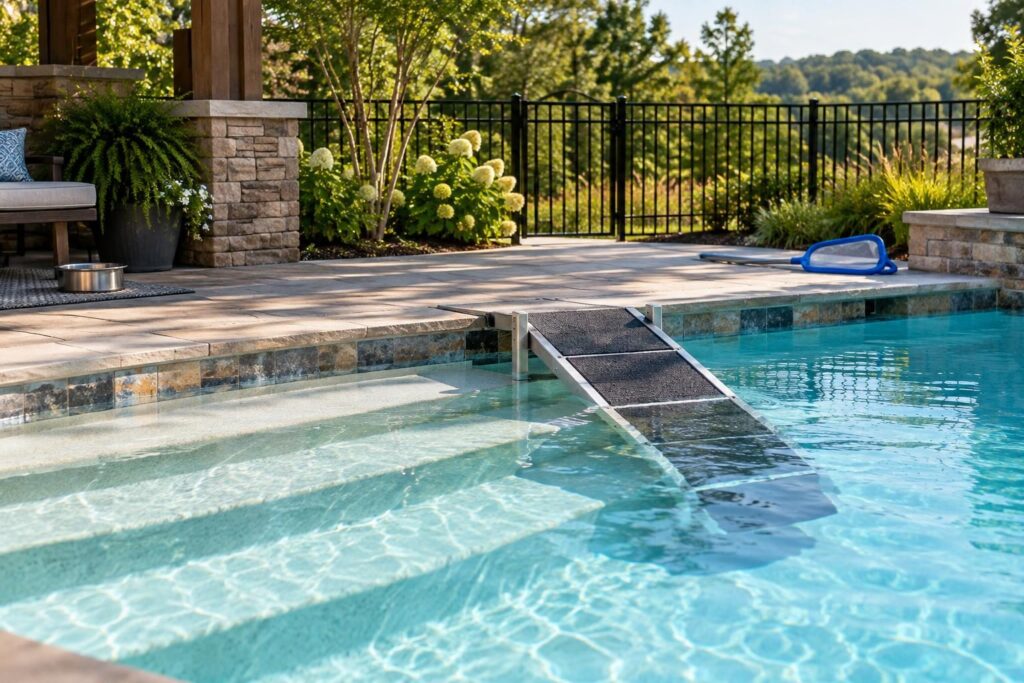
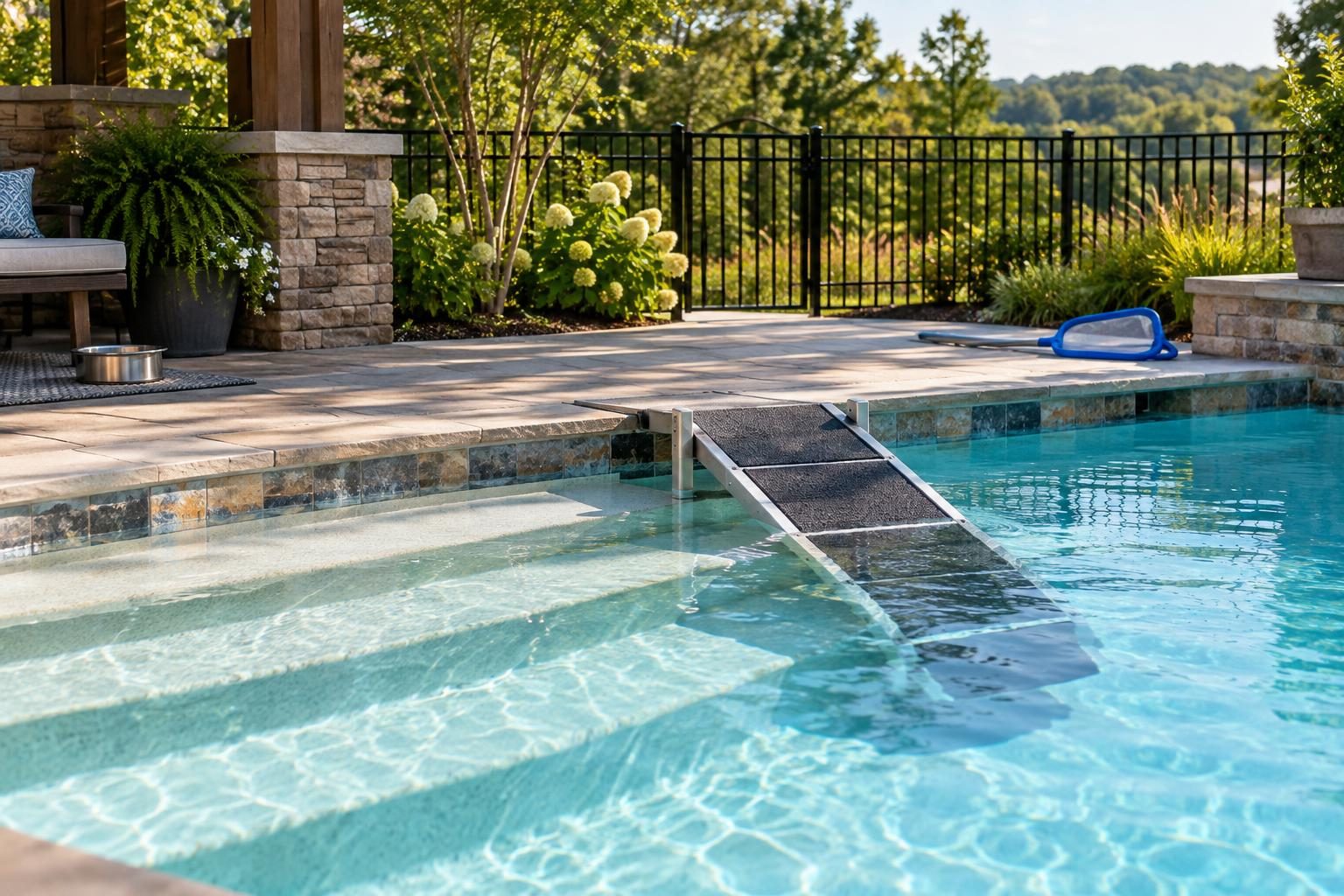
A ladder designed for people may not provide a usable exit for a dog. Broad steps or a compatible pet ramp may help, but suitability depends on the animal and pool layout. A shallow ledge is not automatically an exit.
Introduce the route calmly under close supervision. Never throw or force a dog into the pool. Stop if the animal appears distressed, exhausted, or unable to leave without struggling.
For an added ramp, verify:
- Compatibility with the pool edge, finish, and attachment method.
- Manufacturer load limits and installation instructions.
- Stable footing and an unobstructed approach.
- Whether it interferes with covers, cleaning equipment, or human exits.
- Whether its location creates access over or around a barrier.
Keep the surrounding deck clear. Our guide to planning emergency access routes explains why usable paths matter.
Do not leave the dog unattended, even with a flotation aid. Keep pets out whenever a cover is deployed. A cover is not a pet play surface.
Check manufacturer guidance for vulnerable surfaces
Claw contact can be a concern when dogs scramble against walls, steps, or the waterline. Do not assume every vinyl liner, fiberglass finish, coating, or accessory tolerates the same use.
Before swimming begins, identify your surface product and read its care and warranty documents. Ask the manufacturer about pet use, claw contact, approved cleaning tools, and compatible ramps. Request a written response tied to the actual product.
For a new pool, make the intended pet use part of the written design discussion. Ask the contractor to identify suitable entry features and document any limitations. A verbal statement that a finish is “pet friendly” does not explain exclusions or maintenance duties.
Photograph accessible surfaces before regular pet use. Keep product names, care instructions, and dated photographs together. These records help distinguish existing marks from later changes without guessing at their cause.
If new scratches, tears, or surface changes appear, pause pet access and request an assessment. Avoid improvised patches or abrasive cleaning. Review homeowner maintenance obligations in pool warranties before approving repairs.
Understand what dogs add to pool water
Dogs can carry loose hair, soil, grass, and organic material into the water. Organic material includes substances from living things, such as skin debris and body oils. These additions can increase both cleaning needs and chlorine demand—the amount of chlorine consumed in the water.
How much extra work follows depends on the dog, coat condition, yard, swim duration, and existing pool conditions. Avoid rules claiming that every dog equals a fixed number of human swimmers.
Brush loose hair away from the pool beforehand. Rinse off visible dirt with plain water where runoff will not return to the pool. Do not shampoo the dog in the pool or rinse grooming products into it.
Skimmer baskets catch some floating debris before water reaches the pump. The pump basket and filter handle other material. Hair accumulation can add maintenance work, but it does not automatically mean equipment needs replacement.
Keep dog toys separate from pool-cleaning tools. Remove damaged toys and loose pieces that could become debris. Clear the pool of robotic cleaners and other equipment as their manuals require before swimming.
A practical routine for pool maintenance after dogs swim
Start with visible debris, then test the water. Do not use appearance or chlorine odor as a substitute for measurements.
- Remove floating hair and debris. Use an appropriate skimmer net from a stable position on the deck.
- Check collection baskets. Follow equipment shutdown instructions before opening any basket housing. Never reach into a running skimmer or suction opening.
- Inspect steps and corners. Remove settled material with tools approved for the surface.
- Test and record water conditions. Include free chlorine, the chlorine available for disinfection, and pH, which describes acidity or alkalinity.
- Review filter performance. Compare pressure and flow observations with the equipment manual and your established clean-filter readings.
- Make only supported adjustments. Follow chemical labels and equipment instructions rather than adding an estimated extra dose.
Good pool maintenance after dogs swim does not require opening the filter after every session. Clean it when manufacturer guidance and operating conditions indicate a need.
Never open a pressurized filter. If cartridge cleaning is due, follow the manual and our safe cartridge-cleaning guidance. Do not add basket liners or other accessories unless the equipment manufacturer approves them.
Use testing—not a fixed chemical recipe
The CDC’s home pool treatment and testing guidance explains residential chlorine and pH management. It addresses human swimming health; it does not establish veterinary suitability or a dog-specific chemical dose.
Use a suitable test kit and follow its instructions. Record results before adjusting chemicals. Recheck after treatment according to product directions, and observe all swimming restrictions on the label.
Do not automatically add shock, clarifier, or phosphate remover because a dog swam. “Shock” describes an elevated chemical treatment, not a universal cleanup requirement. Unnecessary products can complicate troubleshooting.
Pause swimming if water becomes cloudy, visibility worsens, or readings fall outside appropriate conditions. Investigate testing, circulation, filtration, and recent use before choosing treatment. Keep animals away during chemical handling and storage.
If fecal contamination occurs, close the pool to people and pets. Contact a qualified pool professional for an appropriate response. Do not assume a routine dose makes the water ready again.
Keep records and clarify paid service responsibilities
A short log makes pool maintenance after dogs swim easier to evaluate. Note swimming activity, visible debris, test results, cleaning, chemical additions, and unusual equipment behavior. Compare similar days before changing your maintenance plan.
If you hire a service company, put pet-related responsibilities in writing:
- Who checks baskets between scheduled visits?
- Does routine service include extra hair removal?
- What conditions trigger an additional visit or charge?
- Who documents test results and recommends treatment?
- Who confirms compatibility before installing a ramp or accessory?
A request for additional service does not prove the equipment is undersized or defective. Ask for the observations supporting the recommendation. Before approving replacement equipment, request model details, written scope, exclusions, and applicable warranty terms.
Photograph proposed attachment locations before installation and before any work is covered. Retain approvals, change orders, invoices, and correction records. Tie accessory payments to agreed work and documented completion, not verbal assurances alone.
Maintain barriers and know when to get help
Pet access must not weaken protection for children or other household members. Never prop a pool gate open for a dog. Inspect gates after adding ramps, rearranging furniture, or changing landscaping.
The CPSC residential pool barrier guidelines provide general consumer-safety guidance, not approval for a particular installation. North Carolina requirements can vary by jurisdiction, adopted code, property conditions, utilities, and project scope.
The best pool maintenance after dogs swim combines manageable cleaning with supervised access and a dependable exit. Consult your local inspections department before barrier or permanent-access changes. Use a licensed pool contractor for installation questions and a qualified electrician for affected electrical work. An engineer may be needed for structural attachments; your veterinarian should address the dog’s health and swimming suitability.