
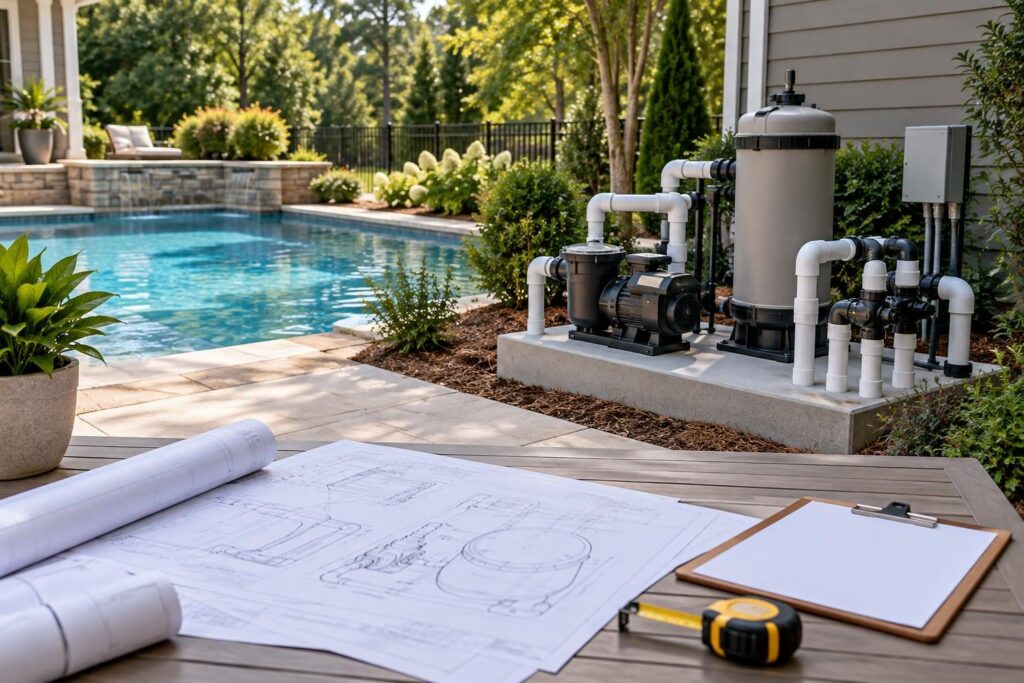
Clear pool proposal pump filter performance specifications turn “premium equipment” into details you can compare and verify. A brand name alone does not identify the pump, filter, controls, or operating assumptions included in your price. Before signing, ask the builder to connect each proposed component to your pool’s actual design.
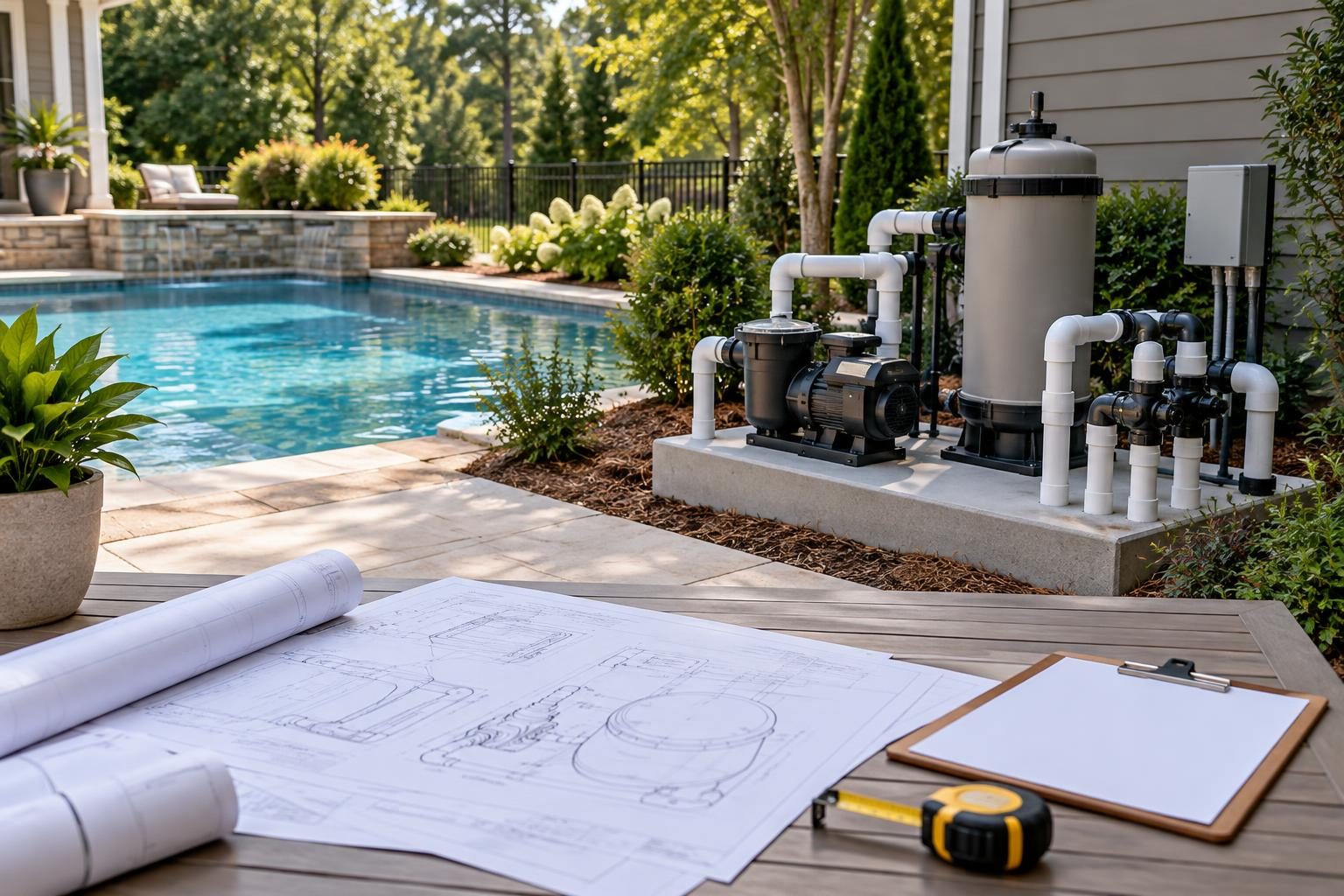
Your goal is not to design the circulation system yourself. It is to understand what you are buying, who selected it, and how the builder will verify its operation. A coordinated equipment schedule also gives you a useful reference if models change before installation.
Identify the pump and filter beyond the brand name
Request an equipment schedule: a written list identifying each component and its included accessories. Date it and have the builder identify it as part of the proposal package.
- Pump: Manufacturer, complete model number, speed-control type, and included controller.
- Filter: Manufacturer, complete model number, filter type, and published filtration area or media capacity, as applicable.
- Accessories: Required valves, unions, gauges, connections, filter media, and control interfaces.
- Supporting documents: Manufacturer specification sheets and installation instructions for the proposed models.
A union is a removable plumbing connection that helps technicians disconnect equipment for service. An interface allows equipment and controls to communicate.
Descriptions such as “large cartridge filter” or “energy-efficient pump” leave important choices unresolved. Ask whether any model remains undecided and when you must approve it. Do not treat a product-family brochure as confirmation of the exact equipment included.
Request pump sizing assumptions, not just horsepower
Horsepower describes motor power, but it does not establish the water flow your installed system will deliver. Flow also depends on resistance from pipes, fittings, valves, filters, and other equipment.
Ask the builder to document the assumptions used to select the pump:
- Estimated pool and connected spa water volumes.
- Proposed pipe sizes, approximate routing, and equipment location.
- Equipment and features served by each pump.
- Estimated flow needs for each planned operating mode.
- The method used to evaluate resistance through the system.
A pump curve shows expected flow at different resistance levels. Ask the equipment designer to explain where the proposed system is expected to operate on that curve.
These are professional design questions, not homeowner calculations. If the explanation rests only on pool volume or motor horsepower, request the remaining assumptions before approving equipment.
Connect filter specifications to the planned flow
The filter must work with the proposed circulation system, not merely match the pump’s brand. Ask the builder to identify the manufacturer’s applicable flow limits and explain the expected operating range.
Filtration area describes the surface available to capture debris in certain filter types. Media capacity describes the filtering material required for others. Neither figure alone establishes suitability for your pool.
Request written answers to these questions:
- What flow is expected through the filter during normal filtration?
- Which other operating modes send water through it?
- How does the selection account for anticipated debris and maintenance?
- What cleaning method, supplies, and service access will it require?
- Does the installed price include the required filtering material?
If cleaning requires backwashing, which reverses flow to remove trapped debris, identify the proposed discharge arrangement. Verify acceptable disposal with the appropriate local authority. Avoid accepting a cleaning plan that leaves drainage responsibility unresolved.
Define performance under named operating conditions
Useful pool proposal pump filter performance specifications describe operating conditions, not just equipment capacity. A claim that a pump “handles everything” does not explain whether features operate together or separately.
Ask for a simple operating-mode schedule covering the functions included in your project:
- Routine filtration and sanitation.
- Heating, including the heater’s required water-flow range.
- Connected spa circulation and jet operation, if applicable.
- Water features and any cleaner that uses the circulation system.
- Combinations the builder represents as available at the same time.
For each mode, request the intended pump setting, valve configuration, and expected flow where relevant. Distinguish estimates from performance commitments and measurements that will occur at startup.
Also ask how normal filter loading may affect operation between cleanings. A clean-filter demonstration alone may not explain the intended everyday operating plan. The designer should define reasonable conditions and limitations rather than promise identical performance under every condition.
Assign responsibility for equipment compatibility
Compatibility includes plumbing, controls, electrical requirements, and the operating needs of connected equipment. Matching logos do not answer every compatibility question.
Have the proposal identify who coordinates the complete system. Ask who confirms that the pump, filter, heater, sanitizer, valves, and automation work together in the planned modes.
Useful questions include:
- Does automation provide full pump control or only basic switching?
- Are communication accessories and setup included?
- Who verifies required flow ranges and equipment sequencing?
- Who coordinates electrical requirements with the licensed electrician?
- Who investigates and corrects a coordination problem discovered at startup?
Request written confirmation of the responsible parties and included coordination work. Independently compare important claims with manufacturer documents; verbal assurances are difficult to evaluate later.
Homeowners should not resolve suction safety, wiring, or bonding questions themselves. Bonding connects specified conductive components to reduce electrical hazards. Those details require qualified review and applicable inspections.
Separate energy estimates from equipment promises
An efficient pump can still cost more to operate than expected if its schedule differs from the sales estimate. Ask what daily operating hours, speed settings, feature use, and electricity rate support any projected cost.
Request that the proposal distinguish these items:
- Manufacturer ratings for the exact model.
- Estimated energy use under stated operating assumptions.
- Any specific performance commitment the contractor is offering.
The ENERGY STAR pool pump resource provides authoritative information about certified pumps and energy-performance considerations. Verify certification for the proposed model rather than relying on a general brand claim.
Ask how the builder will record programmed settings at handover. If the initial schedule changes, retain the revised settings and explanation. Do not reduce circulation solely to match an estimated bill without professional guidance on the system’s operating needs.
Make substitutions and pricing decisions visible
An unavailable model should trigger a documented comparison, not an unexplained replacement. Ask the proposal to describe the substitution approval process before you sign.
Compare the original and replacement models for performance, controls, electrical needs, service access, included accessories, and warranty terms. Our equipment substitution review checklist explains what to examine.
Clarify whether the price includes equipment delivery, installation, control programming, startup, and homeowner instruction. If an allowance appears, ask what equipment it assumes and how price differences will be documented.
Reconcile conflicting model numbers across drawings, selections, and proposal attachments. Use a dated revision rather than assuming one document controls. This guide to clarifying conflicting contract attachments offers a practical review process.
Pressure to approve an unspecified replacement is a reason to pause and request details. It does not, by itself, establish wrongdoing.
Agree on verification before installation begins
Ask how the builder will demonstrate the specified operating modes and document unresolved items. Agree on this process before equipment ordering, not during the final walkthrough. Keep pool proposal pump filter performance specifications alongside startup records to compare promised and observed operation.
Your proposed verification record should identify:
- Installed model and serial numbers.
- Programmed pump settings and operating schedules.
- Valve positions and equipment active during each demonstration.
- Relevant pressure readings and flow measurements, when specified.
- Any estimated values, including how they were obtained.
- Corrections needed, responsible parties, and the follow-up verification process.
A pump display may report an estimated flow rather than a separately measured value. Ask the technician to identify the source and limitations of each reading.
Use a startup readings log to preserve the baseline. Photograph equipment labels and accessible work before concealment, without entering work areas or opening equipment. Keep manuals, approvals, change orders, inspection records, correction records, and warranty documents together.
Use a final proposal decision check
Before signing, review your pool proposal pump filter performance specifications against four questions: Can you identify the equipment? Are the sizing assumptions documented? Are operating expectations clear? Is someone responsible for coordination and verification?
Missing answers call for clarification, not an automatic accusation. Request a revised attachment and written confirmation. Align proposed payment milestones with documented deliverables, and clarify how unresolved equipment items affect closeout under the agreement.
North Carolina requirements vary by jurisdiction, adopted code, property conditions, utilities, and project scope. Consult the local inspections department about permits and inspections. Use an appropriately licensed pool contractor, electrician, or engineer for design and safety questions. Seek local environmental-health guidance when discharge could affect septic systems or wells. This checklist supports proposal review; it does not replace professional design or legal advice.