
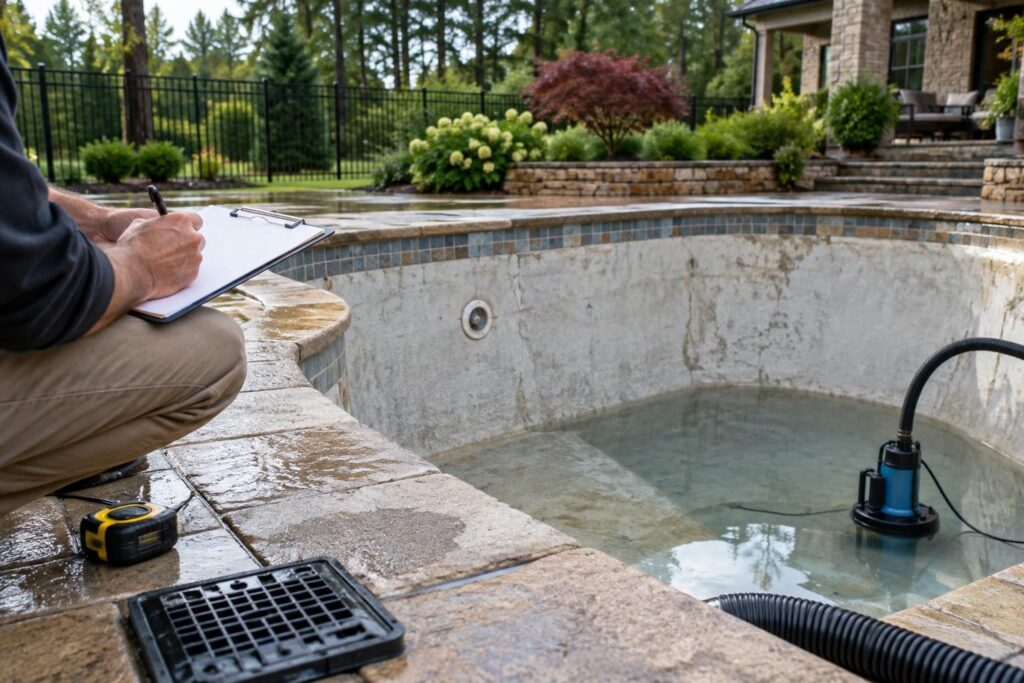
When a repair seems urgent, draining the water can feel like the obvious first step. However, draining pool for repairs North Carolina risks depend on the shell, groundwater, recent weather, liner condition, and discharge route. A pool professional should evaluate those conditions before recommending a full drain.
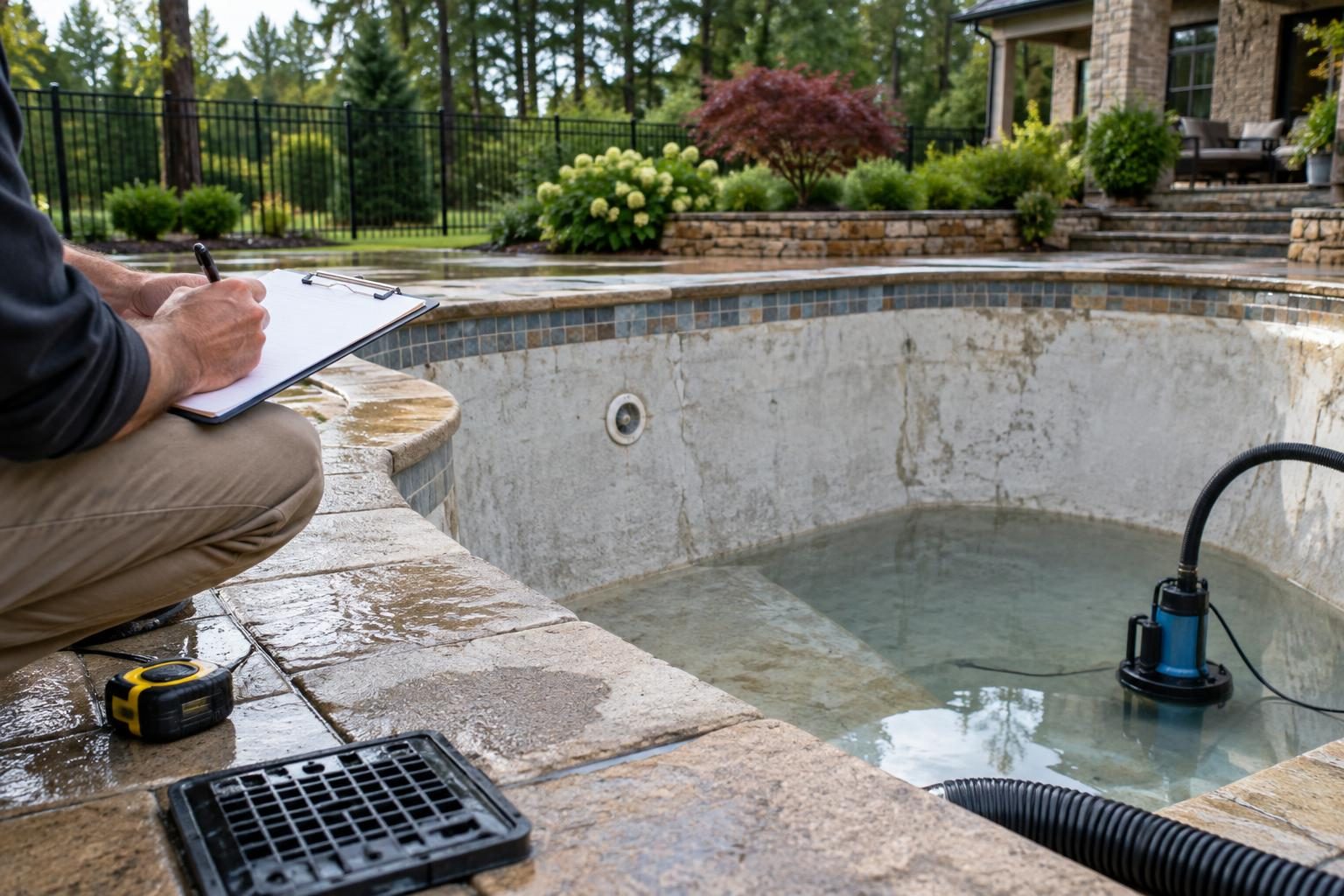
An empty pool is not always a neutral work area. Water helps counter forces around the shell and supports some liner systems. Removing it can expose hidden site conditions that prove difficult to reverse. The safest decision may involve a partial water reduction, an underwater repair, or a different diagnostic step.
Why draining pool for repairs North Carolina risks vary by property
North Carolina properties can have different soils, grades, water tables, drainage patterns, and seasonal rainfall. Two pools with the same visible problem may require different repair plans. A level suburban lot, a sloped site, and a low-lying property may respond very differently after water removal.
Groundwater is one of the key concerns. Water below the pool can create upward pressure against an empty shell. The risk may increase after heavy rain, prolonged wet weather, flooding, or a change in nearby drainage. Homeowners cannot reliably determine subsurface conditions from the pool surface alone.
Ask the professional to explain:
- What evidence suggests groundwater is present or absent?
- Has the property had recent rain, flooding, seepage, or standing water?
- What shell movement or damage could occur if the pool is empty?
- How will the professional monitor conditions during the repair?
- What is the plan if groundwater appears after draining begins?
Request these answers in writing. A vague statement that the pool is “safe to drain” does not explain the property-specific assumptions behind that conclusion. Written reasoning also helps different professionals review the same information. A written review should address draining pool for repairs North Carolina risks before anyone lowers the water.
Review the pool shell before removing water
Pool shell type changes the risk profile. Concrete pools may have structural, finish, plumbing, or crack-related issues that need a careful inspection. Fiberglass shells can respond to outside water pressure and site movement. Vinyl liner pools depend on the liner remaining properly supported by the structure beneath it.
Concrete pools
Concrete construction does not make a full drain automatically safe. An empty shell may still face outside groundwater pressure. Existing cracks, penetrations, fittings, drains, and past repairs deserve professional review. Ask whether the proposed work requires a dry surface or whether the professional can inspect and repair the defect with water in the pool.
Fiberglass pools
Fiberglass shells are manufactured units that rely on surrounding materials and site conditions for support. Outside groundwater can create movement or uplift concerns when the pool is empty. The installer or manufacturer’s repair guidance may matter, especially if the repair involves the shell, fittings, or surrounding backfill.
Vinyl liner pools
Vinyl liners can wrinkle, shift, shrink, tear, or lose their fit when water is removed. The liner’s age and condition matter. A liner that already has brittle areas, loose sections, prior patches, or poor fit may not return to its original position after draining.
Do not rely only on the pool’s age or the fact that it has undergone draining before. Conditions may have changed since the last service. Ask for the shell type, liner condition, groundwater assumptions, and repair method to appear in the written work description.
Recent rainfall deserves a separate review
Recent weather can change the decision even when the pool has never had a visible groundwater problem. Rain can saturate soil, raise shallow groundwater, fill drainage systems, and change runoff paths. A property may also receive water from an uphill lot, swale, retaining wall, roof discharge, or nearby construction.
Before scheduling work, record recent weather and site observations. Note standing water, soft soil, seepage near the pool, wet equipment areas, drainage backups, and changes in nearby grades. Dated photographs can help a professional understand conditions that may disappear during a dry period.
Useful questions include:
- Should the repair wait until site water conditions receive a professional review?
- What weather conditions would postpone the work?
- Will the team need temporary pumping, and where could that water go?
- Could pumping change soil stability or affect nearby structures?
- Who monitors the site if the pool remains empty overnight?
Groundwater specialists, engineers, drainage professionals, or experienced pool contractors may be appropriate depending on the concern. A pool contractor can identify construction issues, but not every contractor has the qualifications to assess complex subsurface or structural conditions.
Check discharge restrictions before moving pool water
Removing water creates a second problem: where the water will go. Discharge may affect the yard, neighboring property, stormwater inlets, septic areas, wells, streams, slopes, retaining walls, or public drainage systems. The correct route depends on local rules, site conditions, water chemistry, and the volume involved.
Do not assume that a lawn, street, storm drain, or sanitary connection provides an acceptable discharge location. Local authorities, utility providers, or other responsible agencies may have requirements. A qualified professional should verify the route before work begins.
Ask for a written discharge plan that identifies:
- The proposed outlet and the person responsible for approving it.
- How flow will be controlled to limit erosion or flooding.
- Whether the team should check water chemistry before discharge.
- How the plan protects neighboring land, wells, septic components, and structures.
- What happens if conditions block the first discharge route.
For broader site-water questions, review pool drainage outlet planning in North Carolina. That discussion can help you identify grades, erosion concerns, and neighboring impacts to raise with the professional managing the repair.
Consider alternatives to a complete drain
A full drain may not be the only way to investigate or complete a repair. The appropriate alternative depends on the defect, water condition, shell, equipment, and professional capabilities. Homeowners should ask for options rather than treating draining as an automatic requirement.
Possible approaches may include an underwater inspection, localized underwater repair, a controlled partial reduction in water level, temporary equipment isolation, or repair of an accessible fitting without emptying the shell. In some cases, a professional may recommend testing first to confirm whether the suspected problem actually exists.
Ask the contractor to compare each option by:
- What the method can confirm or repair.
- What it cannot confirm while water remains.
- How it affects the liner, shell, finish, plumbing, or equipment.
- What site or weather conditions would make it unsuitable.
- What records, photos, tests, or warranty conditions apply.
A lower-cost option is not automatically better if it leaves the cause unresolved. Conversely, a full drain is not automatically more thorough. The goal is a repair plan that addresses the actual problem without creating avoidable shell, liner, groundwater, or discharge exposure.
Document the decision before work starts
Homeowners should preserve the repair request, inspection notes, proposals, photos, water-level records, and written approvals. Photograph the pool, coping, deck, equipment, liner, visible cracks, drainage areas, and surrounding grades before anyone changes them. Keep copies of texts and emails that explain the recommendation.
The written scope should identify the suspected problem, repair method, water-level plan, discharge responsibility, weather conditions, monitoring duties, and restoration work. It should also state who pays for additional pumping, groundwater control, liner correction, shell movement, or unexpected site work. Do not assume these responsibilities are included.
Warning signs do not prove that a contractor has acted improperly. They do show that you should pause and verify the plan. Examples include:
- A recommendation to drain without discussing shell type or groundwater.
- Unclear answers about recent rain or changing site conditions.
- A discharge plan based only on a verbal suggestion.
- Pressure to approve work before receiving a written scope.
- No explanation of alternatives or conditions that would stop the work.
- Missing records about prior liner repairs, leaks, or shell movement.
For groundwater-specific planning questions, see pool hydrostatic relief planning in North Carolina. If the property has active seepage or unusual subsurface conditions, a qualified professional may need to review the site before you finalize a repair decision.
Use a simple homeowner decision checklist
Before approving a full drain, confirm that you can answer these questions:
- Which exact defect does the professional plan to investigate or repair?
- Which pool shell or liner system does the property have?
- How much is known about groundwater and recent rainfall?
- Has the pool shown movement, wrinkles, cracks, seepage, or prior liner damage?
- Which alternatives to a complete drain did the professional consider?
- Where will removed water go, and who verified that route?
- Who monitors the empty pool and responds to changing conditions?
- Which restoration, testing, startup, and follow-up records will the contractor provide?
- Which costs does the proposal include, and which conditions create a change order?
If the answers are incomplete, delay approval long enough to obtain clarification. Keep the request focused on verification rather than blame. A qualified contractor, engineer, drainage professional, or other specialist should explain what applies to your property.
Make the repair decision property-specific
The central lesson behind draining pool for repairs North Carolina risks is that water removal is a site decision, not merely a maintenance task. Shell type, groundwater, rainfall, liner condition, drainage, and local discharge requirements all deserve review.
Homeowners should not use this article as a draining procedure. Ask the local inspections department about applicable requirements, and consult a qualified pool professional for the repair plan. For current North Carolina building-code documents and interpretations, review the North Carolina Office of State Fire Marshal documents, then confirm the local interpretation with the inspections department. An engineer, surveyor, electrician, septic professional, drainage specialist, or other licensed expert may also be appropriate when the site involves structural, electrical, septic, grading, or groundwater concerns. Build a Pool in North Carolina provides homeowner education; property-specific decisions require qualified review.