
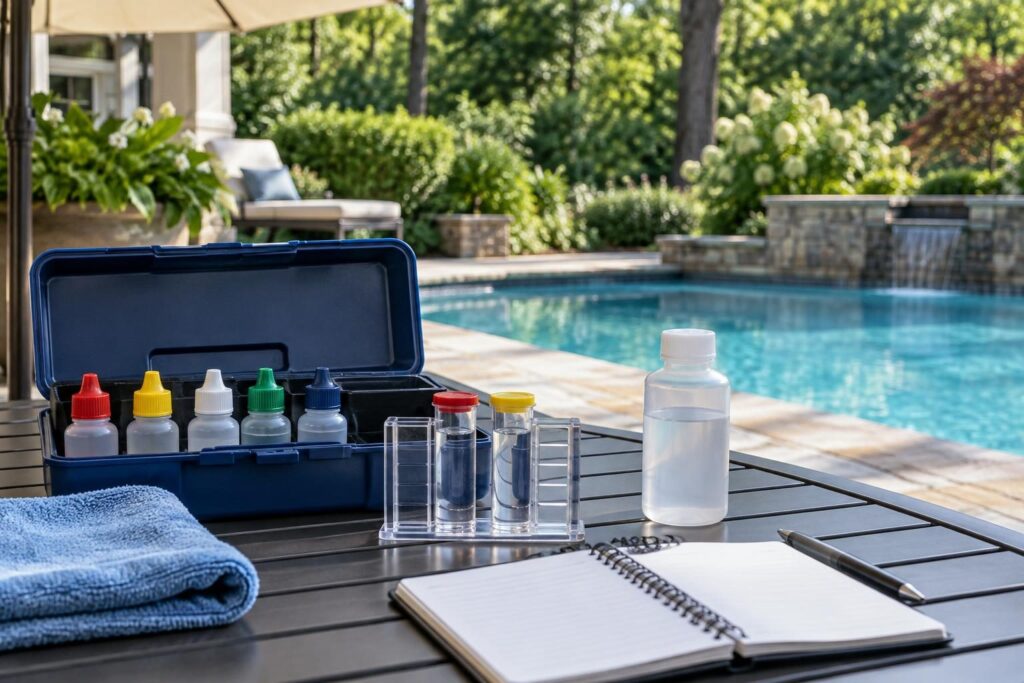
A surprising reading deserves a closer look, and pool test kit accuracy checks can help you decide what to investigate. Old reagents, a hot storage spot, or a poorly collected sample can undermine a test. The water may also have changed. Before adding chemicals, separate a genuine water problem from a testing problem.
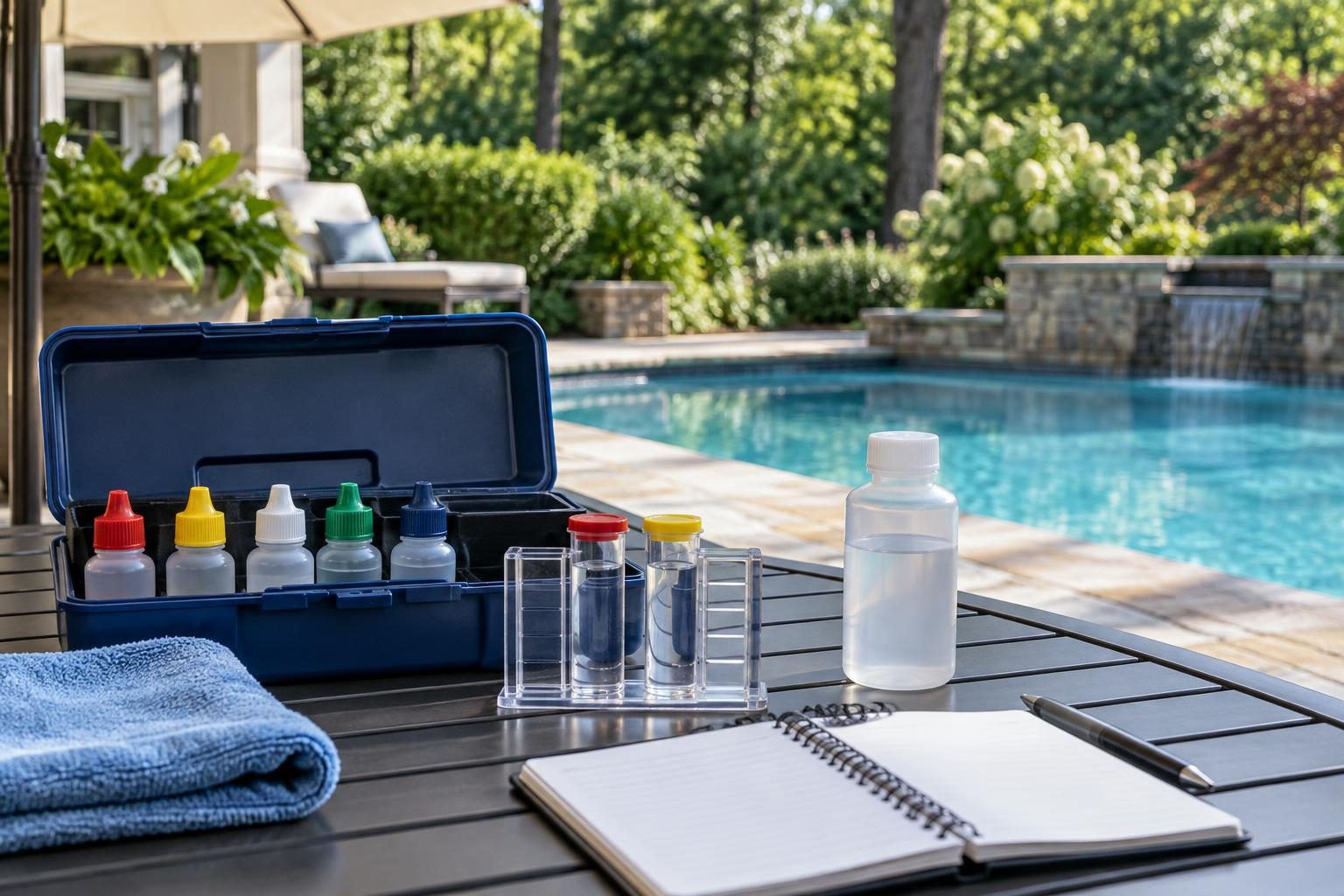
This guide focuses on questionable results rather than routine testing schedules or treatment targets. For North Carolina homeowners, a kit left in a sunny shed or vehicle deserves particular scrutiny. Start with the kit instructions, repeat the test carefully, and seek an independent comparison when uncertainty remains.
First, decide whether the result needs confirmation
Pause before making a chemical adjustment that depends on a doubtful reading. That does not mean ignoring potentially unsafe water. Keep swimmers out when you cannot confirm appropriate sanitizer and pH conditions. Clear water alone does not establish safety.
Investigate a result when:
- It changes sharply without an obvious explanation.
- Repeated tests produce substantially different readings.
- The sample develops an unexpected color or never reaches the described endpoint.
- The reading sits at the top or bottom of the test scale.
- Your home result conflicts with a service report.
An endpoint is the final color change described in certain test instructions. Read it exactly as the manufacturer explains.
The CDC’s home pool treatment and testing guidance provides a useful safety reference. Use your equipment instructions and qualified help to resolve results that do not make sense.
Start pool test kit accuracy checks with reagent condition
Reagents are the chemicals that react with a water sample to produce a measurable result. Their usable life depends on the specific product and its storage history. Do not assume every bottle in a kit expires together.
Check each reagent for:
- Product identity and compatibility with the test method.
- Expiration information and any manufacturer replacement guidance.
- Purchase date, opening date, and lot number, if available.
- Loose caps, leaks, damaged labels, or unfamiliar appearance.
- Known exposure to heat, direct sunlight, or freezing.
Appearance alone cannot confirm that a reagent still works. A bottle may look normal despite questionable storage. Ask the manufacturer about uncertain dates or temperature exposure rather than guessing.
Replace suspect reagents with the specified products. Do not top up old bottles, combine leftovers, or substitute a similar-looking reagent. Keep purchase details with your pool product expiration records.
Review storage heat and container contamination
A kit’s storage history matters as much as its purchase date. Heat can degrade some reagents and compromise their performance. Follow the manufacturer’s storage conditions. Avoid leaving the kit in a vehicle, beside a heater, or on a sunny equipment pad.
Keep testing supplies secure from children and pets, away from bulk treatment chemicals, and in their original labeled containers. Do not assume refrigeration is appropriate; verify the product instructions first.
Next, inspect the sample container and test cells. Residual treatment chemicals, detergent, dirt, or water from a previous test can alter results. A household cup or reused chemical container is not a suitable substitute.
- Use dedicated sampling containers and compatible test cells.
- Follow the kit’s cleaning and rinsing directions.
- Keep fingers away from container interiors and reagent tips.
- Keep caps with their original bottles.
- Replace cells when damage prevents a clear reading.
For photometers—devices that measure light through a sample—fingerprints or damaged cells can interfere with readings. Follow that instrument’s cleaning instructions.
Collect a representative sample and follow the method
Good reagents cannot correct a poor sample. Collect water from the location and depth specified by your kit or testing provider. Avoid water directly beside a return jet or chemical introduction point unless the procedure specifically requires it.
Recent dosing, rainfall, refill water, or changing circulation may affect how representative a sample is. Record those conditions. Follow product directions for circulation and waiting before retesting after treatment; there is no universal waiting period.
At the testing station:
- Measure the sample volume carefully using the specified fill mark.
- Add reagents in the stated order and amount.
- Hold dropper bottles as instructed so drop size stays consistent.
- Use the required mixing method and reading time.
- Read color comparisons under the recommended lighting.
- Test promptly rather than leaving the sample in sunlight.
Do not improvise extra drops or extend the reading time to obtain a preferred color. Photograph unusual reactions for troubleshooting, but do not treat phone photographs as calibrated color measurements.
Understand test ranges before trusting an extreme reading
Every test has a working range. A reading at a scale limit may not reveal the actual concentration. Record the limit or instrument message instead of reporting a more precise number than the method supports.
Some chlorine tests can produce misleadingly low results when chlorine exceeds the method’s limits. High sanitizer concentrations can also interfere with some pH tests. Check the kit instructions for these interferences and the approved response.
Do not assume an unexpected low result proves the pool needs more sanitizer. Likewise, do not dismiss it as reagent failure without checking.
Only dilute a sample when the specific test procedure allows it. Follow the prescribed dilution water, proportions, and calculation. Improvised dilution is not a reliable fix, especially for pH testing.
When the method cannot resolve the reading, request testing with a suitable range. A digital display does not automatically make a result more accurate.
Use a repeat-testing and independent-comparison sequence
Make pool test kit accuracy checks systematic. Change one suspected testing variable at a time when practical, and record what changed.
- Document the first result. Note the time, method, reagent identity, sample location, and recent chemical additions.
- Review the instructions. Check volume, sequence, mixing, timing, range, and known interferences.
- Repeat with a fresh sample. Use properly prepared cells and the same prescribed sampling method.
- Address suspect supplies. Replace questionable reagents or damaged cells, then repeat according to instructions.
- Arrange an independent comparison. Ask a qualified pool service or testing provider to test the same water conditions.
On-site comparison can reduce differences caused by sample transport and elapsed time. If you deliver water elsewhere, obtain the provider’s collection, container, storage, and delivery instructions first.
Ask both testers to report the method, units, and property measured. Free chlorine and total chlorine are different measurements. Results using different units or measuring different properties are not directly comparable.
Resolve disagreements before buying a treatment package
Matching repeat results show consistency, but they do not prove accuracy. The same degraded reagent or repeated technique error can reproduce the same answer.
If the independent result differs, compare sampling times, chemical additions, test methods, reagent condition, and measurement ranges. Ask whether the difference exceeds the method’s expected precision. Do not average conflicting results simply to select a dose.
Complete pool test kit accuracy checks before authorizing paid treatment, then request:
- Actual readings and the test method, not just a water-quality summary.
- Proposed products, amounts, and the reason for each addition.
- Pool volume used for dosing calculations.
- The treatment sequence and follow-up testing plan.
- Written approval requirements for additional products or charges.
Reluctance to explain a result or pressure to buy immediately warrants clarification. Neither automatically proves wrongdoing. Independent verification helps separate test limitations from actual treatment needs.
Keep a short testing record and know when to get help
Save receipts, reagent dates, test reports, photographs, and written recommendations. Your pool test kit accuracy checks become more useful when you can compare conditions across repeat tests.
Record any treatment only after documenting the result supporting it. Include the product, amount, time, and follow-up reading. Once testing is reliable, use your water-testing log to investigate equipment and water trends.
Consult the kit manufacturer about reagent compatibility, storage damage, and test limits. A qualified pool service professional can help resolve conflicting readings and plan treatment. If troubleshooting points to electrical or equipment work, involve the appropriate licensed professional. Verify any applicable local requirements before changing the installation.