
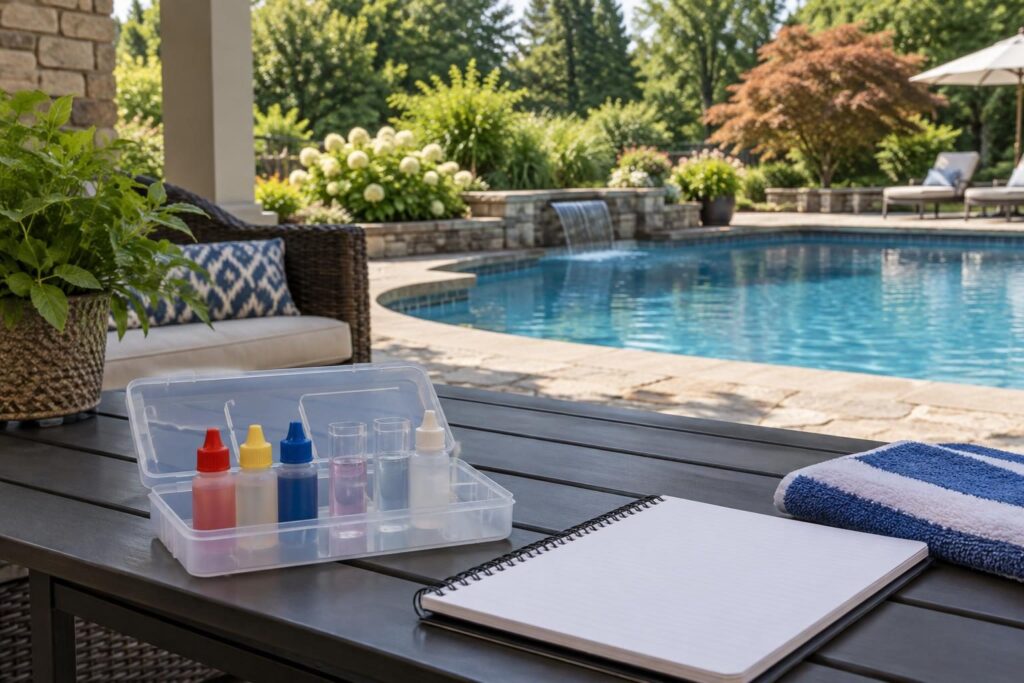
Persistent pool chlorine odor deserves testing, not a chemical guess. Smell alone cannot show whether your water has too much or too little effective sanitizer. Chlorine reaction products, recent swimming, and surrounding air conditions can all affect what you notice. Start by checking whether anyone has symptoms, then measure free chlorine, total chlorine, and pH before choosing a response.
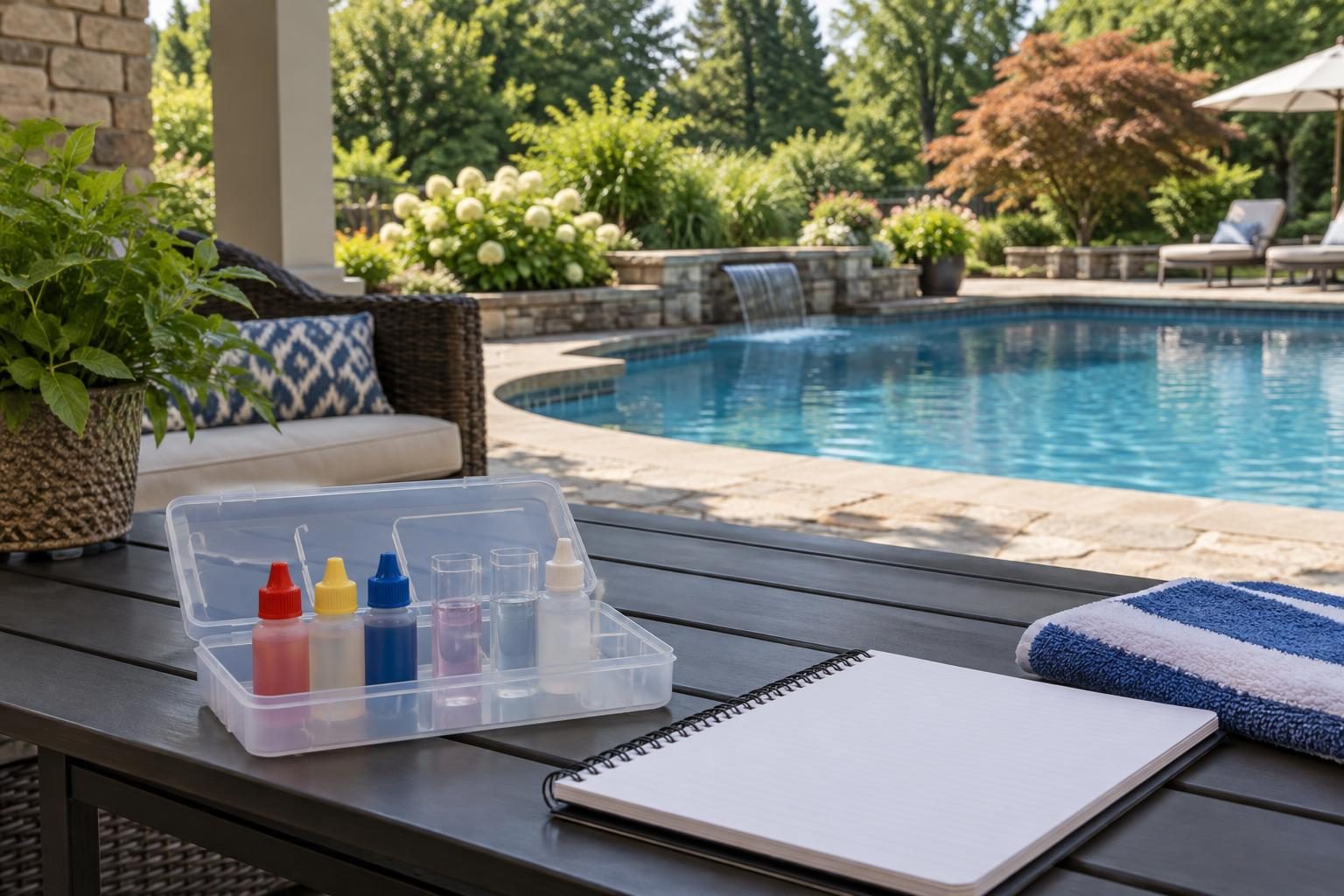
This guide focuses on investigating an odor complaint at a North Carolina home pool. It does not provide a treatment dose or certify water as safe for swimming.
Why pool chlorine odor is not a sanitizer reading
Chlorine reacts with material introduced by swimmers and the environment. Some reactions produce chloramines, compounds that can contribute to a familiar sharp pool smell. Sweat and urine introduce nitrogen-containing material involved in chloramine formation.
A strong smell does not reliably mean the pool contains excessive free chlorine. Likewise, little or no odor does not prove adequate disinfection. Your nose cannot measure sanitizer concentration, pH, or how quickly chlorine can work.
Wind, enclosures, covers, and water movement can change where an odor becomes noticeable. A smell near chemical storage may also have a different source than one across the swimming area.
Record where you noticed the odor without approaching a suspected leak or opening chemical containers. Never deliberately sniff water samples, feeders, or stored products to identify a problem.
Decide whether swimming and testing can wait
Pause swimming while you investigate persistent odor, especially when readings are unknown or someone reports irritation. Keep children and pets away from the water and any suspected chemical source.
- Leave the area immediately if a sudden strong odor suggests a spill, mixing incident, or equipment leak.
- Seek emergency help for breathing difficulty, severe symptoms, or a suspected dangerous chemical release. Call 911 when appropriate.
- Keep swimmers out if cloudiness prevents a clear view of the bottom or submerged swimmers.
- Get professional guidance when sanitizer or pH results fall outside applicable guidance, labels, or equipment instructions.
Do not stay near irritating fumes to collect a sample or photograph equipment. Eye irritation and coughing do not identify the chemical involved. They are reasons to leave the exposure and obtain medical guidance as needed.
A fecal or vomit incident requires a separate contamination response. Routine odor testing cannot establish that the water is ready for swimming afterward.
Test free chlorine, total chlorine, and pH first
For pool chlorine odor, request actual results rather than a general statement that the water is balanced. These measurements answer different questions:
- Free chlorine: chlorine available for disinfection and oxidation, meaning reactions that break down contaminants.
- Total chlorine: the combined amount of free chlorine and combined chlorine measured by the test.
- Combined chlorine: chlorine that has reacted with nitrogen-containing contaminants, including chloramines.
- pH: a measure of how acidic or basic the water is. It affects chlorine performance and swimmer comfort.
Many testing methods determine combined chlorine by subtracting free chlorine from total chlorine. Some kits measure it through a separate test sequence. Follow your kit’s instructions rather than adapting another product’s method.
Combined chlorine is a water measurement, not a direct measurement of airborne chloramines. It cannot identify every source of odor or irritation.
Review the CDC’s home pool treatment and testing guidance alongside product labels. Also record cyanuric acid, often called stabilizer, when relevant. It protects chlorine from sunlight but also affects disinfection performance.
Check whether the results are usable
Choose a test method that distinguishes free and combined chlorine at useful resolution. A total-chlorine-only result cannot establish how much free chlorine remains. Ask a qualified pool service professional which method suits your sanitizer system.
Follow the manufacturer’s sampling location, timing, and reading instructions. Collect the sample only when conditions are safe. Test promptly, using clean testing equipment and correctly stored, unexpired reagents—the chemicals used to produce a test result.
- Record units, usually parts per million, written as ppm.
- Check the test’s measurement range and smallest readable increment.
- List recent chemical additions, including non-chlorine shock products.
- Repeat unexpected results before making a dosing decision.
Some oxidizers can interfere with combined-chlorine testing. Very high chlorine can also disrupt certain tests. Follow the kit’s interference instructions or request independent confirmation.
If total chlorine reads below free chlorine, investigate the testing discrepancy. Do not treat the subtraction as a meaningful negative concentration. Our test kit accuracy checklist explains additional verification steps.
Connect combined chlorine results with recent pool use
Recent activity helps explain a result, but it does not replace testing. A busy swimming afternoon can introduce sweat, personal-care products, and other contaminants. Leaves, pollen, insects, and yard runoff add different material that can increase chlorine demand.
Chlorine demand means the amount consumed through reactions in the water. Not every contaminant produces the same reaction products or odor.
Write down the following before calling for service:
- When the smell began and whether it changes with swimming activity.
- Recent rain, visible runoff, leaf accumulation, or unusual debris.
- Whether the pool was covered or enclosed before the odor appeared.
- Chemical products added, amounts, times, and who added them.
- Pump schedules, displayed warnings, and any recent service changes.
- Current and previous free chlorine, total chlorine, combined chlorine, and pH results.
For recurring problems, use a chlorine demand tracking log. Comparable readings can help distinguish an isolated event from an ongoing treatment or equipment issue.
Choose the next step from evidence, not smell
A pool chlorine odor investigation should produce a decision supported by readings and observations. Avoid treating any single result as a complete diagnosis.
If free chlorine is low or uncertain
Keep swimming paused until reliable testing and appropriate guidance establish suitable conditions. Review recent use, debris, dosing records, and equipment warnings. A saltwater pool still relies on chlorine; its generator display does not replace a water test.
If combined chlorine remains elevated
Confirm the result and ask a qualified professional to interpret it with pH, stabilizer, and recent chemical additions. Request a treatment plan tied to the measured condition and product label. Do not calculate a large treatment dose from odor or an unexplained multiplier.
If readings look acceptable but odor persists
Investigate the odor location, test limitations, nearby chemical storage, and air movement around enclosed areas. Continued irritation warrants continued caution. Water readings alone cannot assess an airborne exposure or establish that equipment is functioning correctly.
Avoid chemical additions that obscure the cause
Adding several products before testing can create new risks and make the original problem harder to trace. The term “shock” describes a treatment approach, not one universally interchangeable product.
Never mix pool chemicals together. Follow each label for handling, application, circulation, and reentry. Do not improvise application points or open a chemical feeder to investigate a smell.
Normal debris removal may help address contamination, but only proceed when the area is safe. Follow equipment instructions before servicing baskets or filters. Leave chemical-feed, electrical, and pressurized-equipment repairs to qualified professionals.
If someone recommends draining water or backwashing, first verify where that water may go. North Carolina requirements can vary by jurisdiction, property conditions, utilities, septic systems, flood zones, and project scope. Confirm discharge plans with the appropriate local authority or qualified specialist.
Require a documented treatment and follow-up plan
When hiring help for pool chlorine odor, ask for a written scope covering testing, treatment, equipment evaluation, and follow-up. Clarify charges and approval requirements before authorizing additional work.
- What were the before-treatment readings, units, and test method?
- What evidence supports the proposed cause and treatment?
- Which products and quantities will be used?
- Who will retest, and what conditions must be met before swimming?
- Will equipment changes require separate written authorization?
Repeated chemical additions without recorded results are a reason to ask questions, not proof of wrongdoing. Independently confirm unexplained readings rather than relying only on verbal reassurance.
Keep reports, invoices, messages, label photographs, and before-and-after readings. Document corrections and unresolved follow-up items before accepting the service as complete.
Consult a qualified pool service professional when odor persists, results conflict, or symptoms occur. Use a licensed electrician for electrical concerns. Contact local inspections or environmental-health staff when proposed equipment or discharge changes raise jurisdiction-specific questions.