
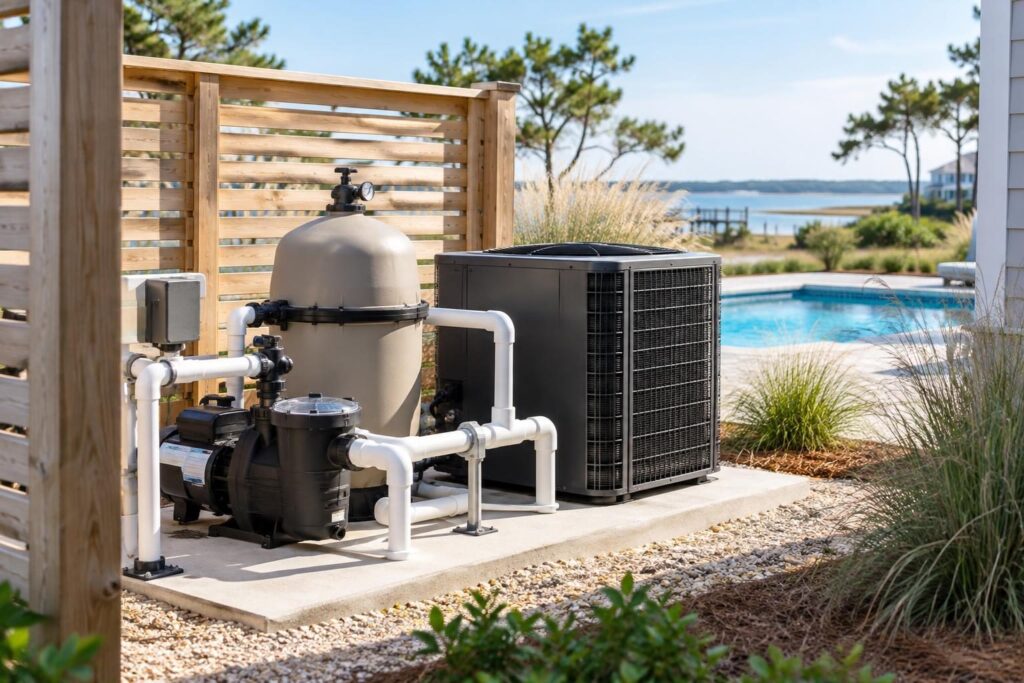
Good coastal North Carolina pool equipment corrosion prevention starts before you choose a pump, heater, or equipment screen. Airborne salt can reach exterior surfaces even when a pool has no saltwater chlorination system. Meanwhile, equipment that tolerates salty pool water may need separate protection from coastal air. Homeowners should review both exposures rather than accept one broad claim that equipment is suitable for the coast.
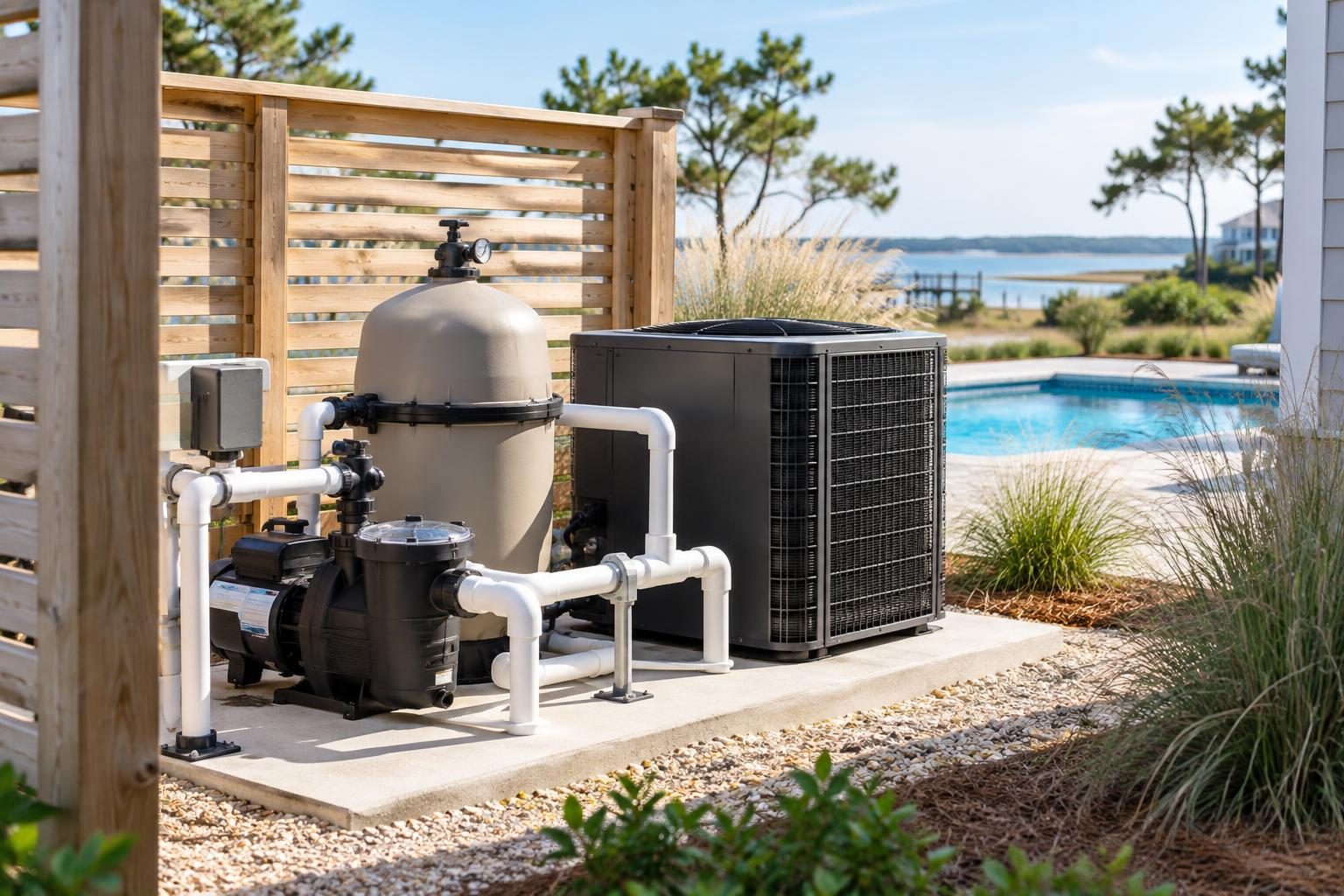
The practical goal is not a promise of corrosion-free ownership. It is a documented plan for suitable materials, workable placement, approved care, and prompt professional evaluation. That plan should identify who verifies each choice and which records you receive at handover.
Separate salt-air exposure from saltwater chlorination
Coastal air can carry tiny salt-containing droplets that leave deposits on exposed surfaces. Combined with moisture, those deposits can contribute to metal deterioration. Cabinets, fasteners, supports, and exposed equipment components deserve attention—not just parts touching pool water.
A saltwater chlorination system uses dissolved salt to generate chlorine for pool sanitation. Its salt travels through the circulation system with the pool water. Water chemistry, leaks, and splash can therefore create a different exposure pathway from airborne coastal salt.
These issues can overlap, but they are not interchangeable. A heater’s internal water-contact components might suit a saltwater pool without every exterior part having equal coastal resistance. Conversely, a pool using another chlorination method still faces salt-air exposure near the coast.
Ask the supplier to address two questions separately: Is this model compatible with the planned pool water? What documentation supports its suitability for the proposed coastal location?
Map coastal exposure before choosing the equipment location
Do not rely on distance from the ocean alone. Review exposure to wind-driven spray, nearby splash, roof runoff, irrigation, and water collecting around the equipment. Photograph the proposed location from several directions before construction.
Record nearby walls, fences, vegetation, and roof edges on the site drawing. Ask the designer which features provide useful shelter and which could trap moisture or obstruct service. Discuss how future landscaping could change those conditions.
- Where might salt deposits and debris collect?
- Will irrigation repeatedly wet cabinets, supports, or controls?
- Can technicians reach and replace equipment without removing permanent structures?
- Could stormwater or flooding reach the proposed equipment location?
Check the FEMA Flood Map Service Center for flood-hazard information. Then confirm property-specific requirements with the local floodplain administrator and inspections department. Salt-air protection does not replace flood planning, drainage review, or appropriate equipment elevation.
Ask specific corrosion-resistant material questions
Terms such as coastal-ready and corrosion-resistant need supporting details. No single label explains the materials, coatings, installation limits, or maintenance obligations of an entire equipment package.
For coastal North Carolina pool equipment corrosion prevention, compare exact models and exposed components rather than broad product categories. Request written answers from the supplier, supported by manufacturer literature.
- Which cabinet panels, fasteners, brackets, and supports are metal?
- What material grades or factory coatings protect those parts?
- Does the manufacturer identify coastal exposure limitations?
- Are specified mounting parts suitable for this equipment and environment?
- Which parts require periodic professional evaluation or replacement?
- Does saltwater compatibility cover only water-contact components?
Stainless steel is not a universal guarantee against corrosion. Different metals touching each other in wet, salty conditions can also create compatibility concerns. Have the installer or manufacturer resolve those details; homeowners should not select substitute fasteners by appearance.
Retain product sheets with the proposal. A verbal assurance is difficult to compare against the model ultimately delivered.
Provide shelter without blocking ventilation or service
A screen or shelter may reduce direct exposure, but a tight enclosure can create other problems. Pumps need cooling, heat pumps need airflow, and fuel-fired heaters have combustion-air and exhaust requirements. Those needs differ by model.
Ask the installer to mark manufacturer-required clearances on the equipment drawing. Clearances are the open spaces needed around equipment for operation, safety, and servicing. Include nearby walls, overhead structures, screen panels, and anticipated plant growth.
Do not improvise a cover for operating equipment. Any shelter should preserve required airflow, drainage, electrical working space, and access. Have qualified professionals review the complete arrangement before approving it.
Use these filter access planning questions to check maintenance and removal space. Also review irrigation overspray around pool equipment before landscaping is finalized.
North Carolina requirements vary by jurisdiction, adopted code, utilities, flood zones, septic systems, property conditions, and project scope. Verify location and shelter requirements locally rather than copying another property’s installation.
Put coastal equipment commitments in the written scope
Equipment suitability belongs in the contract documents, not only in sales discussions. Identify model numbers, factory options, mounting materials, shelter work, drainage responsibilities, and commissioning tasks. Commissioning means checking that installed equipment operates as intended.
If a contractor proposes a substitution, request the revised specifications before approval. Compare coastal-use guidance, water compatibility, care instructions, and warranty terms. Record any price or scope change through a written change order.
- Who obtains manufacturer clarification about coastal exposure?
- Who approves the equipment layout and shelter details?
- Which documents establish completion of each payment milestone?
- Who corrects damaged factory finishes found during installation?
- What training and records are included at handover?
Photograph equipment labels, mounting details, and accessible work before concealment. Never enter unsafe work areas or open electrical equipment for photographs.
Vague specifications or reluctance to document commitments warrant clarification, not an automatic accusation. Pause the affected selection or approval while you independently verify important claims with the manufacturer.
Build a manufacturer-approved coastal care routine
Effective coastal North Carolina pool equipment corrosion prevention depends on care that matches each product. Ask for the exact maintenance instructions for every installed model. One cleaning method may not suit the entire equipment pad.
Do not assume every component can be hosed down. Water entering electrical equipment can create serious hazards. If the manufacturer permits exterior rinsing, follow its shutdown, water-pressure, cleaning-agent, and drying instructions. Obtain professional guidance when those directions are unclear.
- Avoid pressure washing equipment unless its manufacturer expressly permits it.
- Do not spray cleaners or protective products into vents or electrical openings.
- Use coatings, lubricants, and touch-up products only where specifically approved.
- Never coat or alter electrical bonding connections yourself.
- Keep pool chemicals in appropriate storage, separate from equipment service space.
Bonding connects specified metal components to reduce electrical voltage differences; a licensed electrician should assess it. Ask your service provider for an exposure-based inspection schedule rather than adopting a generic interval.
Record approved cleaning methods and completed service. Add those notes to your seasonal pool handover file.
Recognize changes that warrant professional evaluation
Observe equipment from a safe, accessible position. Compare current conditions with installation photographs rather than relying on memory. A deposit, stain, or damaged finish does not establish the cause or severity of a problem.
Request professional evaluation for changes such as:
- Spreading rust, flaking coatings, pitting, or deteriorating supports.
- Unusual deposits around connections or evidence of water entering a cabinet.
- Loose hardware, damaged covers, or exposed wiring.
- Recurring shutdowns, unusual noise, leaks, or reduced heating performance.
- Visible damage around bonding connections or electrical enclosures.
Do not open panels, scrape electrical connections, reset repeatedly tripping protective devices, or apply a coating to hide deterioration. Arrange qualified assessment before further use when electrical damage or unsafe operation is suspected.
If anyone feels tingling or shock in or near the water, keep everyone out and seek urgent professional assistance. Do not touch suspect equipment. Smoke, fire, or an immediate electrical emergency requires emergency services.
Keep warranty and correction records through closeout
Read the actual warranty before purchasing. Ask whether coastal exposure, corrosion, chemical conditions, installation methods, or maintenance affect coverage. Do not assume a manufacturer’s warranty and an installer’s workmanship warranty cover the same issues.
At closeout, collect model and serial numbers, manuals, warranty documents, startup records, and required registration confirmations. Retain applicable inspection and correction records. Track unresolved items on a punch list—a written list of work still needing attention.
For a service concern, record the date, symptoms, photographs, water-test results when relevant, and written communications. Ask the technician to distinguish observed damage from a suspected cause. Request the repair description, replacement-part details, and follow-up recommendations before marking the issue resolved.
Keep coastal North Carolina pool equipment corrosion prevention practical: verify product claims, preserve access, follow approved care, and document changes. Consult local inspections staff about requirements, a qualified pool contractor about equipment, and a licensed electrician about electrical concerns. Drainage, flood elevation, structural shelter, or boundary questions may also need an engineer or surveyor.