
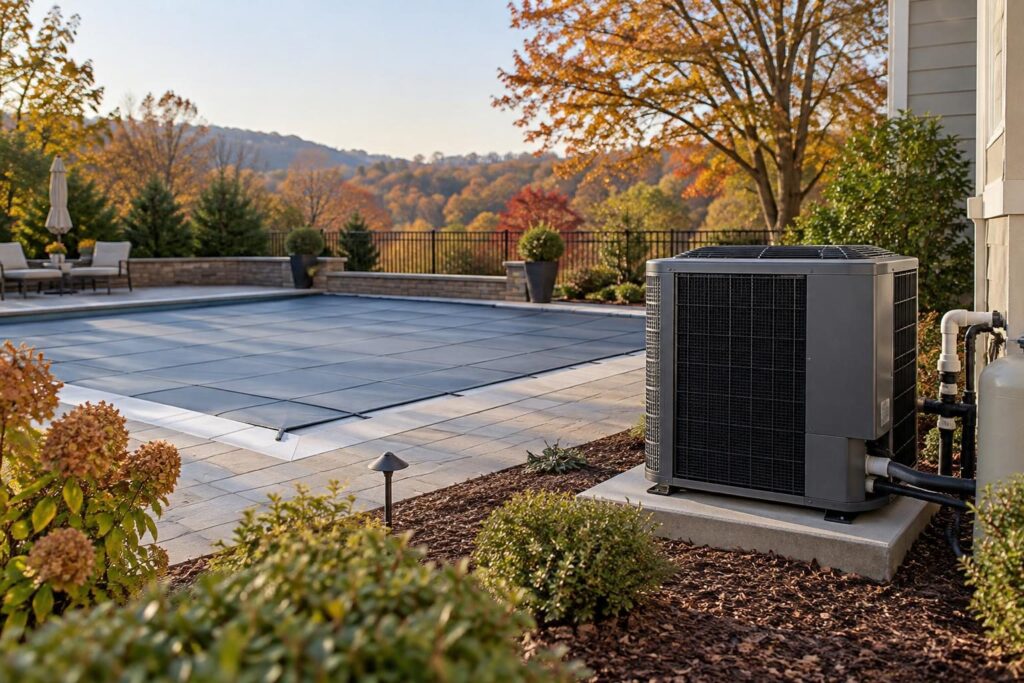
Comparing pool heat pump performance means looking beyond the largest heating number or highest efficiency claim. North Carolina homeowners need to know how equipment performs during the weather when they actually want to swim. A warm-day rating may say little about a chilly spring morning or an exposed pool in October.
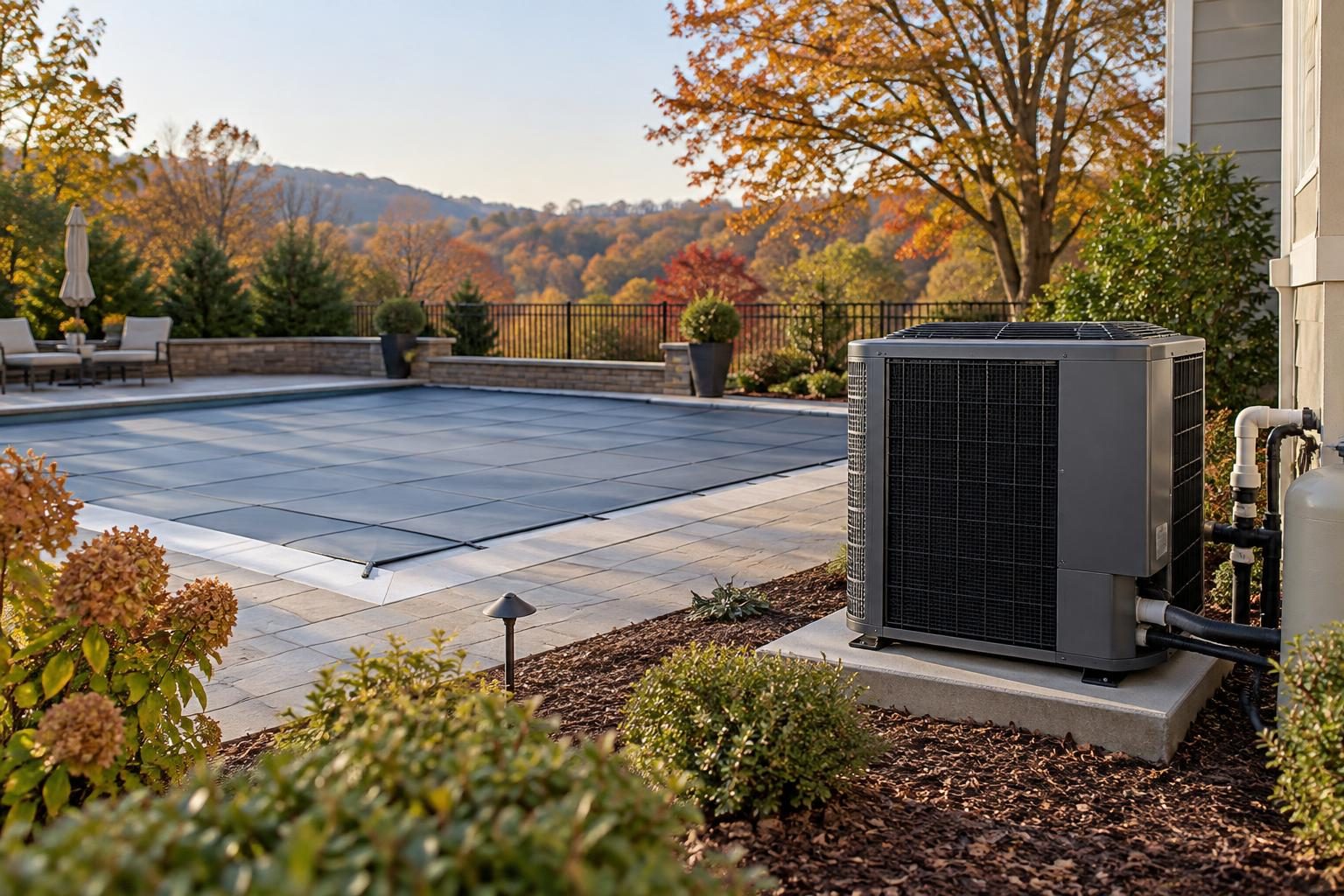
A useful proposal connects published equipment data with your swimming schedule, water temperature, and yard conditions. Ask for the assumptions in writing before choosing a model. That makes competing proposals easier to compare and gives you a clear record if expectations later differ.
Set your cool-weather pool heat pump goals
Shoulder season means the spring and fall periods outside the main summer swimming season. Conditions during those months differ across North Carolina. Coastal exposure, Piedmont weather, and mountain temperatures should not be treated as interchangeable.
Describe the result you want before discussing equipment:
- Which months would you like to swim?
- What water temperature do you want to maintain?
- Will you swim daily, occasionally, or only on weekends?
- Will you consistently cover the pool between uses?
- Can you accept missed swimming days during cold spells?
Maintaining warm water differs from reheating a pool that has cooled for several days. Ask the contractor to evaluate both situations if both matter. A system suitable for steady temperature maintenance may not provide the rapid recovery you expect.
For a must-have swimming schedule, request a written explanation of when the proposed system may fall short. Discuss alternative heating approaches if the available data cannot support your goal.
Read heat pump output and efficiency separately
A pool heat pump uses electricity to move heat from outdoor air into pool water. Its available heating output and efficiency change with operating conditions.
Heating output describes how quickly the unit supplies heat. Manufacturers commonly express it in British thermal units per hour, or Btu/h. More output does not automatically mean lower operating costs.
Coefficient of performance, or COP, compares delivered heat with electrical energy consumed on the same energy basis. A higher COP indicates greater efficiency at the stated test conditions. It does not show whether the equipment supplies enough heat for your pool.
For pool heat pump performance, compare output and COP together at matching conditions. A model can show an attractive efficiency figure while delivering insufficient heat during cooler weather.
Also check whether both figures describe the same operating mode. Variable-output equipment can change compressor speed, which affects output and efficiency. A maximum-output claim and a low-speed efficiency claim may describe different operating points.
Request a temperature-specific comparison sheet
Ask each bidder for current manufacturer data covering the exact proposed model. A product-family brochure is not enough when models have different capabilities.
Use these fields for a side-by-side comparison of pool heat pump performance:
- Exact model number and published document revision.
- Outdoor air temperature at each rating point.
- Entering pool-water temperature at that point.
- Relative humidity or other stated air-moisture condition.
- Heating output, COP, and electrical input.
- Compressor speed or operating mode.
- Water-flow conditions and referenced test method.
- Whether reported results account for defrost operation.
Relative humidity describes how much moisture air holds compared with its capacity at that temperature. If the sheet lists wet-bulb temperature instead, ask the supplier to explain that air-moisture test condition.
Compare matching rating points, not one brand’s warm-air result against another brand’s cooler-air result. If comparable data are unavailable, label that gap clearly. Ask the manufacturer for supporting information rather than accepting an unsupported estimate.
Do not extend a warm-weather rating into colder conditions yourself. Published performance curves or a documented manufacturer selection are better evidence.
Understand humidity and defrost behavior
Humidity affects how much heat the equipment can collect from the air. Under otherwise comparable conditions, moisture can improve heat transfer. However, cool, moist air can also contribute to frost on a sufficiently cold outdoor coil.
The coil is the heat-transfer surface through which outdoor air passes. Frost can restrict airflow and heat transfer. Equipment may pause heating or use a defrost process to clear it, depending on the design.
Defrost time can reduce the heat delivered over an operating period. That is why a single favorable rating cannot establish pool heat pump performance across an entire cool day.
Ask the supplier:
- How does this model detect and clear frost?
- Does it pause pool heating during defrost?
- What should the owner expect to see on the controls?
- Which frost patterns or repeated alerts require service?
- How should defrost water drain away from the equipment?
Retain the written answers with the operating manual. Never chip ice from the coil or bypass a protective control. Have a qualified technician evaluate persistent icing or unfamiliar fault messages.
Separate operating limits from useful heating
A minimum operating temperature describes an equipment limit. It does not promise enough output to maintain your preferred water temperature.
A heat pump may still operate while the pool loses heat faster than the unit replaces it. Conversely, the controls may stop heating below a model-specific threshold. Ask about both operating limits and expected heating capacity near those limits.
Have the contractor explain three different questions:
- Can the unit operate under the stated conditions?
- Will it maintain the desired pool temperature under those conditions?
- Can it raise the temperature within your desired swimming window?
Request model-specific shutdown and restart information. Do not confuse heating capability with freeze protection for the pool plumbing. Equipment and exposed pipes still need a separate winter-protection plan.
Keep that plan with your seasonal opening and closing records. Confirm who handles seasonal service and what happens if power fails during freezing weather.
Include wind exposure and cover habits
Equipment ratings describe the heater, not the pool’s total heat loss. Wind across exposed water can increase evaporation and heat loss. Cool nights, water temperature, and water features also affect the heating demand.
Ask for a site-specific estimate that identifies pool surface area, exposure, target temperature, and expected cover use. Pool volume matters for warm-up calculations, but volume alone does not describe ongoing heat loss.
A suitable cover can reduce evaporation and heating demand when used consistently. Request separate expectations for covered and uncovered operation if your habits may vary.
Cover practicality matters as much as the assumption on paper. Consider handling effort, storage, weather exposure, and automatic cover drainage planning where relevant.
A thermal cover is not automatically a safety cover. Follow product instructions and maintain appropriate supervision and barriers. The federal Pool Safely guidance explains important layers of protection.
Do not surround the heat pump with a windbreak that blocks airflow or service access. Have the installer check proposed fencing and landscaping against manufacturer clearances.
Turn the comparison into a written purchase scope
Once pool heat pump performance looks suitable, document exactly what the price includes. Identify the model, controls, plumbing changes, electrical work, drainage arrangements, startup, and owner instruction.
Ask for operating-cost estimates to disclose electricity rates, weather assumptions, cover use, and circulation-pump energy. A COP figure alone is not a seasonal utility-bill forecast.
Protect the purchase with clear records:
- Attach the selected model’s performance data to the proposal.
- Identify permit and inspection responsibilities.
- Require written approval before equipment substitutions.
- Connect payment milestones to documented deliverables.
- Separate manufacturer warranty coverage from installation coverage.
- List exclusions, unresolved items, and service responsibilities.
Independently verify licensing representations through the appropriate licensing board. The North Carolina general-contractor consumer overview provides a starting point for contractor due diligence.
A vague claim or missing chart does not establish wrongdoing. Ask for clarification and supporting records. Pause approval if important heating expectations remain undocumented or explanations conflict.
Document startup and know when to seek help
At handover, retain model and serial-number photos, settings, manuals, inspection records, and the installer’s startup readings. Photograph accessible work before it is covered. Have the contractor document corrections and close remaining punch-list items.
Keep a simple heating log showing outdoor conditions, starting water temperature, cover use, operating hours, and ending temperature. Note defrost events and alerts without opening equipment panels. These observations help a technician investigate concerns; they do not independently prove rated efficiency or a defect.
If installation occurs in warm weather, ask how cooler-weather concerns will be evaluated later. Document that process rather than treating a warm-day startup as proof of shoulder-season capacity.
North Carolina requirements vary with jurisdiction, adopted code, property conditions, utilities, septic systems, flood zones, and project scope. Consult local inspections staff about permits and inspections. Use a qualified, appropriately licensed contractor for selection and installation, and a licensed electrician for electrical work. Seek engineering or drainage advice when site conditions warrant it.