
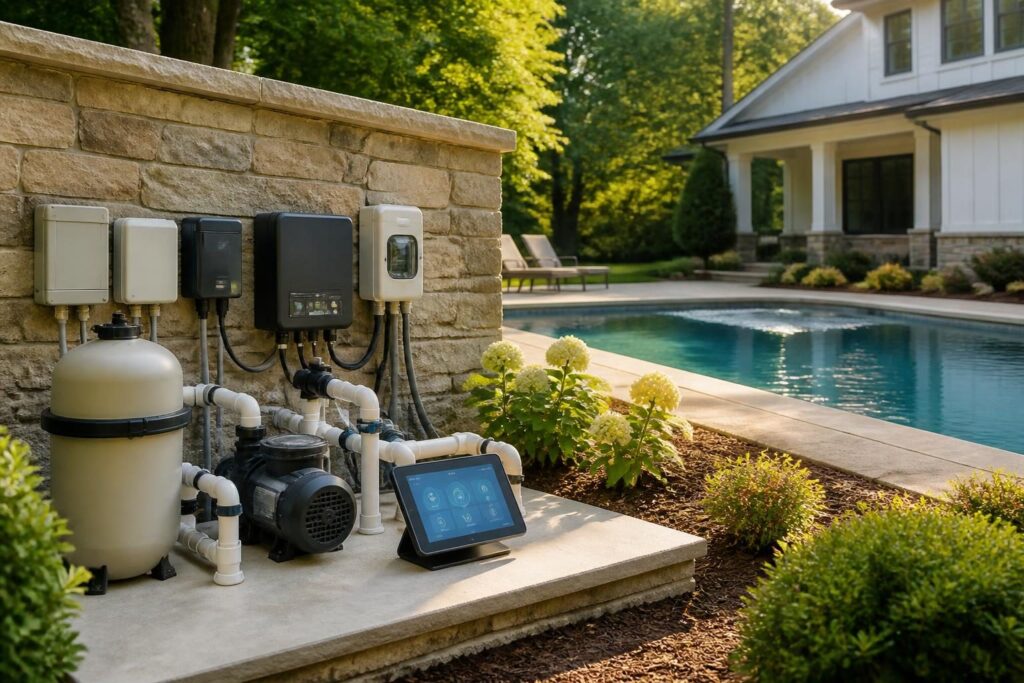
When you compare automated pool systems, pool automation sensor calibration questions deserve the same attention as pump schedules and app features. Sensors influence what the controller displays, when equipment runs, and which alerts reach your phone.

A sensor does not replace safe observation, water testing, or professional service. It measures a condition and sends information to a control system. If the sensor has poor placement, loses connection, becomes dirty, or drifts from its reference, the displayed result may not match the pool.
North Carolina conditions can add practical concerns. Heat, pollen, storms, mineral content, winter temperature changes, and outdoor equipment exposure may affect maintenance needs. Ask the pool contractor to explain the proposed sensors, their limits, and the records you will receive at handover. These pool automation sensor calibration questions can also help you compare service plans before choosing equipment.
Start with the sensor list and its job
Automation packages vary. Some use basic temperature and flow detection. Others add chemical monitoring, water-level control, leak-related observations, or remote notifications. Begin with a written list rather than assuming every system includes the same functions.
Temperature sensors
A temperature sensor may monitor pool water, return water, outdoor air, or equipment conditions. The controller may use those readings for heater operation, freeze protection, schedules, or alerts.
Ask where each sensor will sit and whether it measures the condition you care about. A water sensor near a warm equipment area may not represent the pool evenly. Outdoor air readings can also differ from a shaded or sunny location.
- Which temperatures can the system display?
- Which reading controls the heater or other equipment?
- What comparison method does the installer use during commissioning?
- Can the homeowner see the sensor status in the app or at the controller?
- What happens if the reading becomes unavailable?
Flow and pressure-related sensors
A flow sensor detects movement through a pipe or equipment circuit. It may help prevent a heater or chemical device from operating without adequate circulation. Some systems use related pressure or switch signals instead.
Flow readings can change when a filter needs attention, a valve moves, an air pocket forms, or a pump speed changes. The sensor itself may not identify the cause. For background, see this guide to safe pool filter pressure gauge observations.
Do not bypass a flow safety device because an alert is inconvenient. Ask a qualified pool professional to diagnose the equipment and confirm safe operation.
Ask precise pool automation sensor calibration questions
“Did you calibrate it?” is not enough. Calibration means comparing a sensor with a known reference and adjusting or confirming the reading according to the manufacturer’s process. The correct process depends on the sensor and control platform.
During a proposal review or startup visit, ask:
- What reference does the installer use for each sensor?
- Who performs the initial calibration or verification?
- Will you receive a record showing the date, sensor location, and result?
- Does the manufacturer require a warm-up, stabilization, or cleaning step?
- How often should the sensor be checked?
- What conditions require replacement instead of adjustment?
- Can a homeowner view calibration status without changing settings?
- Which readings are estimates, and which control equipment?
Request the manufacturer’s instructions for cleaning, storage, replacement, and testing. Keep them with the system manual. Avoid relying on a generic online procedure for a sensor that controls heating, chemical dosing, or other equipment. Include these pool automation sensor calibration questions in the written startup record.
Understand chemical sensors before choosing automation
Chemical sensors may estimate or measure conditions such as pH or sanitizer-related values. They can help an automation system adjust treatment, but they do not make water care automatic in every situation.
Sensor readings can differ from a properly collected manual sample. Poor circulation, contamination, depleted probes, air exposure, incorrect storage, or expired calibration solutions may affect results. The controller may also need a stable operating condition before it makes an adjustment.
The CDC provides general information about home pool water treatment and testing. Use that information as general education, then follow the equipment manufacturer’s instructions and seek qualified advice for your specific system.
Questions about chemical control
- Which chemical readings does the system monitor?
- Does the system dose chemicals, recommend an action, or only display a reading?
- What manual tests should still be performed?
- How does the controller respond to a missing or implausible reading?
- What prevents dosing when circulation or chemical supply is unsuitable?
- How do you record calibration fluids, probe replacements, and service visits?
- Can the system show when a probe was cleaned or recalibrated?
A chemical automation system also needs safe storage and service access. Arrange chemical containers, probes, tubing, and electrical controls as the installer specifies. Do not open equipment or handle chemicals beyond your training.
Review water-level sensors and refill controls
Water-level sensors can detect a low or high condition. A connected autofill may add water when the level drops. A drain, overflow, pump-down function, or alert may address excess water, depending on the design.
Water-level control deserves careful review in a rainy North Carolina yard. Heavy weather, splash-out, evaporation, backwashing, cover use, and drainage conditions can all change water levels. A sensor cannot determine whether a drop comes from normal use or a possible leak.
For useful observations before requesting professional testing, review pool water evaporation versus possible leakage.
- Where is the level sensor installed?
- What water level activates the refill?
- Is there a shutoff or maximum-fill safeguard?
- What happens during a power, communication, or supply interruption?
- Can the controller alert you before the refill operates?
- How should the sensor be cleaned and checked?
- Which device stops or limits unwanted continuous filling?
Ask whether the refill line and its controls require local review. Requirements can vary with the property, plumbing arrangement, jurisdiction, and project scope. Add water-level details to your pool automation sensor calibration questions list before approving the installation.
Plan alerts that help instead of creating noise
Automation alerts are useful only when homeowners understand them and can respond safely. A message such as “low flow” may indicate a filter, valve, pump, sensor, or communication issue. It is not a complete diagnosis.
Ask the installer to demonstrate each alert. Have them show the trigger, the message, the recommended first observation, and the safe reset process. Request written information for alerts that affect heating, chemical dosing, autofill, circulation, or freeze protection.
Build an alert review list:
- What condition triggered the alert?
- Does equipment stop, continue, or enter a protective mode?
- Will the alert repeat until resolved?
- Does the system record the time and duration?
- Can more than one household member receive notifications?
- What happens if internet service or the app is unavailable?
- Which alert requires immediate professional attention?
Keep a simple record of unusual messages, weather, recent cleaning, water additions, and equipment changes. A residential pool maintenance log can give a service technician better context.
Protect service access and system records
Sensors are small, but they depend on accessible equipment, clear labels, stable connections, and correct settings. A qualified person should reach probes, wiring, valves, flow paths, and controller displays without unsafe improvisation.
Review the equipment arrangement with the same care given to the control features. This pool equipment pad planning guide covers access, drainage, weather exposure, and future service needs.
At handover, request:
- A sensor inventory with locations and functions
- Manufacturer and model information
- Calibration or verification records
- Cleaning and replacement instructions
- Normal reading ranges supplied by the manufacturer
- Alert definitions and response guidance
- Controller, app, and account access instructions
- Wiring, plumbing, and equipment diagrams when available
- Service contact information and parts information
- A record of unresolved setup questions
Photograph labels and controller screens without exposing passwords or private account details. Save digital records in more than one location. If equipment changes, update the sensor list and diagrams.
Verify installation, electrical, and local considerations
Sensor calibration is only one part of a safe automation installation. Wiring, bonding, grounding, equipment placement, plumbing, chemical storage, barriers, and permits may involve different professionals and authorities.
North Carolina requirements can vary by jurisdiction, adopted code, utilities, septic systems, flood zones, property conditions, and project scope. The North Carolina Office of State Fire Marshal documents can help homeowners locate state code materials and interpretations. Confirm current requirements with the local inspections department and qualified professionals.
For electrical work, use a qualified electrician. For controls tied to chemical dosing or water treatment, ask the pool professional to explain safeguards. Do not change wiring, bypass interlocks, move probes, or alter dosing settings unless the responsible professional or manufacturer’s instructions authorize that work.
A practical review before approving automation
Use these decision points before signing off on the system:
- Define the outcome. Decide whether you want remote status, equipment protection, water-level control, chemical support, or several functions.
- List the sensors. Identify every sensor, its location, its purpose, and the equipment it can control.
- Test the explanation. Ask the installer to demonstrate normal readings and each important alert.
- Confirm records. Require calibration, startup, model, and unresolved-question records in writing.
- Review access. Check whether a qualified service person can reach sensors, controls, and related plumbing.
- Plan manual checks. Keep appropriate observation and water-testing routines even when automation is active.
- Verify locally. Confirm permits, inspections, electrical requirements, and property-specific conditions with the relevant authority.
Good automation should make the pool easier to understand, not harder to question. If a reading conflicts with visible water conditions or a manual test, pause automatic adjustments and request qualified guidance.
Consult the local inspections department about current requirements. Ask a licensed pool contractor about sensor selection and service. Use a qualified electrician, engineer, surveyor, septic professional, or other specialist when the site or system requires that expertise. Build a Pool in North Carolina can help homeowners organize the questions, records, and decisions that support a clearer project handover.