
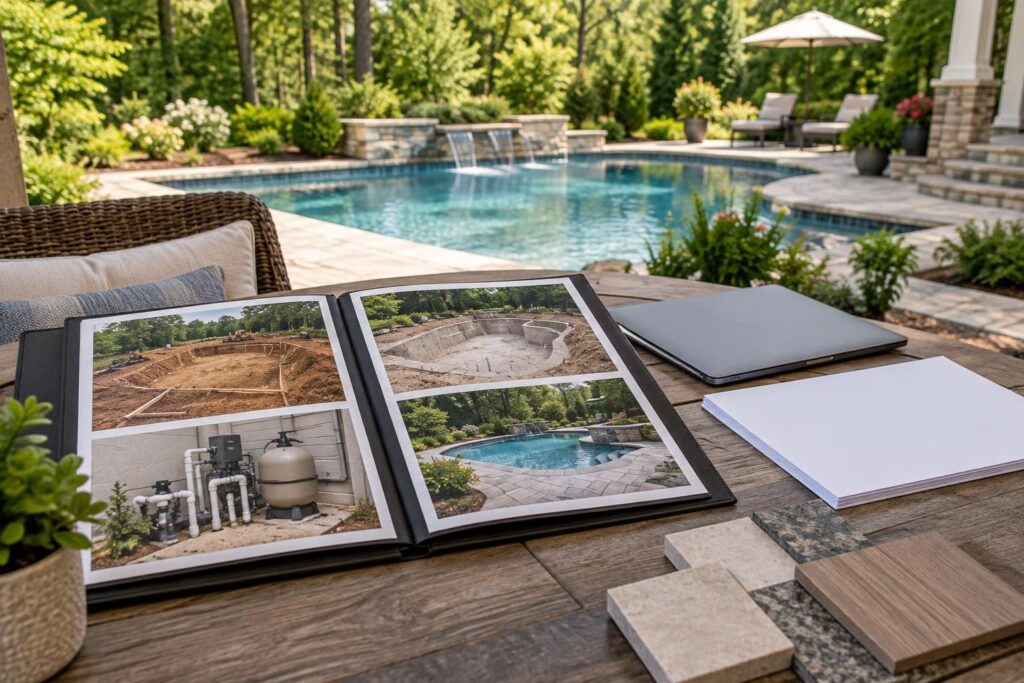
Before choosing a contractor, use pool builder portfolio project verification to connect attractive photographs with the work actually performed. A finished pool might demonstrate company experience, an employee’s earlier work, a subcontractor’s contribution, or design inspiration. Those categories offer different evidence for your hiring decision.
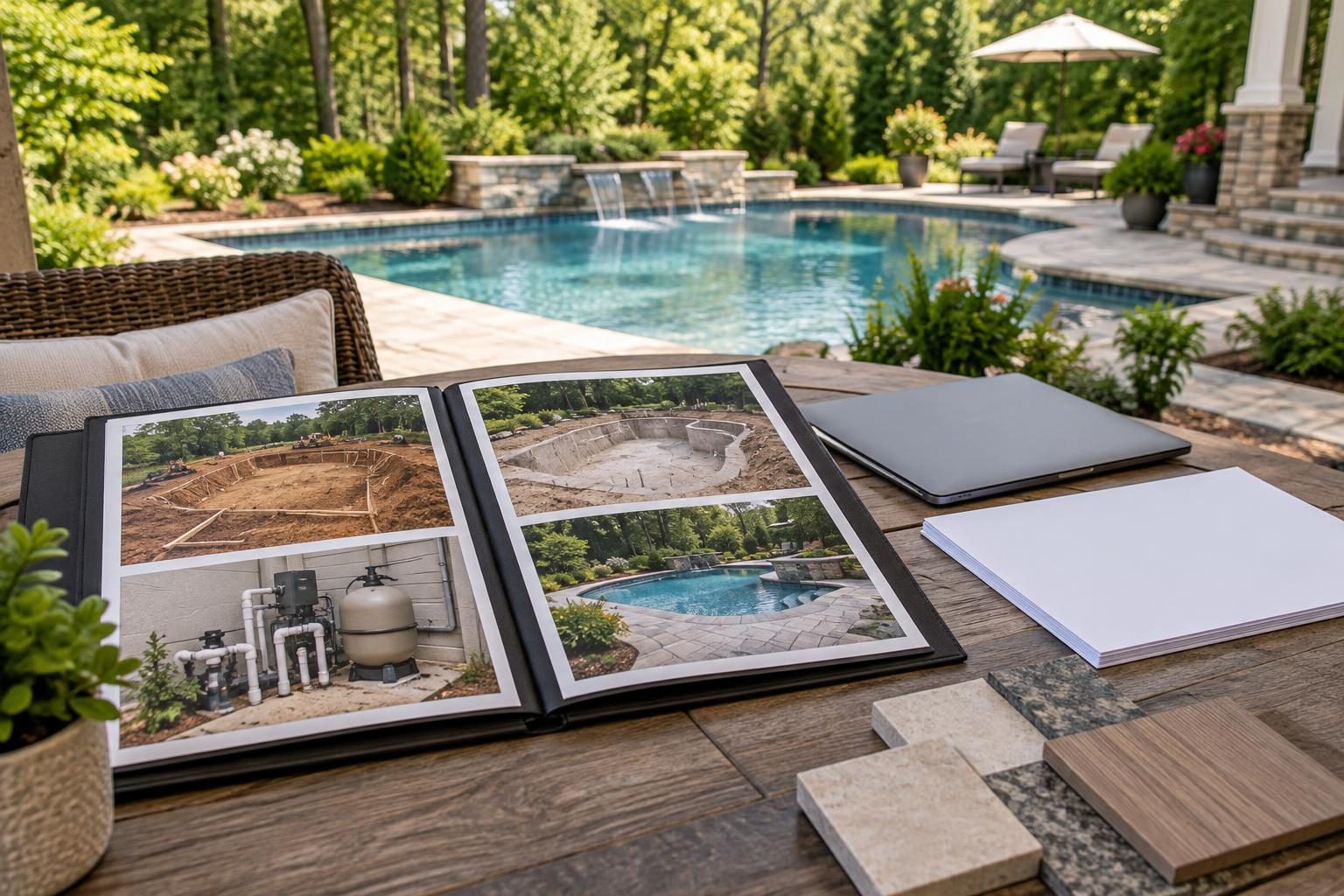
The goal is not to challenge every photograph. It is to understand who handled comparable work and whether those capabilities will support your project. Unclear attribution deserves a specific follow-up question, not an automatic accusation.
Start by identifying what each portfolio project represents
Ask the builder to select a small group of completed projects relevant to your plans. Request a short written description for each. A gallery caption alone may not explain who contracted with the homeowner or managed construction.
- Which business signed the construction contract?
- What work did the business perform or manage?
- Which portions belonged to separate contractors?
- Who supervised the project, and does that person still work with the company?
- Does the image show completed construction, work in progress, or a digital rendering?
A rendering is a computer-generated design image, not evidence of completed construction. Likewise, a photograph showing a pool and outdoor kitchen does not establish that one builder delivered both.
Record the builder’s explanation beside the project image or reference number. If the description changes later, request clarification before drawing conclusions.
Separate company work from an employee’s prior experience
An employee may bring valuable experience from another employer. Ask the builder to describe that experience accurately rather than present it as proof that the current company delivered the project.
Ask what the person actually did. Designing the layout, supervising excavation, installing equipment, and managing the whole contract are different responsibilities. A broad statement such as “our team built this” needs more detail when hiring depends on that claim.
- Was this completed under the current company’s contract?
- If not, which current employee participated, and in what role?
- Will that employee have a defined role on your pool?
- Which current systems support scheduling, supervision, documentation, and warranty service?
A newer company may have experienced staff but limited completed-company history. That is a distinction to evaluate, not proof of poor workmanship. Ask how the company will support the proposed scope if a key employee leaves.
Request comparable pool projects, not just impressive ones
The most useful comparison shares your project’s construction challenges. Similar colors and landscaping matter less than similar pool type, site conditions, and responsibility.
For pool builder portfolio project verification, explain your priorities before requesting examples. Ask the builder to identify both similarities and important differences.
- Construction: The same pool type and comparable steps, ledges, finishes, or custom features.
- Site: Similar slopes, equipment access, groundwater concerns, or nearby structures.
- Coordination: Comparable drainage work, retaining structures, decking, and electrical responsibilities.
- Completion: Examples that reached handover, not only excavation or installation.
- Service: Owners who can discuss operation and follow-up after construction.
A project elsewhere does not establish that your North Carolina property can use the same design. Requirements vary by jurisdiction, property conditions, adopted code, utilities, septic systems, flood zones, and scope. Verify property-specific constraints with the appropriate local authority or qualified professional.
Build a small evidence file for each selected project
Keep the review proportionate. You do not need another homeowner’s complete financial or construction file. Ask for enough information to connect the project, claimed role, and completion status. Keep pool builder portfolio project verification focused on the role you need the builder to perform.
Useful supporting material may include:
- A project summary naming the contracting business and its scope.
- Dated construction photographs showing stages beyond the finished view.
- Redacted records showing the company’s role, with private information removed.
- Owner-authorized reference contact information.
- Available permit or inspection identifiers for independent follow-up.
- A description of handover, outstanding work, and warranty responsibility.
No single item proves everything. A photograph cannot establish hidden workmanship. A permit record may identify a permit holder without explaining every subcontractor’s role. Inspection approval does not establish that every contractual promise was fulfilled.
Save relevant portfolio pages with the date viewed. Preserve emails and distinguish the builder’s statements from your own observations.
Verify important claims through independent channels
Use the North Carolina contractor license search to check relevant business and qualifier records. Confirm licensing questions with the board and local inspections department for your proposed work. A license record does not prove authorship of a particular pool.
The licensing board’s consumer overview provides another starting point for contractor research. Keep licensing review separate from portfolio review: both matter, but they answer different questions.
Where project records are available, ask the issuing inspections department what those records establish. Respect access restrictions and homeowner privacy. Do not assume a missing online entry means work lacked a permit.
If a photo appears elsewhere, ask about its origin and the builder’s contribution. Shared photography, subcontractor participation, or prior employment may explain the overlap. Image matching alone cannot determine who performed the work.
Use references to confirm role and completion
Once an owner agrees to speak, begin with attribution rather than general satisfaction. Confirm which company held the contract and what it delivered.
- Which parts of the pictured project were included in that company’s scope?
- Who supervised construction and communicated decisions?
- Did the pictured features reach completion and operation?
- How were changes, corrections, and unfinished items documented?
- Were manuals, startup instructions, and warranty information provided?
- How did the company respond when follow-up was needed?
A callback or correction does not by itself establish misconduct. Ask how the issue was recorded, addressed, and closed. Our guide to tracking inspection corrections and rechecks explains useful documentation distinctions.
For an authorized site visit, obtain permission and follow the owner’s access rules. Observe visible details without operating equipment, opening electrical enclosures, or entering restricted areas. A visit is not a technical inspection.
Resolve unclear portfolio attribution before committing
Privacy concerns may reasonably limit addresses, contracts, or owner contact details. Ask whether redacted records, an owner-approved call, or a written project summary could answer your question instead.
Other gaps deserve closer attention: inconsistent company names, changing explanations, unclear completion status, or reluctance to describe the claimed role. None automatically establishes misrepresentation.
Use a simple decision process:
- Identify the specific claim you cannot confirm.
- Ask what evidence could clarify it without exposing private information.
- Set a mutually understood follow-up date.
- Record whether the answer resolves the question.
- Decide whether the remaining uncertainty changes your willingness to hire.
Good pool builder portfolio project verification can end with an honest limitation: the company has not completed a closely comparable project. You can then compare other bidders or seek independent technical review.
Carry verified experience into the proposed contract
A strong portfolio is useful only if the proposal clearly describes your work. Confirm the contracting entity, supervision arrangements, detailed specifications, exclusions, and responsibility for specialty work.
Ask how payment milestones will connect to documented progress. Clarify change orders, inspections, correction records, startup, warranties, and final handover. Completed-project photos cannot replace those commitments.
After a sales meeting, send a neutral recap using a written confirmation of verbal decisions. Separate confirmed commitments from options still under discussion.
For your own project, plan to photograph work before crews cover it. Retain approvals, inspection results, correction records, and closeout documents. This creates a clearer record than a finished photograph alone.
Use pool builder portfolio project verification as one part of hiring, not a guarantee of future performance. Consult local inspections staff about requirements and records. Bring technical concerns to a licensed pool contractor, electrician, engineer, surveyor, or septic professional as appropriate.