
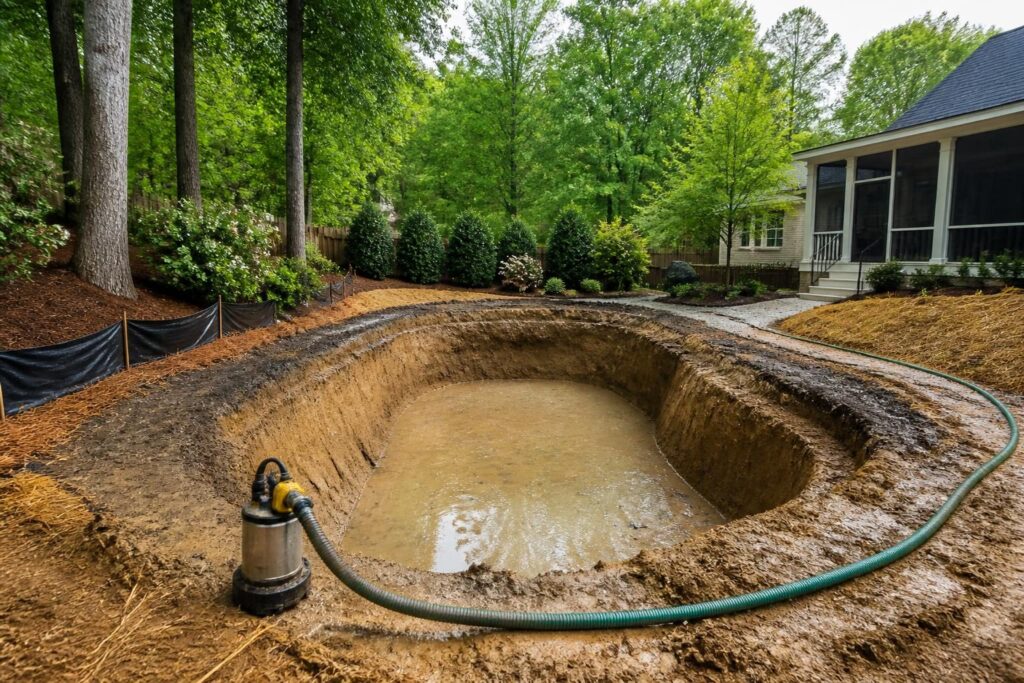
Pool construction groundwater dewatering questions deserve attention before excavation begins. Water can appear because of recent rain, a high seasonal water table, permeable soil, springs, leaking lines, or several conditions together. The visible water may be temporary, or it may continue as work progresses.

Dewatering means temporarily removing or controlling water in an excavation so work can proceed. It does not automatically mean a permanent drainage system is needed. The right response depends on the site, excavation depth, weather, soil, nearby structures, discharge route, and professional evaluation. A North Carolina homeowner’s role is to observe, ask clear questions, and keep decisions in writing.
What signs suggest groundwater during excavation?
Groundwater may be obvious, but it does not always appear as a flowing stream. A contractor may encounter standing water at the bottom, damp soil that quickly refills after pumping, muddy excavation walls, or water entering through seams in soil or rock. A shallow wet area near the proposed pool also deserves attention.
Rainwater behaves differently from groundwater. Rain may collect after a storm and then drain away as the site dries. Groundwater can return after pumping or remain present during periods without rain. These observations help, but they do not identify the source by themselves.
Observable clues to record
- Date and time water first appeared.
- Recent rainfall and general weather conditions.
- Where water appeared: excavation bottom, sidewall, trench, or surface.
- Whether the water level rose after pumping stopped.
- Soil color, mud, seepage, or visible erosion.
- Nearby areas that became saturated or ponded.
- Any unusual flow near a water line, drain, well, or septic area.
Take wide and close photographs from safe locations. Do not enter an open excavation or approach unstable edges for a better image. An open pool excavation creates hazards for people, pets, equipment, and nearby property. Use this open excavation safety checklist while conditions change.
How might temporary pumping work?
Temporary pumping can involve a pump in a low point, a sump arrangement, hoses, collection areas, or other measures selected by the project team. The equipment and setup should match the volume and source of water. A small pump that handles rainwater may not suit continuing seepage. These pool construction groundwater dewatering questions can clarify who selects and monitors that equipment.
Ask who will select the equipment, monitor it, and respond if it stops. Pumping may need attention outside normal work hours, especially after a storm. The project plan should address power, backup arrangements, hose placement, access, noise, and safe operation.
Do not operate construction pumps, temporary wiring, or electrical equipment yourself unless a qualified professional directs and safeguards that work. Water and electricity create serious risks. Keep children, pets, and visitors away from the excavation, hoses, cords, and discharge points.
Questions for the pool contractor
- What source of water appears most likely, based on current observations?
- Is the pumping intended only for excavation, or could it continue during later work?
- What level of dryness or stability does the next construction step require?
- Who checks the pump, and how will the team handle interruptions?
- What happens if pumping reveals soft soil, erosion, or unstable excavation sides?
- Which activities require a revised plan or qualified evaluation?
These are questions, not instructions for diagnosing the site. A pool contractor may need input from an engineer, geotechnical professional, surveyor, drainage specialist, or another qualified person. The appropriate specialist depends on the observed condition.
Where can pumped water go?
Discharge planning is one of the most important pool construction groundwater dewatering questions. Water should not simply flow toward a foundation, crawl space, basement, neighboring property, septic area, public walkway, road, or erosion-prone slope. The route can change as the yard becomes muddy or rain increases the flow.
Ask for a simple discharge plan that identifies the pump outlet, hose route, receiving area, and measures used to limit erosion. Consider the receiving area in relation to soil type, grade, storm drains, streams, wetlands, property boundaries, and existing drainage features. Local requirements may apply to land disturbance, sediment, stormwater, or discharge.
North Carolina requirements vary by jurisdiction, project scope, site conditions, and the amount of land disturbance. Review current information from the NC DEQ Construction Stormwater Program. Then confirm property-specific questions with the local inspections department, local authority, or qualified environmental and drainage professional.
Keep the discharge route away from the pool excavation edge unless a qualified professional planned that arrangement. Concentrated water can wash soil from slopes and undermine surfaces. Sediment controls may also help. The NC DEQ Erosion and Sediment Control Manual provides official guidance for land-disturbing work.
How does weather change dewatering needs?
Weather can change the amount, timing, and source of water. A dry period may make an excavation appear stable, while one storm exposes poor surface drainage. Repeated rain can saturate soil around the excavation and make pumping less effective. Seasonal groundwater conditions may also differ from those observed on excavation day.
Do not treat a weather delay as proof that the site has a permanent groundwater problem. Likewise, do not assume that a dry excavation proves water will not return. Ask the project team how recent rain, forecast conditions, and site saturation affect the next decision.
A daily record can connect weather to observed conditions. Note rain generally rather than inventing a precise measurement. Record whether the day was dry, wet, stormy, or affected by standing water. Add photographs when safe, and note when pumping started, stopped, or changed.
For a related record-keeping approach, review rain delay documentation for North Carolina pool projects. It can help separate weather observations from schedule assumptions.
What should the written scope address?
Before work begins, review the contract and excavation scope for language about groundwater, pumping, wet soil, unsuitable material, rock, discharge, restoration, and extra work. A general allowance may not explain what happens when actual site conditions differ from expectations.
Useful documents should identify who supplies pumping equipment, who monitors it, and how costs are handled. They should also explain how a changed condition is reported, approved, priced, and recorded. Avoid relying on a verbal statement that “water is included” without asking what that statement covers.
The project may already have related terms for excavated soil, access, drainage, or schedule changes. Compare the documents for conflicts. The guide on rock and groundwater allowances in the written scope offers additional questions for this review.
Records worth keeping
- Photographs with dates and a brief location description.
- Weather notes and major rainfall events.
- Messages about water observations and pumping decisions.
- Pump start, stop, relocation, or interruption notes.
- Discharge route sketches or marked-up site plans.
- Written change descriptions and approvals.
- Reports, recommendations, or notes from qualified specialists.
- Receipts or invoices that explain water-control work.
- Notes about soil, slope, driveway, landscape, or drainage effects.
Keep records factual. Describe what you saw, when you saw it, and what the project team said would happen next. Do not label the condition as a code violation, structural failure, or environmental problem without qualified support.
How should homeowners make decisions during changing conditions?
When water appears, pause before approving an assumption. Ask whether the condition changes the excavation, schedule, discharge route, cost, safety controls, or need for professional review. Request a written explanation when the answer affects the project scope.
One site may need short-term pumping after rain. Another may need a different excavation sequence, drainage measure, soil evaluation, or design review. No single dewatering method fits every North Carolina property. Nearby foundations, slopes, wells, septic systems, utilities, flood exposure, and neighboring drainage can all matter.
Use the decision record below:
- Record the visible condition from a safe location.
- Ask what source and risk the project team is evaluating.
- Confirm the temporary control and discharge route.
- Ask what work must wait for stable conditions.
- Request written scope or cost changes before authorizing them.
- Schedule a qualified review when the condition exceeds routine site work.
Pool construction groundwater dewatering questions help homeowners request clear responsibilities and safe next steps. They also help determine whether pumping is a short interruption or part of a broader site decision.
When should you involve a specialist?
Contact the local inspections department when permits, inspections, land disturbance, drainage, or discharge requirements may apply. Consult the licensed pool contractor for construction sequencing and equipment questions. An engineer, surveyor, septic professional, electrician, or drainage specialist may suit property-specific concerns.
Build a Pool in North Carolina encourages homeowners to document changing site conditions without replacing professional judgment. Stop and seek qualified guidance if water threatens nearby structures, excavation stability, electrical safety, septic areas, public drainage, or neighboring property. Asking pool construction groundwater dewatering questions early can help the right specialist review the site before work continues.