
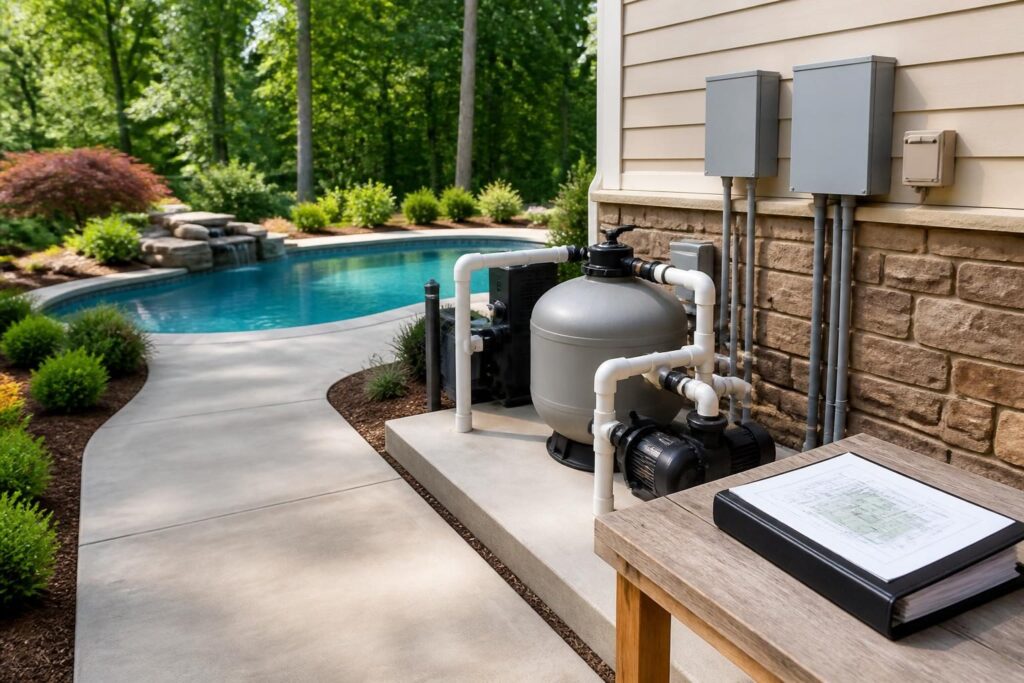
Pool electrical inspection preparation documents help a North Carolina homeowner make the inspection process more organized. They also give the local inspections department and qualified electrical professionals a clearer record of the work. Your role is to gather information, provide safe access, and avoid making technical determinations about wiring, bonding, grounding, protection, or code compliance.

Requirements can vary by jurisdiction, adopted code, property conditions, utility arrangements, and project scope. Before relying on any checklist, ask the local inspections department which approvals, inspections, and records apply to your project. The North Carolina Office of State Fire Marshal documents page can help you locate statewide code materials, but local officials remain the right source for current project-specific direction.
Start with a property-specific inspection folder
Create one digital folder and one physical folder if the project remains active. Use a simple file name that includes the property address, project name, and document date. Keep original records when possible, then add clear scans or photographs for convenient reference.
Keep your pool electrical inspection preparation documents together rather than scattering them among invoices, email threads, and general pool records. Place a one-page index at the front. It should identify the latest approved plan set, known inspection dates, equipment list, contractor contacts, and unresolved questions. Do not mark a document “final” unless the responsible professional or authority identifies it that way.
- Approved drawings and plan revisions
- Permit records and inspection notices
- Equipment schedules and manufacturer information
- Installation photographs and progress notes
- Electrical contractor records provided for the project
- Correction notices, responses, and reinspection records
- Final approvals or other closeout documents, when issued
A useful folder does not prove that an installation complies. It helps the appropriate reviewer understand what the project team proposed, what changed, and which records remain available.
Gather approved plans and inspection records
Find the plan set that the authority accepted for the project. Include the approval page, site plan, pool layout, equipment arrangement, lighting information, and any sheets that show electrical work. If several versions exist, keep them in date order and label superseded versions clearly.
Plans may not show every field detail. Construction can also change after approval. Make a short list of differences rather than editing drawings yourself. Ask the pool contractor or design professional whether the authority needs an official revision, field clarification, or updated record.
Keep copies of:
- Permit applications and issued permits
- Approved plan sheets and revision notices
- Inspection scheduling confirmations
- Inspection results and correction notices
- Reinspection results, if applicable
- Documents showing final approval or project closeout
For more guidance on organizing approvals, see North Carolina pool permit inspection records. Treat that information as a recordkeeping aid, not as a substitute for instructions from your local jurisdiction.
Prepare equipment labels and identification details
Inspect the equipment area from a safe distance before the appointment. Make sure the reviewer can identify the pump, filter, heater, sanitizer system, lighting equipment, controls, disconnects, and other installed components. Do not remove covers or open enclosures unless a qualified professional directs you.
Photograph each equipment label in good light. Capture the manufacturer, model, serial number, voltage information, and other visible identification. Avoid covering or cleaning labels in a way that could damage them. Add each item to a simple equipment schedule.
| Item | Record to gather | Homeowner action |
|---|---|---|
| Pool pump | Manufacturer and model | Keep the label visible and add the manual |
| Pool light | Fixture and transformer details | Record visible identification; do not open wiring areas |
| Controls | Controller or automation model | Save setup information and installation instructions |
| Disconnects | Visible labels and location | Keep the area clear; let the electrician verify function |
Labels can support identification, but they do not establish that equipment connects correctly. The licensed electrician, inspector, or other qualified professional responsible for the determination must perform the technical review.
Make the inspection route safe and accessible
Access is one of the most practical parts of pool electrical inspection preparation documents. Clear the path from the normal entry point to the equipment pad, controls, lighting access points, and relevant service areas. Remove stored items, hoses, toys, loose materials, and landscaping tools.
Keep children and pets away from the work area. Do not create temporary access with wet extension cords, ladders, unstable boards, or improvised platforms. If the inspection requires access near water, slopes, unfinished decking, or open construction areas, ask the contractor and local authority what preparation is appropriate.
Before the appointment, confirm:
- The gate or access path opens without moving heavy objects.
- Equipment doors and panels have no obstructions.
- Lighting controls and equipment labels remain visible.
- The equipment pad has no stored materials or debris.
- Any required keys, access codes, or gate information are available.
- Someone authorized to answer project questions will be present or reachable.
Do not operate, disconnect, reset, or test electrical equipment for the inspection unless the qualified professional gives you clear instructions.
Collect installation records without guessing
Installation records may include contractor invoices, equipment delivery records, product data sheets, photographs before concealment, and written descriptions of completed work. Request records from the responsible contractor if they are not already in your file. Keep these pool electrical inspection preparation documents with their dates and source information.
Photographs can prove especially useful when they show equipment locations, conduit routes, junction boxes, light niches, and other work before surfaces closed it from view. Store the original files with their dates when available. Add a brief caption that describes what the image appears to show. Avoid captions that declare compliance.
Useful questions include:
- Which approved plan revision guided the installation?
- Which electrical contractor performed or supervised the work?
- Did the project team change any equipment locations or components from the plans?
- Which records should the inspections department receive?
- Are any corrections open or items awaiting professional review?
- Which documents belong in the homeowner handover file?
For a nontechnical discussion of bonding, grounding, connections, lighting, and final review, read residential pool electrical bonding and grounding review questions. The article is intended to improve communication, not to replace an electrical inspection.
Separate homeowner observations from technical findings
A homeowner can report visible conditions. You can note a missing label, blocked equipment door, damaged cover, exposed-looking component, water near equipment, or a plan detail that seems different from the finished work. Do not decide whether a condition is safe, permitted, bonded, grounded, or electrically correct.
Use neutral notes with dates and photographs. For example, write “equipment label not visible from the walkway” instead of “equipment is improperly installed.” Send questions to the responsible contractor or qualified professional before changing anything.
Stop and request qualified direction if you notice:
- Damage to an enclosure, conduit, cord, receptacle, or cover
- Water intrusion near electrical equipment
- Burning smells, unusual heat, smoke, sparks, or repeated trips
- Missing covers or loose components
- Construction conditions that make access unstable
If there is an immediate safety concern, keep people away and contact the appropriate qualified professional or emergency service. Do not investigate energized equipment yourself.
Prepare questions for the day of inspection
Write questions before the appointment so you do not rely on memory. Keep them focused on process and records. The inspector or licensed professional may need to direct technical questions to another responsible party.
- Which areas must remain accessible for this inspection?
- Which documents should remain on site?
- Does the current plan set match the installed equipment locations?
- Do any revisions or clarifications need to come from the contractor?
- What written result will the inspection office or professional issue afterward?
- How should someone schedule any correction or reinspection?
- Which closeout records should the homeowner retain for future service?
Record the appointment date, names or offices involved, documents reviewed, and next steps. Keep factual notes. A clear record reduces confusion when several parties participate in a new pool project.
Use a final homeowner checklist
Review your pool electrical inspection preparation documents one day before the visit. Confirm that the folder contains the latest approved plans, permits, inspection notices, equipment records, photographs, and contractor information.
- ☐ Identify the current plan set and keep it easy to find.
- ☐ Label older plan versions as superseded.
- ☐ Photograph equipment labels and confirm they are readable.
- ☐ Save manuals and product data.
- ☐ Keep equipment access areas clear and dry.
- ☐ Keep children, pets, and visitors away.
- ☐ Write down questions about changes.
- ☐ Do not open, move, reset, or alter electrical equipment.
- ☐ Prepare a recordkeeping plan for inspection results and corrections.
After the visit, add the result and any correction record to the folder. Keep updated documents with the equipment manuals and handover materials. Build a Pool in North Carolina can help homeowners approach pool records with a practical, organized mindset.
Because electrical inspections involve safety and jurisdiction-specific requirements, consult the local inspections department for current procedures. Ask the licensed electrician, pool contractor, engineer, surveyor, or other qualified specialist to address technical questions, plan changes, access concerns, and any condition that you cannot safely evaluate yourself.