
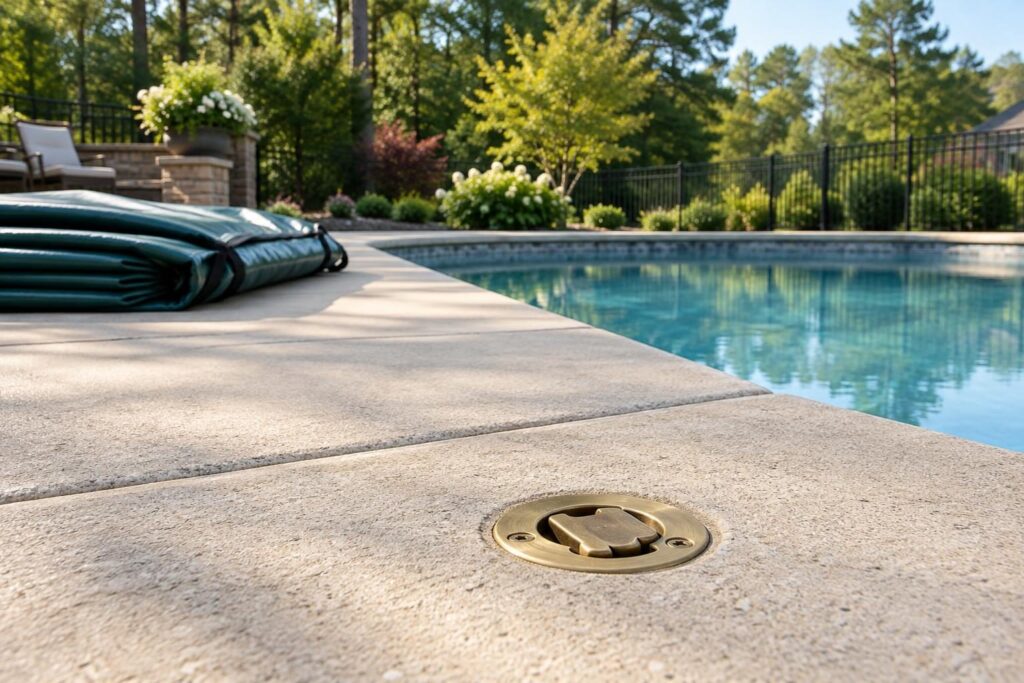
Before reopening the deck for everyday use, include pool safety cover anchor trip hazard checks in your cover-removal routine. You may pack away the cover while attachment hardware remains around the pool. A raised component, damaged socket, or loose surrounding surface deserves attention before people walk through that area.
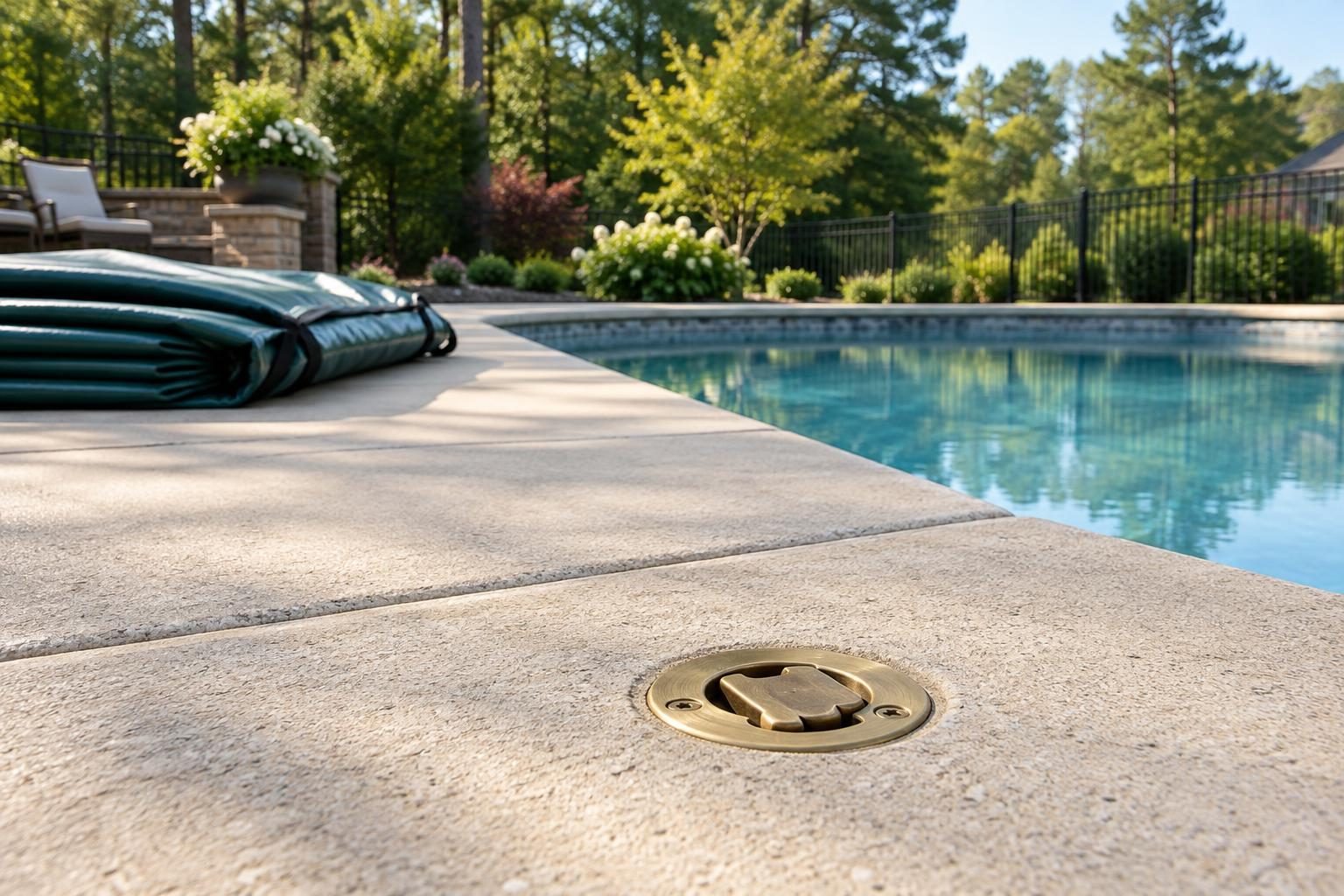
Start with observation, not adjustment. Identify the installed hardware, obtain its instructions, and confirm how each component should sit when unused. Keep people away from questionable areas until the correct next step is clear.
Identify the cover anchors before adjusting anything
An anchor is the attachment point that secures a safety cover to the deck or another approved support. Its design determines its stored position after you remove the cover. Do not assume every anchor retracts, unscrews, or uses the same tool.
Find the cover manufacturer, model, installation paperwork, and any separate anchor information. A cover label may identify the cover without identifying replacement hardware installed later. Ask the installer or service provider to confirm the actual components.
- Which instructions apply to these anchors and this deck material?
- What is the specified unused or stored position?
- Which tool and maintenance products, if any, does the manufacturer approve?
- Which tasks can the homeowner perform, and which require service?
Request the relevant instruction page, not just a verbal statement that the anchors are fine. Independent confirmation helps prevent using a familiar procedure on unfamiliar hardware.
Inspect exposed anchor areas before opening walkways
Inspect in good light with the cover, straps, tools, and storage bags out of the walking route. Wear footwear. Do not test suspected projections by dragging bare feet across them.
For pool safety cover anchor trip hazard checks, follow a consistent route around the pool. Look at each anchor from above and from a lower viewing angle while staying safely back from the water. Avoid leaning over the pool to inspect hardware.
- Look for hardware standing above its specified stored position.
- Check for bent parts, sharp edges, missing pieces, or visible damage.
- Note debris that prevents you from seeing the component clearly.
- Look for cracking, chipped edges, or gaps around the anchor body.
- Record movement noticed during normal, manufacturer-approved handling; do not deliberately rock anchors.
- Check nearby paths to gates, steps, seating, and equipment.
Appearance alone cannot establish that an anchor is secure or suitable for future cover use. Treat this walk-through as a screening check, not a professional inspection.
Confirm the manufacturer’s stored position
For some hardware, the unused position may place a component level with the surrounding surface. Other systems may use removable pieces or different storage arrangements. Follow the instructions for your exact assembly rather than a universal rule about turning anchors down.
If the instructions permit homeowner adjustment, use the specified tool and procedure. Stop if the part binds, resists normal operation, or behaves differently from the instructions. Do not force, hammer, grind, or modify hardware to make the deck look clear.
Avoid adding lubricant, sealant, or substitute caps unless the manufacturer approves them for that assembly. An improvised fix may hide damage or complicate later servicing.
If the stored position remains uncertain, send the provider clear photographs and the hardware identification. Ask for written confirmation of the required position and any service needed. Keep the affected walking route unavailable until the provider resolves the uncertainty.
Separate hardware problems from surrounding deck concerns
A projection may involve the moving anchor component, its fixed housing, or the surrounding deck. Those are different conditions. A photo showing only the top of the anchor may not reveal the full concern.
Take one close view and another showing the surrounding surface. Note cracks, chipped material, nearby joints, visible gaps, and water collecting around the location. Describe observations without deciding what caused them.
For example, record that an anchor appears higher than the adjacent surface. Avoid labeling it an installation defect or deck settlement without a qualified assessment. Ask the service provider which part needs evaluation and whether another trade should participate.
If water regularly collects nearby, keep separate drainage observations. Our guide to observing pool deck drainage explains useful records to gather. Do not drill drainage holes or alter the deck around an anchor as a homeowner shortcut.
Restrict access when a trip concern remains unresolved
A warning to watch your step is not a repair. If hardware protrudes, has sharp damage, or cannot reach its documented stored position, keep people away from that section. If no safe route remains, keep the deck unavailable pending service.
Do not conceal the concern beneath a loose mat, towel, or improvised cap. These measures can hide the location and introduce another obstruction. Any temporary access control should remain clear of required exits and must not compromise pool barriers.
Removing the cover also changes the pool’s safety setup. Continue supervision and maintain other protective measures. The federal Pool Safely safety tips explain the importance of multiple layers of protection.
Check gate operation separately using these pool gate observation questions. Clear anchors do not establish that the rest of the pool area is safe.
Request a specific repair scope and completion record
When hardware needs service, ask for a written scope identifying each affected anchor and the proposed work. Clarify whether the price includes hardware, surrounding deck repairs, cleanup, and a completion demonstration.
- What condition did the provider identify, and what remains uncertain?
- Does the manufacturer approve the proposed replacement parts for this system?
- Who will address damage beyond the anchor assembly?
- Will the repair affect later cover installation or require a separate fit check?
- What records and warranty information will accompany the work?
Vague explanations or reluctance to identify replacement parts warrant clarification, not an automatic accusation. Ask the provider to resolve those gaps before authorizing work.
Match payments to the written agreement and documented milestones. Preserve photographs before any repair conceals the original condition. Review homeowner warranty maintenance obligations before assuming your warranty covers a repair.
Keep a short anchor checklist and location record
Make pool safety cover anchor trip hazard checks repeatable with a simple location record. Use existing drawings or label locations in photographs, starting from a fixed feature such as the gate. Do not mark or alter the hardware itself without approval.
For each location, record:
- The observation date and person performing the check.
- The applicable instruction document or service recommendation.
- The observed stored position and any visible damage.
- Photographs, access restrictions, and the service request.
- Repair details, replacement part identification, and completion photos.
- Unresolved questions and who will answer them.
Before reopening a restricted route, confirm the provider has addressed the documented concern. Review the completed work against the agreed scope and applicable instructions. Ask the provider to demonstrate the stored position where appropriate.
Keep unresolved items on a written punch list—a list of work still needing completion. Do not mark the job complete solely because a service visit occurred.
Repeat the check when conditions change
Repeat pool safety cover anchor trip hazard checks whenever you remove the cover. Look again after nearby deck work, landscaping activity, or another event that may have affected the hardware. Tell household members where concerns remain and who is handling service.
Before reinstalling the cover, ask a qualified provider to evaluate unresolved anchor concerns. An unobstructed walking surface does not by itself establish that the attachment system can perform its intended role.
For North Carolina properties, requirements can vary by jurisdiction, adopted code, site conditions, and project scope. Consult the local inspections department about barrier or deck alterations. Use a qualified cover-service provider or licensed pool contractor for hardware concerns, and an engineer when surrounding deck conditions warrant evaluation.