
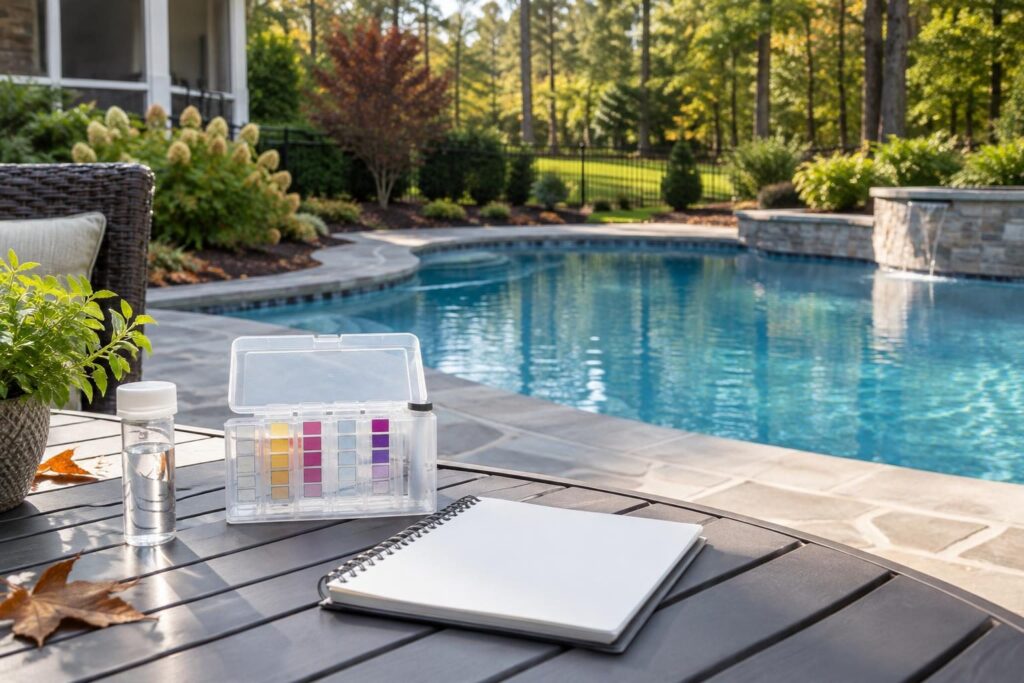
Understanding when pool phosphate remover is needed starts with more than a phosphate test. A high result can identify a nutrient-management issue, but it cannot explain every algae outbreak or cloudy-water episode. For North Carolina homeowners, fertilizer runoff, leaves, and other yard debris deserve attention. Still, another treatment should follow a clear diagnosis, not replace one.
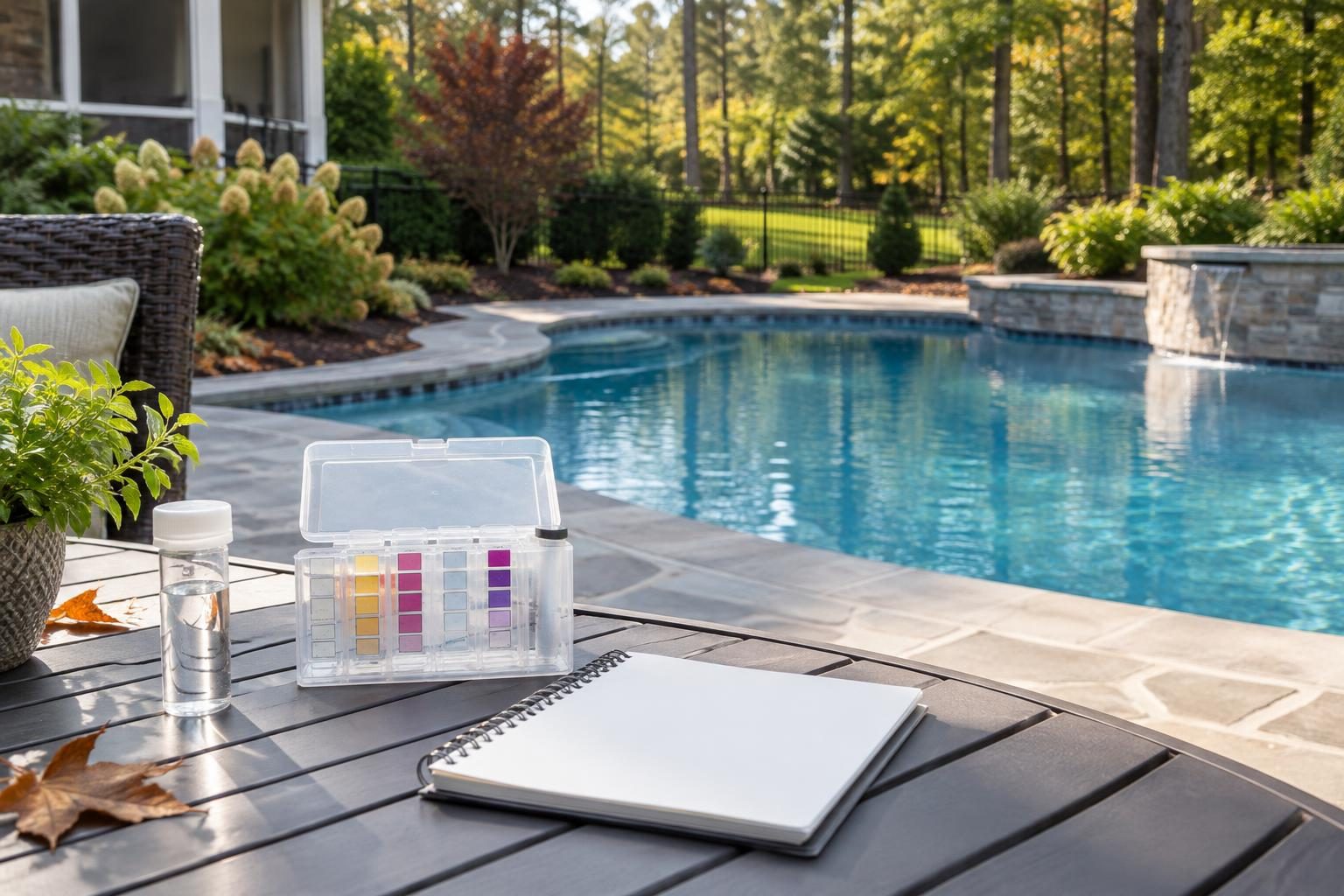
The practical question is whether phosphate reduction would solve a documented problem after basic care is working. Before buying, review your water tests, equipment performance, and recent yard conditions. Then ask the seller to explain the proposed treatment, follow-up work, and total cost in writing.
What a pool phosphate test actually tells you
Phosphates are phosphorus-containing compounds that can supply nutrients for algae. However, their presence does not mean algae must develop. Maintaining effective sanitation remains essential, whether a phosphate result is low or high.
Many pool phosphate kits measure orthophosphate, a readily measurable form of phosphate, rather than every form of phosphorus. Check the kit instructions before interpreting the number. A result describes what that method detected in that sample.
A phosphate test does not establish:
- Whether the water has adequate sanitizer to control germs.
- Why chlorine readings keep dropping.
- Whether circulation and filtration are working properly.
- Whether cloudy water comes from algae, fine debris, or water-balance problems.
- Where the detected phosphate entered the pool.
Neither a low phosphate result nor clear water proves that swimming conditions are safe. Treat phosphate testing as supporting evidence, not a replacement for routine sanitation checks.
Check sanitation before considering nutrient removal
Start with free chlorine, the chlorine available for disinfection, and pH, a measure of acidity or alkalinity. Also review cyanuric acid when applicable. This chlorine stabilizer helps protect chlorine from sunlight, but its concentration matters when interpreting chlorine results.
The CDC’s home pool treatment and testing guidance explains the importance of chlorine and pH. Use that guidance alongside your equipment instructions and qualified service advice.
Look beyond one acceptable reading. Ask whether sanitizer remained adequate between visits, during heavy use, and after storms. A service-day snapshot cannot reconstruct the whole week.
If algae is present, address sanitation, brushing, debris removal, and filtration first. Phosphate remover alone is not a substitute for disinfecting the pool. Keep swimmers out when sanitation is uncertain or visibility is inadequate.
For a broader diagnostic sequence, review troubleshooting cloudy water despite a chlorine reading.
Look for runoff and organic debris around the pool
Some fertilizers contain phosphorus; others do not. Leaves, soil, and decomposing organic material can also contribute phosphorus. A phosphate result cannot identify fertilizer as the source without additional evidence.
After rain, observe the yard from a safe location. Look for muddy streaks, washed mulch, fertilizer granules, or water flowing from planting beds toward the pool. Photograph these conditions and note recent lawn treatments.
- Ask the landscaper which products were applied and retain their labels.
- Keep fertilizer applications and grass clippings away from the water.
- Remove leaves and other debris before they accumulate.
- Check whether irrigation carries soil or lawn products onto the deck.
- Record any top-offs or recent replacement water.
Source water may deserve testing when phosphate readings repeatedly rebound. Our guide to pool fill-water testing explains useful questions about supply and treatment.
Do not assume phosphate removal makes contaminated storm runoff safe. Significant runoff intrusion warrants a broader water-care assessment, especially when sewage or other contamination is possible.
Confirm the phosphate result before buying
Ask for the actual number, units, test method, and sampling date. A report labeled only “high” does not provide enough information for a purchase decision. Keep the report with your other water-care records.
Pool phosphate results often use parts per billion, abbreviated ppb. Other reports may use different units or reporting conventions. Ask whether results are expressed as phosphate or as phosphorus before comparing them.
Use this verification checklist:
- Follow the kit’s sampling, mixing, and reading instructions.
- Check reagent condition and storage requirements.
- Tell the tester about recent chemicals, cleaning, and water additions.
- Repeat an unexpected result before authorizing a substantial treatment.
- Ask about the test’s range and possible interference from recent treatments.
Do not invent a dilution procedure for an out-of-range test. Follow the test manufacturer’s instructions or seek qualified testing. An independent check is especially useful when a surprising result leads directly to an expensive recommendation.
Decide when pool phosphate remover is needed
A phosphate-reduction product may be a reasonable supplement when repeated testing confirms a persistent nutrient issue. The case is stronger when sanitation, debris control, and filtration have already been reviewed and corrected.
Use these decision points rather than a single sales threshold:
- Clear water with stable sanitation and no recurring trouble: A phosphate number alone is not a compelling reason to buy immediately.
- Active algae with inconsistent sanitizer: Correct the sanitation problem first. Nutrient removal does not replace algae treatment.
- Recurring algae despite documented care: Request a broader diagnosis. Phosphate control may become one part of the plan.
- Continuing soil or fertilizer entry: Address the source. Repeated chemical treatment leaves the underlying pathway unchanged.
No single phosphate reading establishes a universal treatment requirement for every residential pool. A manufacturer’s suggested treatment threshold is product guidance, not proof that your pool needs treatment.
Check whether the filter can handle the treatment
Many phosphate removers bind dissolved phosphate into particles that filtration can capture. Product chemistry varies, so confirm how the proposed treatment works. Some products can temporarily cloud water or increase filter loading.
Before adding anything, ask:
- Is this product suitable for my filter type and pool equipment?
- Does the filter need cleaning or service first?
- What operating instructions apply during treatment?
- Which pressure or performance changes require attention?
- Who will clean the filter and complete the follow-up testing?
Record the filter’s operating pressure under comparable conditions before treatment. Follow the equipment manual’s cleaning criteria rather than an invented universal pressure limit.
Never open a pressurized filter. Follow the manufacturer’s shutdown and pressure-release procedure, or use a qualified service professional. Confirm acceptable disposal methods locally before discharging cleaning water or backwash, the reverse-flow water used to clean certain filters.
Compare the full treatment proposal, not just the bottle
A useful proposal should explain when pool phosphate remover is needed for your particular pool, using recorded findings. It should also distinguish necessary corrective work from an optional maintenance add-on.
Request a written scope covering:
- The exact product and its intended purpose.
- The pool volume used to calculate treatment.
- The label-based dose and any staged applications.
- Required filter service and return visits.
- Retesting, swimming restrictions, and completion criteria.
- The total authorized charge and approval process for extras.
Compare treatment cost with correcting a continuing source problem. A cheaper bottle may still require substantial follow-up labor. Conversely, routine dosing may add expense without a documented benefit.
Pressure to purchase immediately, missing test records, or promises to eliminate all future algae deserve clarification. These signs do not prove wrongdoing. Ask for supporting instructions and consider an independent service assessment before committing.
Use the product safely and document the outcome
Read the label before purchase, including compatibility, handling, protective equipment, and swimming restrictions. Never mix pool chemicals together. Follow product-specific sequencing instructions rather than combining treatments for convenience.
Keep a short treatment record:
- Before-treatment phosphate, sanitizer, and pH results.
- Product name, amount added, and application date.
- Filter observations, cleaning, and service charges.
- Retest date selected from the product instructions.
- Changes in clarity and recurrence of the original problem.
Evaluate more than whether the phosphate number fell. Did the recurring problem improve while sanitation remained consistent? If conditions worsened, contact the service provider instead of automatically adding another product.
A product’s label-based swimming restriction and adequate water visibility both matter. A lower phosphate reading is not permission to reopen an unsafe pool.
Know when to get help beyond chemical treatment
The best way to establish when pool phosphate remover is needed is to connect reliable tests with a specific problem. Start with sanitation, filtration, and source control. Buy an additional treatment only when its purpose and follow-up responsibilities are clear.
Consult a qualified pool service professional for persistent water problems or uncertain product compatibility. For runoff corrections, involve an appropriate drainage professional or engineer. North Carolina requirements vary by jurisdiction, property conditions, adopted code, utilities, septic systems, flood zones, and project scope. Verify proposed drainage work and discharge questions with the local inspections department or environmental-health authority before making changes.