
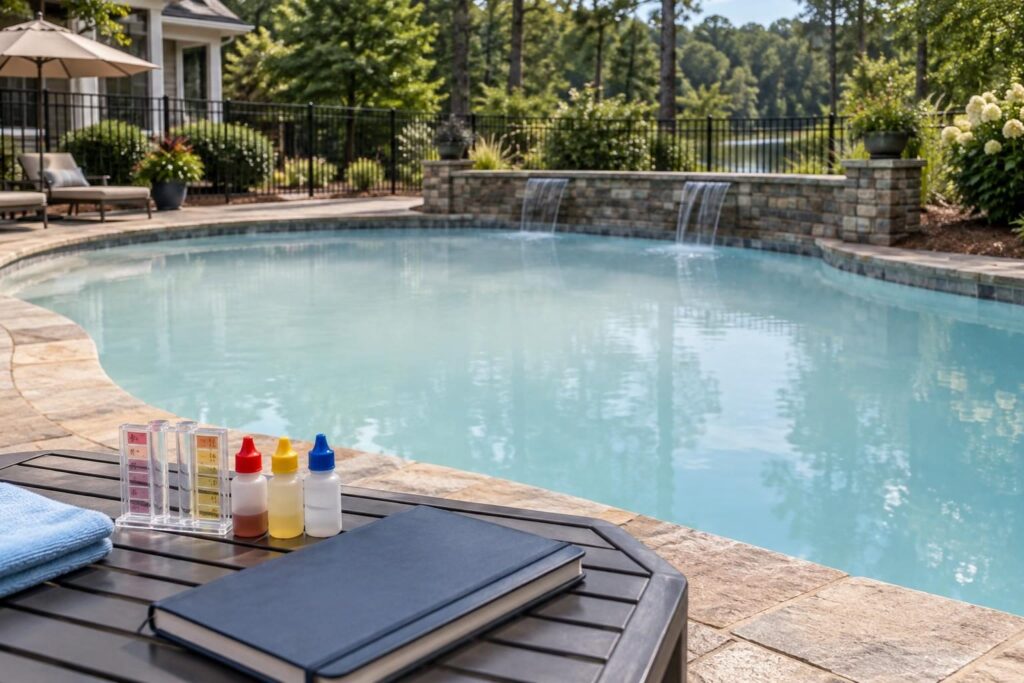
Finding cloudy pool water with a chlorine reading can make the next step unclear. Should you add sanitizer, clean the filter, or simply wait? Start with visibility, then verify your test results before changing treatment. A chlorine number alone cannot establish safe swimming conditions or identify what is making the water cloudy.
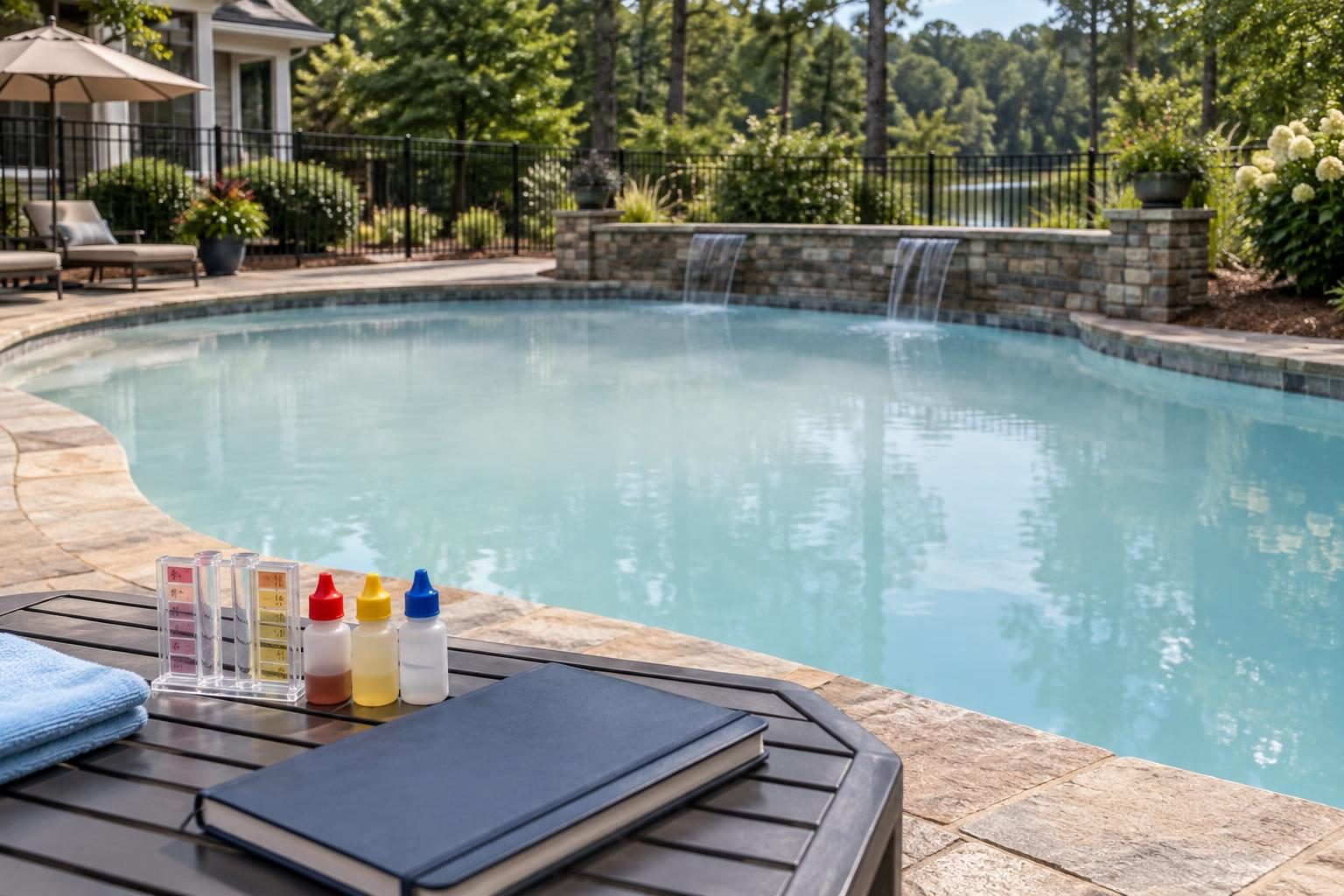
For North Carolina homeowners, recent rain, pollen, swimming activity, and equipment changes provide useful clues. None proves the cause by itself. Work through the checks below, keep swimmers out when visibility is poor, and record what changes.
1. Check cloudy pool water visibility before considering another swim
Stay out if you cannot clearly see the pool floor throughout the swimming area, including its deepest point. Cloudiness can conceal a submerged person. Seeing the shallow steps is not enough.
Check from several safe positions on the deck. Glare and shadows may affect your view, but do not enter the water to investigate. Keep barriers secured and tell everyone responsible for supervision that the pool is closed.
- Can you clearly see the bottom across the entire pool?
- Has visibility worsened since the last observation?
- Is there a known contamination event, equipment fault, or unexplained chemical reading?
Clear water is necessary for visibility, but clarity alone does not prove sanitary conditions. Likewise, detectable chlorine does not guarantee that all germs have been inactivated. Review the CDC’s pool safety and healthy swimming guidance alongside water-care instructions.
2. Identify what your chlorine reading actually measures
Before troubleshooting cloudy pool water with a chlorine reading, identify the test and its units. A strip, drop-based kit, and controller display may provide different information.
Free chlorine measures chlorine available for disinfection. Total chlorine includes free chlorine plus combined chlorine. Combined chlorine forms when chlorine reacts with contaminants. A total chlorine result alone does not tell you how much free chlorine remains.
Test pH as well. This measure of acidity affects chlorine performance and swimmer comfort. Also check cyanuric acid, often called stabilizer, because it affects how chlorine works. Depending on the results, calcium hardness and total alkalinity may help explain cloudiness from mineral particles.
The CDC’s home pool treatment and testing guidance explains chlorine, pH, and testing considerations. Use current guidance and applicable product instructions rather than assuming that any positive chlorine reading is sufficient.
3. Confirm the chlorine test before adding chemicals
A surprising result deserves confirmation, especially when the water’s appearance and the reported chemistry seem inconsistent. Follow your kit’s sampling location, timing, and reading instructions.
- Check reagent expiration dates and storage conditions.
- Use clean testing equipment and the specified sample volume.
- Read colors under the lighting conditions the manufacturer recommends.
- Check the test’s measuring range and interference warnings.
- Record whether sampling occurred before or after a chemical addition.
Very high sanitizer levels can interfere with some tests. Do not improvise sample dilution unless the test instructions specifically explain it. Our guide to checking pool test accuracy provides a separate verification checklist.
If results remain uncertain, obtain a second test using a suitable method. Ask a qualified pool professional to document the method and full results. A verbal statement that the water is “fine” does not resolve an unexplained reading.
4. Check circulation without opening equipment
Circulation moves water through the treatment system. A running pump does not necessarily mean water is moving as intended throughout the pool.
From a safe position, compare current operation with your normal records. Note the pump schedule, displayed speed, visible return flow, and any alarms. Returns are the fittings that send filtered water back into the pool. Look for obvious debris at skimmer openings, which collect surface water.
- Did someone change the schedule or operating mode?
- Is the water level within the equipment manufacturer’s recommended operating range?
- Are persistent bubbles, unusual noise, or weak returns new?
- Does the system show a flow warning or lost-prime condition?
Do not reach into suction openings, move unfamiliar valves, or open electrical enclosures. Follow shutdown instructions for abnormal operation and arrange service when necessary. Increasing pump time cannot correct every blockage, air leak, or equipment fault.
5. Check filtration against its documented baseline
Filtration captures particles that circulation carries to the filter. Chlorine does not physically remove those particles, so cloudiness can persist even when sanitizer is present.
Record filter pressure at the same pump speed and operating configuration used for your clean-filter baseline. That baseline is the normal pressure recorded after proper cleaning or service. Without comparable conditions, a pressure difference can be misleading.
Ask these questions before authorizing work:
- When was the filter last serviced, and what did that service include?
- Does the manufacturer’s cleaning trigger indicate service is due?
- Did pressure or clarity change immediately after recent maintenance?
- Is there evidence supporting a damaged element, internal bypass, or another filter problem?
A normal pressure reading does not prove the filter is working correctly. Filters can also retain dangerous pressure. Do not loosen clamps or open a housing while operating or pressurized. Follow the exact shutdown and pressure-release procedure, or leave the work to a qualified technician.
6. Reconstruct recent weather and swimmer load
Build a short timeline covering the period before cloudiness appeared. Include rain, wind, pollen, heavy swimming, landscaping work, added water, and chemical treatments.
Storms may introduce debris or yard runoff. Swimming adds contaminants that increase treatment demands. Recent chemical additions can also matter, especially if products were incompatible or mineral balance changed. Treat these as possibilities to investigate, not conclusions based on appearance.
- After rain: Photograph soil trails, overflowing drains, or muddy entry points from the deck.
- Heavy swimming: Compare free chlorine and pH results before and after swimming.
- Treatment history: Record the product, amount, application time, and label instructions followed.
- After service: Compare schedules, valve positions, and readings with earlier records.
Suspected sewage, floodwater, or fecal contamination requires specific professional guidance, not this routine troubleshooting sequence. Keep the pool closed. For ordinary trends, use our guide to connecting water-test logs with equipment observations.
7. Match the correction to the evidence
Avoid stacking treatments simply because the first product did not clear the water immediately. Repeated additions can obscure the cause and complicate later testing. For cloudy pool water with a chlorine reading, address confirmed problems rather than guessing from color alone.
Choose the next step from the findings:
- Uncertain chemistry: Confirm testing before selecting a treatment.
- Verified chemistry problem: Follow an appropriate treatment plan and product labels.
- Weak or interrupted flow: Resolve the operating problem before relying on treatment distribution.
- Filter service needed: Follow the manufacturer’s procedure and record the outcome.
- Recurring debris entry: Investigate the source rather than repeatedly treating its effects.
Clarifiers help some small particles collect for filtration. Flocculants generally settle particles for removal. Neither substitutes for sanitation or equipment repair, and either may be unsuitable for your system. Verify compatibility and removal requirements before use.
Never mix pool chemicals. Follow label directions for handling, application, circulation, and reentry. Do not default to draining the pool; structural, groundwater, and discharge concerns require separate review.
8. Require a documented service plan and recheck
When hiring help for cloudy pool water with a chlorine reading, request more than a product recommendation. Ask for written findings, proposed work, exclusions, and the readings that support the diagnosis.
Before approving equipment replacement, ask what testing supports it and what less extensive corrections were considered. Independently compare recommendations with equipment manuals and your records. Vague explanations do not prove wrongdoing, but they justify clarification before approval or payment.
Keep dated photographs, test reports, invoices, written communications, and equipment settings. Photograph accessible components before replacement or concealment without entering work areas. Preserve contracts and written change orders. For repairs, obtain completion records, applicable inspection approvals, warranty terms, and a plan for unresolved items.
Reopen only after visibility returns, reliable chemistry results meet applicable guidance, and relevant treatment or contamination instructions are satisfied. Arrange a recheck if cloudiness persists or returns.
Consult a qualified pool professional when the cause remains uncertain. North Carolina requirements vary by jurisdiction, adopted code, property conditions, utilities, septic systems, flood zones, and scope. Verify drainage or repair requirements with local authorities. Use an appropriately licensed contractor, electrician, engineer, or septic professional when the work involves their specialty.