
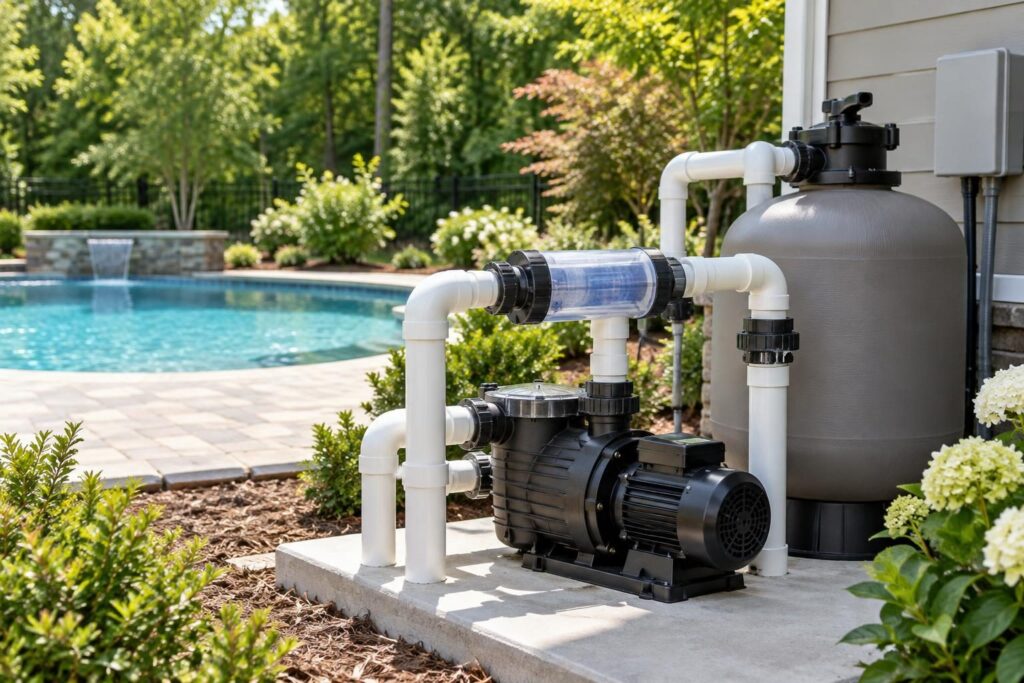
Good salt chlorine generator sizing starts with chlorine production, not the largest pool-size number on a box. North Carolina homeowners should compare pool volume, available operating hours, water temperature, and expected summer use. Equipment compatibility matters just as much. A cell with ample advertised capacity may still disappoint if its controls or operating schedule limit production.
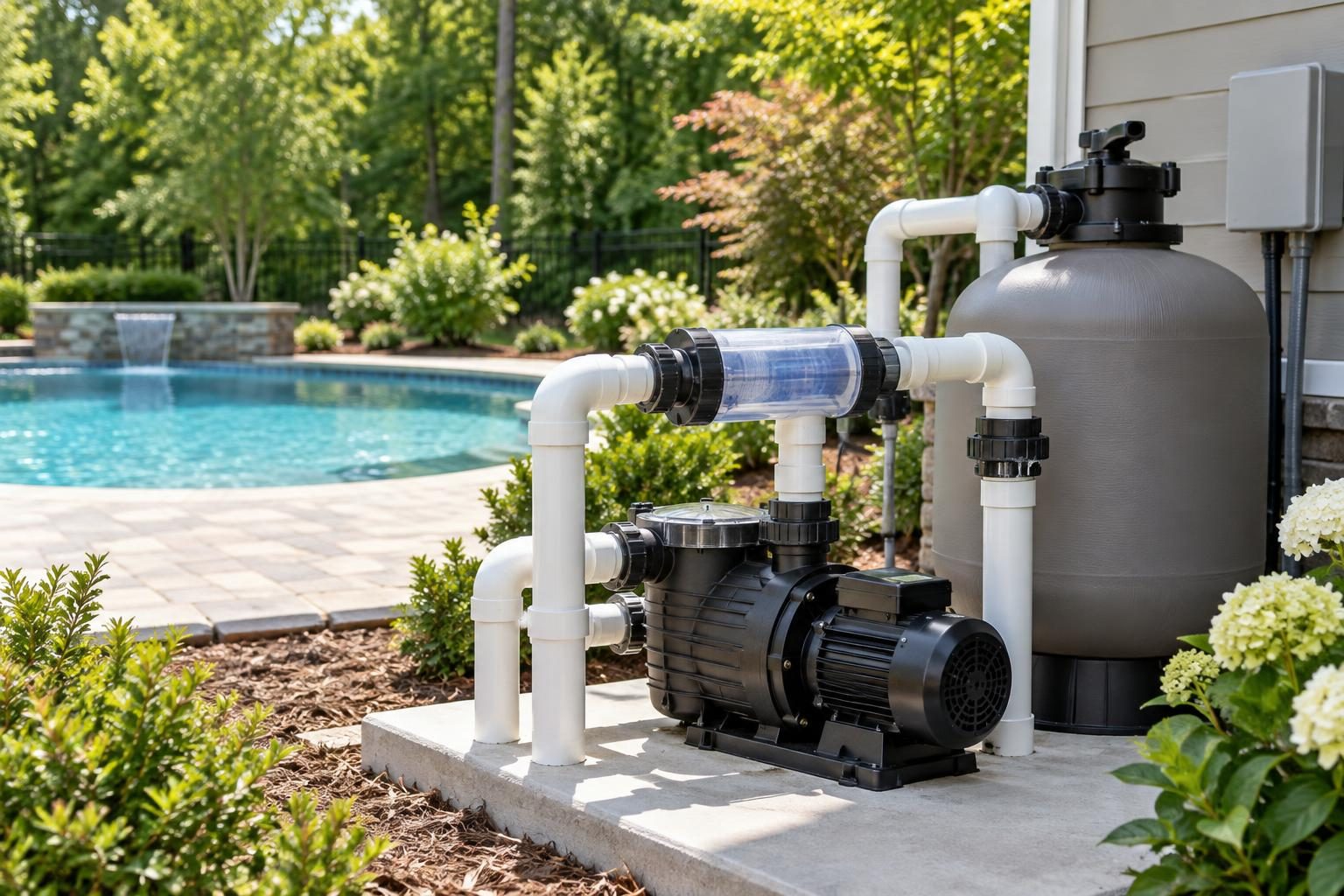
A salt chlorine generator uses electricity to make chlorine from salt dissolved in pool water. The cell is the component where that process happens. These systems still require water testing, cleaning, and occasional adjustments. Before buying, ask the installer to explain the selection in writing using your pool’s actual conditions.
Look beyond the advertised pool-size rating
An advertised gallon rating provides a starting point, not a complete sizing calculation. It does not tell you how much chlorine the system will produce during your planned operating schedule. Nor does it describe every condition in your backyard.
Request the exact cell and power-center model numbers. The power center supplies and controls electrical power for the cell. Then obtain the manufacturer’s current product specifications and installation manual.
- What is the rated chlorine output, and what units describe it?
- Does the daily output rating assume continuous operation at full production?
- What conditions or limitations accompany the advertised pool capacity?
- Does the manufacturer provide guidance for heavy use or demanding conditions?
Compare models using the same output units and operating assumptions. Independently check the documents instead of accepting a verbal claim that one unit is “equivalent.” A larger gallon label alone does not establish better performance.
Confirm pool volume before comparing chlorine output
Pool volume affects how much chlorine is needed to change the water’s chlorine concentration. Free chlorine means the chlorine available to sanitize the water. Its measured concentration reflects both production and ongoing consumption.
Ask how the builder calculated the working water volume. A simple length-and-width estimate can miss sloping floors, broad steps, benches, and tanning ledges. Confirm whether the estimate includes a connected spa and how operating modes affect shared water treatment.
Keep these records with the equipment proposal:
- The volume estimate and its calculation method.
- The drawing revision used for that estimate.
- Any separate pool and spa volumes.
- The intended normal operating water level.
If the pool design changes, request a fresh review of the equipment selection. Do not assume the original recommendation still fits. Volume errors also affect chemical dosing, so resolving uncertainty helps beyond the initial purchase. A documented volume gives each bidder the same starting point for salt chlorine generator sizing.
Connect salt chlorine generator sizing to operating hours
A generator can produce chlorine only when its required operating conditions are satisfied. Those conditions typically include adequate water flow and acceptable temperature and salt readings. Pump operation alone does not prove that the cell is producing chlorine.
For a rating based on continuous full-output operation, this relationship can help compare proposals:
Estimated daily production = rated 24-hour output × eligible generating hours ÷ 24 × output fraction.
The output fraction expresses the selected percentage as a decimal. Many systems control output by alternating generating and resting periods. Ask how the proposed model works before using this estimate. It is a planning tool, not a guaranteed daily yield.
- Which pump schedule supplies enough flow for generation?
- How many scheduled hours actually permit chlorine production?
- Does the estimate assume maximum output throughout those hours?
- What happens when spa mode or another feature changes water flow?
A variable-speed pump can operate at different speeds. Ask the installer to verify suitable flow at the proposed settings. Never bypass a flow switch or other protective device to extend production.
Allow for summer swimmers, sunshine, and water temperature
Two pools with similar volumes can have different chlorine needs. Sunshine, debris, water conditions, and swimmer use all matter. A shaded pool used occasionally presents different planning questions than a sunny pool hosting frequent gatherings.
Describe your expected use before requesting quotes. Include summer visitors, swim parties, heating plans, and whether a cover will regularly shade the water. Discuss both everyday demand and busy periods.
Water temperature affects the comparison in two ways. Warmer swimming conditions can accompany greater chlorine demand. Meanwhile, the generator’s own temperature limits can reduce or stop production in cooler water. Exact behavior depends on the model.
For an existing pool, bring test results and operating records. Our guide to tracking daily chlorine demand explains which observations help identify patterns. For a new pool, ask the installer to document assumptions and review them after startup.
Also ask how stabilizer affects the recommendation. Stabilizer, or cyanuric acid, helps protect chlorine from sunlight. Its management must follow applicable water-care and equipment guidance.
Choose useful reserve capacity, not simply the biggest cell
Reserve capacity means available production beyond the expected everyday requirement. It gives the operator room to respond when demand rises. A proposal that requires maximum production throughout the entire planned schedule leaves little adjustment room.
However, choosing the largest available cell is not automatically the best purchase. Compare its adjustment range, compatible controls, installed cost, replacement-cell cost, and maintenance requirements. An oversized system still needs careful settings and testing.
Ask each bidder to explain three operating situations:
- Ordinary use: The expected schedule and starting output setting.
- Heavy use: Available adjustment capacity and the response if production cannot keep up.
- Cooler weather: Temperature restrictions and an approved alternative sanitation plan.
Do not accept a universal sizing multiplier without its supporting assumptions. Effective salt chlorine generator sizing balances usable production with control and operating flexibility. Neither a larger cell nor a boost setting replaces testing or an appropriate response to unsafe water.
Verify compatibility across the equipment system
Cell capacity means little if the proposed parts cannot operate together correctly. Have the installer confirm compatibility using manufacturer documents for the exact models.
- Power center: Does it support the selected cell and its required configuration?
- Automation: Can the pool controller communicate with the generator and manage its intended functions?
- Plumbing: Does the layout meet specified flow, orientation, placement, and service-access requirements?
- Other equipment: Are the heater, cover components, and other exposed materials suitable for the specified water chemistry?
- Electrical installation: Who will verify the supply, protective measures, and inspection requirements?
Have a qualified electrician address electrical work. Do not treat a homeowner compatibility checklist as wiring instructions.
For coastal properties, separate saltwater chemistry questions from exposure to airborne salt. Our coastal equipment corrosion planning guide covers related material and care questions. Confirm warranty conditions directly from current documents rather than general assurances about “salt-ready” equipment.
Put the selection and installation scope in writing
A useful proposal identifies more than a brand name and gallon rating. Request the exact cell, power center, sensors, control accessories, and installation work included. Separate the equipment price from electrical work, plumbing changes, startup, and other allowances.
Specify who will provide the volume calculation, compatibility confirmation, water testing, training, and warranty registration. Record the assumptions behind the recommended operating schedule. Keep the salt chlorine generator sizing explanation with the approved specifications so later changes can be checked against it.
Vague model descriptions or unexplained substitutions deserve clarification. They do not prove wrongdoing, but they make meaningful comparison difficult. Use a written change order for an approved substitution, including any price, warranty, or control changes. Our equipment substitution review checklist can help structure that review.
Agree on payment milestones tied to documented deliverables. Before approving an installation-stage payment, compare the installed model labels with the approved specification. Preserve written communications and photograph accessible equipment and work before anything is concealed.
Require startup evidence and a clear handover
Startup should demonstrate more than an illuminated control panel. Request a record of water readings, pump settings, output settings, and any active alerts. Ask the installer to demonstrate normal operation and explain how to recognize interrupted production.
Confirm when salt addition and generator operation may begin, particularly with a new pool finish. Follow the finish supplier’s and equipment manufacturer’s instructions.
Keep the manuals, serial numbers, warranty terms, registration confirmation, and service contacts. Obtain applicable inspection records and written correction records. List unresolved work on a punch list with assigned responsibility and completion arrangements.
Use the CDC’s home pool treatment and testing guidance alongside model-specific instructions. Test the water rather than relying solely on the generator display. Review performance during representative warm-weather use before assuming the initial settings are sufficient.
North Carolina requirements vary with jurisdiction, adopted code, property conditions, utilities, and project scope. Consult local inspections staff about permits and inspections. Use an appropriately licensed pool contractor for selection and installation, and a qualified electrician for electrical questions.