
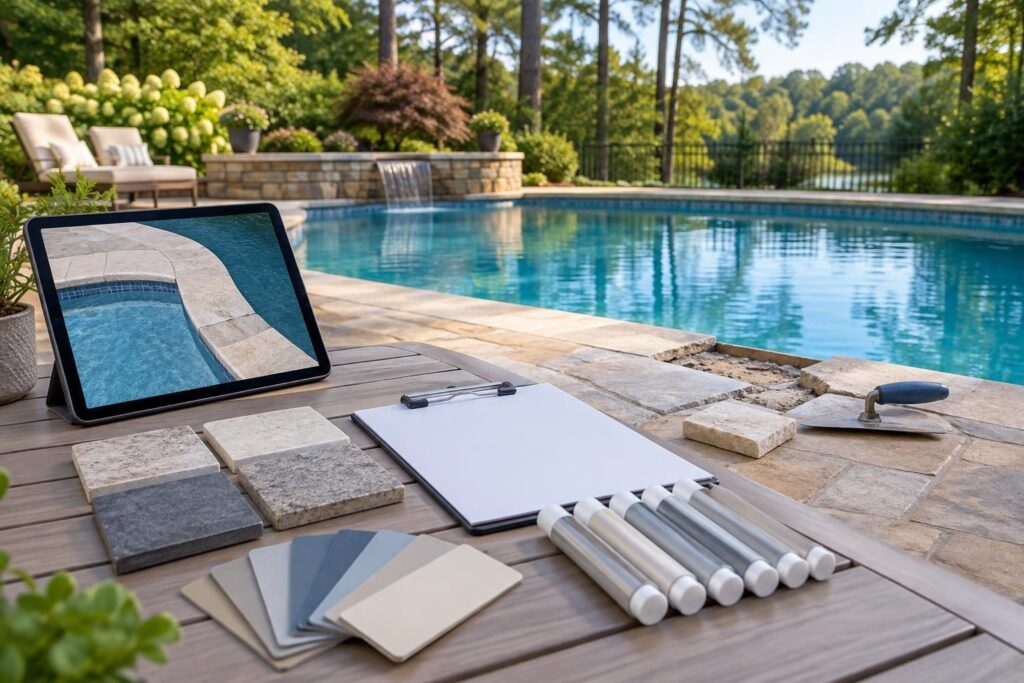
A pool repair proposal scope review helps you compare what contractors will investigate, repair, restore, and verify. Price alone cannot tell you whether two proposals address the same problem. Before approving work, separate the observed symptom from the proposed cause. Then ask how the contractor will demonstrate success.
For North Carolina homeowners, a useful proposal should explain both the work and its limits. It should also identify decisions that require further investigation. This checklist focuses on approval before repairs begin, when you can still clarify responsibilities and compare options.
Separate the symptom from the repair diagnosis
A symptom is something you observe, such as water loss, loose tile, or recurring equipment shutdowns. A diagnosis explains why that symptom occurs. They are not interchangeable.
Ask the contractor to identify the evidence supporting the stated cause. Request dated photographs, test reports, measurements, operating observations, or other relevant records. The explanation should connect those findings to the proposed repair location and method.
- What problem did the contractor observe directly?
- Which information came from your description or earlier service records?
- What testing supports the diagnosis?
- Which possible causes remain unresolved?
- Does the repair address the cause, the visible damage, or both?
Decision point: If the proposal calls the cause confirmed, ask what evidence supports that confidence. A confident verbal explanation is not a substitute for records. Independent review may help when the evidence is unclear or the proposed work is extensive.
Identify an investigative repair before approving it
An investigative repair combines opening or testing an area with limited corrective work. Its purpose may include finding the cause, rather than correcting an already established cause. That approach can be reasonable when access is limited. The proposal should label the uncertainty clearly.
Ask for separate stages: investigation, findings review, repair authorization, and retesting. Define the stopping point between stages. Opening a deck section, for example, should not automatically authorize replacement of every component uncovered.
- What will the initial stage reveal?
- What work and expense does that authorization include?
- Who will photograph and explain the findings?
- What conditions trigger a revised proposal?
- How will the contractor leave the area safe if work pauses?
During your pool repair proposal scope review, distinguish payment for investigation from payment for a successful repair. Ask what you owe if testing rules out the suspected cause. Document any spending limit and require written approval before the next stage.
Compare repair scope with the same checklist
Put each proposal beside the same list of questions. Mark each item as included, excluded, unresolved, or subject to further findings. A blank entry deserves clarification, not an assumption.
| Scope item | What to request in writing |
|---|---|
| Stated cause | Diagnosis, supporting evidence, and remaining uncertainty. |
| Preparation | Removal, cleaning, drying, access, and protection steps. |
| Materials | Product names, intended uses, and compatibility documentation. |
| Affected areas | Marked photographs or drawings showing repair limits. |
| Restoration | Deck, finish, landscape, drainage, and access-route repairs. |
| Success criteria | Test method, operating conditions, acceptance criteria, and records. |
| Unresolved findings | Stop-work point, notification process, and additional approval requirements. |
A lower price may reflect a smaller repair area, fewer preparation steps, or excluded restoration. That does not automatically make it unsuitable. Your pool repair proposal scope review should reveal those differences before you choose.
Review preparation, materials, and repair boundaries
Ask for a plain-language sequence of work. It should explain what the crew removes, what remains, and how they prepare the exposed base surface. Surface preparation means making that base suitable for the repair material.
Request exact product identification rather than descriptions such as premium patch or commercial sealant. Ask the contractor to provide relevant manufacturer instructions and explain compatibility with existing materials. Do not select a repair product based only on appearance or a sales brochure.
- How will the contractor assess the condition beneath the visible damage?
- What happens if removal exposes a larger affected area?
- Who approves material substitutions?
- What curing conditions and waiting periods apply before testing or use?
- Where will color, texture, or joint differences remain visible?
Require marked repair boundaries on photographs or a drawing. Agree on points when work pauses for photographs, professional review, or required inspections. Keep homeowner observations separate from technical approval.
Include protection and restoration—not just the patch
A repair may affect more than the failed component. Ask who protects nearby finishes, equipment, gates, plants, and access routes. Identify responsibility for debris removal and restoring anything disturbed during the work.
Use a site access protection record to document existing conditions. Photograph the work area and travel route from safe locations before crews arrive.
- Does restoration include deck surfaces, irrigation, soil, sod, and drainage features?
- Will replacement finishes match, approximate, or intentionally contrast with existing finishes?
- Who maintains pool access restrictions and barriers during the repair?
- Who handles refill, startup, cleanup, and return-to-service instructions?
If draining is proposed, review pool draining risks before repairs with a qualified professional. Ask who evaluates groundwater conditions and discharge arrangements. Do not treat draining as routine homeowner preparation.
Set retesting and success criteria before work begins
Success criteria describe the evidence needed to accept the repair. A finished appearance may establish cosmetic completion, but it cannot establish every type of functional performance.
Ask the qualified repair professional to specify the appropriate test method and acceptance criteria. Do not invent your own pressure settings, electrical checks, or structural tests.
- Baseline: What condition or reading documents the original problem?
- Method: How will the contractor check the repaired component?
- Conditions: Which operating settings, weather observations, or water conditions matter?
- Timing: When can testing occur after installation and curing?
- Evidence: Who provides readings, photographs, and the written result?
- Next step: What happens if the repair does not meet the agreed criteria?
Keep the test boundary clear. Testing one repaired pipe section does not establish the condition of every pool component. Likewise, inspection approval and contractual repair performance answer different questions.
If an inspection is required, request the result and any correction records. An inspection correction tracking checklist can help organize those documents.
Verify the contractor and local repair requirements
Confirm the contracting business, the person managing the repair, and any specialist performing regulated work. Independently verify important representations rather than relying only on proposal wording.
The North Carolina Licensing Board for General Contractors consumer overview provides a starting point for licensing due diligence. Use the Board’s official license search when checking general-contractor records. Confirm applicable licensing requirements for your particular scope; a general-contractor search does not verify every trade credential.
North Carolina requirements can vary by jurisdiction, property conditions, adopted code, utilities, septic systems, flood zones, and project scope. Ask the local inspections department whether the proposed work needs permits or inspections. Identify who obtains approvals and supplies the records.
Excavation, electrical changes, structural concerns, and work near septic systems may require additional review. A contractor’s statement that a repair is minor does not settle those questions.
Document approval, payment stages, and unresolved items
Complete your pool repair proposal scope review before signing the authorization or paying a deposit. Identify the final proposal version and attach the agreed photographs, drawings, product information, exclusions, and testing plan.
- Separate fixed repair costs from investigation costs and uncertain work.
- Define any allowance: an estimated amount reserved for an item not yet fully specified.
- Tie payment stages to clearly described work and supporting records.
- Require written change orders describing scope, price, and schedule effects before added work begins.
- Clarify whether existing warranty coverage applies and obtain the repair warranty terms.
- List closeout records and the process for resolving unfinished items.
Vague scope, inconsistent explanations, and premature payment requests are reasons to pause and verify. They do not, by themselves, prove wrongdoing. Request a revised written proposal when an important commitment remains verbal.
Keep signed approvals, written communications, before-and-after photographs, and test results together. Arrange photographs of concealed work before it is covered, without entering excavations or approaching unsafe equipment.
Make the approval decision match the evidence
A useful pool repair proposal scope review ends with a clear choice: approve a defined repair, authorize limited investigation, or request more information. You do not need to diagnose the pool yourself. You need enough evidence to understand what you are buying and how completion will be demonstrated.
Consult the local inspections department about approvals and a properly licensed pool contractor about repair scope. Bring in an electrician, engineer, surveyor, or septic professional when the work calls for that expertise. This checklist supports those conversations; it does not replace technical evaluation or legal advice.