
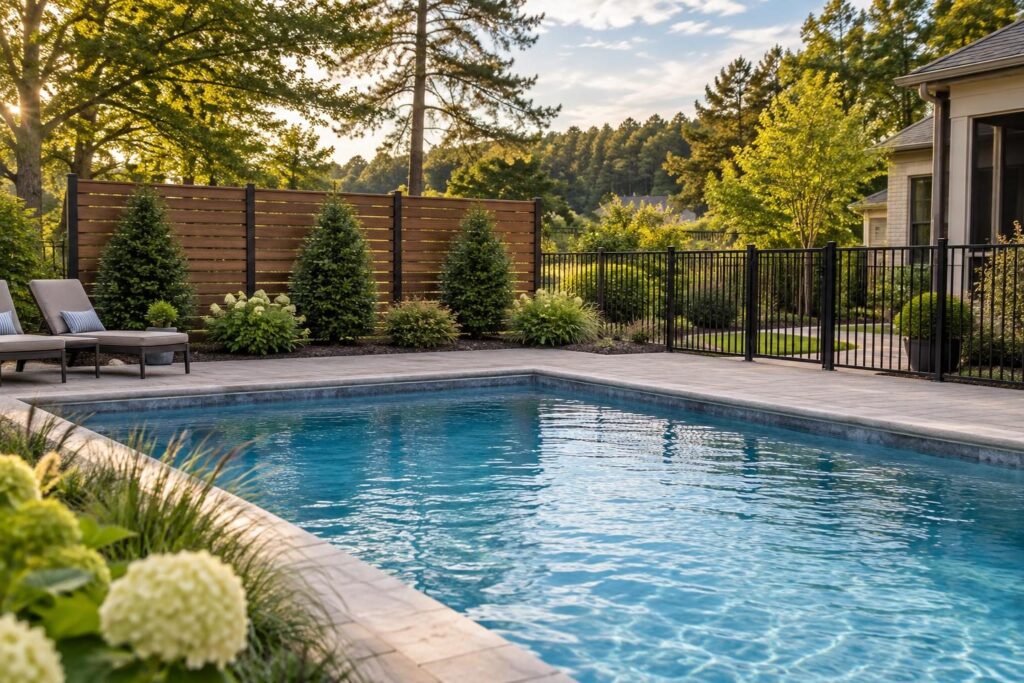
Good pool windbreak planning starts with watching your yard, not choosing a hedge or privacy panel. Wind can increase evaporation, carry away heat, blow debris into water, and chill wet swimmers. Yet a poorly placed screen can create swirling gusts or complicate pool safety.
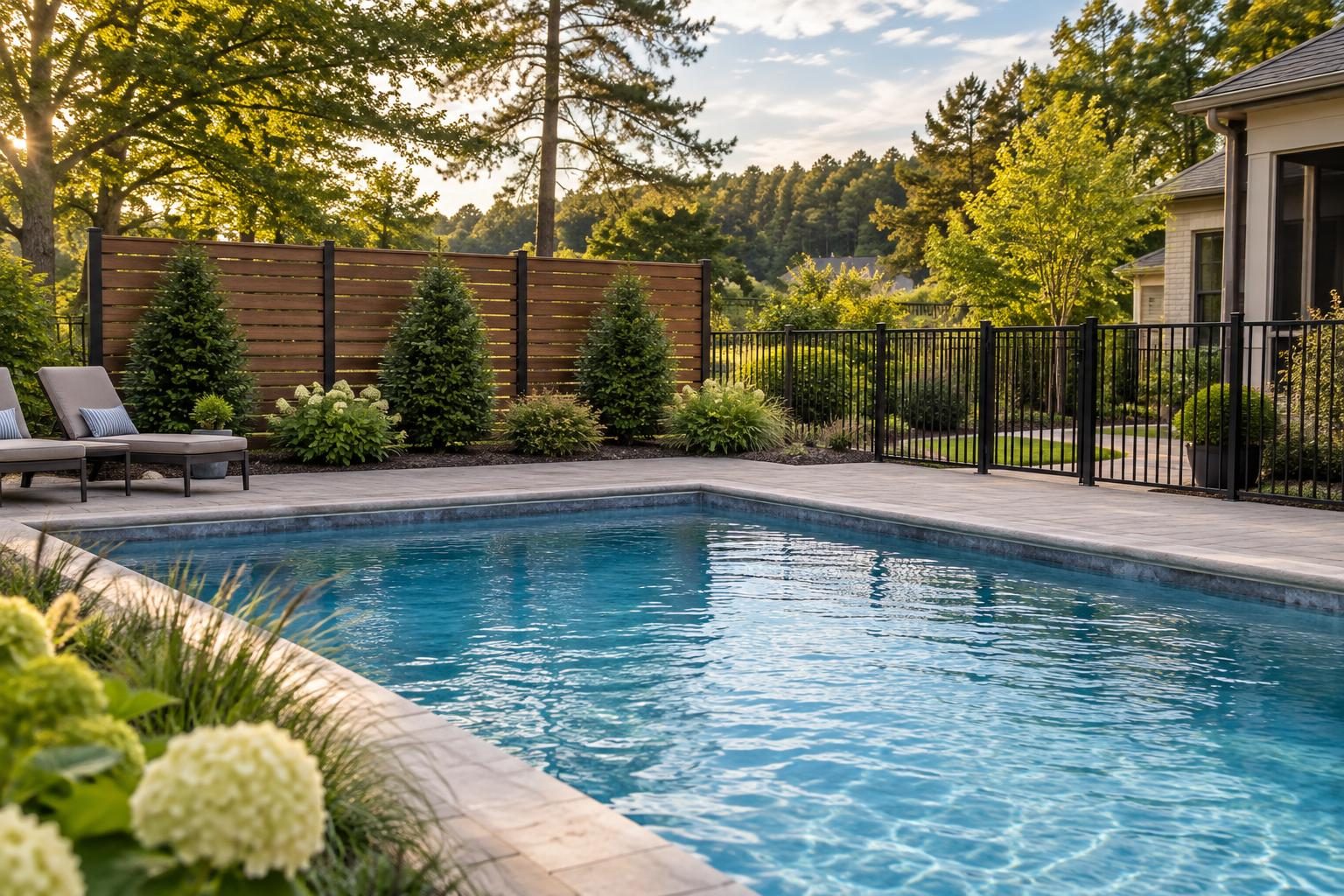
For North Carolina homeowners, the right approach depends on the property and the swimming season. A coastal yard, wooded Piedmont lot, and exposed mountain site need different assessments. Start pool windbreak planning with observations, compare options, and document the proposed layout before approving installation.
Start pool windbreak planning with a backyard wind log
Prevailing winds are winds that most often come from a particular direction during a given period. Regional weather information provides context, but nearby buildings and terrain can redirect airflow. Your pool may experience a different pattern from an open weather station.
Observe the proposed pool area on several days and at different times. Include the hours when your household expects to swim. Repeat observations during relevant seasons when practical, rather than relying on one windy afternoon.
- Mark north, the pool outline, buildings, fences, trees, and open corridors on a yard sketch.
- Draw arrows showing where wind comes from and where it travels.
- Note steady breezes separately from brief gusts and swirling air.
- Record movement in existing leaves, branches, and water without installing loose objects near the pool.
- Photograph debris accumulation and note the date, weather, and location.
Observe from safe ground. Do not investigate outside during thunderstorms or hazardous winds. Seasonal leaf loss and future tree removal also deserve notes because both can change shelter.
Separate water loss, heating needs, and swimmer comfort
Wind moves air across the water surface and can accelerate evaporation. Evaporation also removes heat. The effect depends on water temperature, air temperature, humidity, exposure, and whether the pool is covered.
A windbreak may help, but it cannot establish why a pool loses water. Unexpected water loss still deserves a separate assessment. Avoid accepting a wind explanation without reviewing other possibilities with a pool professional.
Identify the main problem before comparing solutions:
- Water exposure: Does wind cross most of the pool, or mainly one end?
- Wet-swimmer comfort: Are steps, ladders, and towel areas especially breezy?
- Seating comfort: Would shelter around a lounge area address the actual complaint?
- Debris: Does wind carry material from a nearby source or across the wider neighborhood?
Ask the heating contractor to explain the wind and cover assumptions behind equipment recommendations. Our guide to comparing pool heat pump performance explains why operating conditions matter. Do not treat a windbreak as a substitute for a heating assessment.
Map where shelter could create new turbulence
A solid wall does not simply stop wind. Air can move over its top and around its ends. Behind it, turbulence—irregular, swirling airflow—may produce uncomfortable gusts in unexpected places.
A windbreak with openings allows some air through. This can soften airflow changes, but results depend on height, openness, length, placement, and surrounding structures. There is no universal panel spacing or pool-to-screen distance for every backyard.
During pool windbreak planning, ask the designer to mark the intended sheltered area on the drawing. Include the pool surface, entry steps, seating, and the ends of the proposed screen.
- Could the house and screen form a narrow, windy passage?
- Would gaps between sections direct gusts toward swimmers?
- Could the screen push leaves toward the water instead of away?
- Will the design preserve useful summer ventilation?
A visual mockup can help assess views and placement, but it does not prove wind performance. Avoid unsecured temporary screens. Ask an appropriate design professional how to assess difficult exposure before committing to permanent construction.
Compare planting and constructed screen approaches
Planting: gradual shelter with ongoing care
Hedges or layered shrubs can soften views and filter wind. Their effectiveness changes as plants grow, lose leaves, receive pruning, or develop gaps. Initial plant size is not the same as mature coverage.
Ask a qualified landscape professional to recommend plants suited to local soil, moisture, sunlight, and exposure. Coastal salt exposure or exposed winter conditions may narrow suitable choices.
- Review mature height and width, not only nursery dimensions.
- Ask about leaf drop, flowers, seeds, fruit, and storm debris.
- Leave room for pruning without entering unsafe areas or blocking equipment.
- Document irrigation needs, establishment care, and replacement terms.
Consider whether shelter would add more cleaning work than it prevents. The guide to tree canopy and seasonal leaf load offers related questions for screening plants.
Screens: defined coverage with structural responsibilities
Slatted panels and other constructed screens provide coverage without waiting for plants to mature. Their performance still depends on geometry and exposure. Fabric products also need suitable supports and a documented care plan.
Request product specifications, anchoring details, material selections, and maintenance instructions. Ask who verifies the supports for the actual site and wind exposure. A privacy product is not automatically suitable as a windbreak or pool barrier.
Never assume an existing pool fence can support added panels or fabric. Attachments can change wind loading—the force wind places on a structure—and may affect gate operation. Obtain appropriate professional review before modifying a fence.
Check setbacks, pool barriers, and property restrictions
Before ordering plants or screens, locate property lines, easements, utilities, and approved pool features. A setback is a required separation from a boundary or other regulated feature. Do not use the existing fence as proof of the property line.
North Carolina requirements can vary by jurisdiction, adopted code, property conditions, and project scope. Ask local planning and inspections staff about the proposed screen’s location, height, permits, and barrier implications. HOA approval, where applicable, does not replace government review.
Keep planting, supports, and nearby objects from compromising the pool barrier. Review gate travel, closing and latching, sightlines, and possible climbing opportunities. A hedge should not be assumed to replace a required barrier.
The CPSC residential pool barrier guidelines provide consumer-safety background, not a site-specific compliance determination. Also plan a barrier recheck after landscaping changes.
Where septic systems, private wells, or flood zones are involved, confirm restrictions with the appropriate local authority. Before digging, arrange required utility locating and identify private pool lines that public marking may not cover.
Protect drainage and maintenance access
A windbreak occupies working space, not just visual space. Mark planting beds, mature growth, posts, footings, and access openings on the same plan as pool equipment and drainage.
Ask the installer to walk through routine tasks before finalizing placement:
- Can someone remove the filter components and reach all service panels?
- Does the heat pump or heater retain manufacturer-required airflow and clearances?
- Can workers operate and service the pool cover?
- Will pruning crews have safe access without moving barrier components?
- Could beds or supports obstruct shallow drainage channels or drain inlets?
- Can future equipment replacements pass through the remaining opening?
Raised planting beds and changes in ground level can redirect runoff toward the deck or house. Have drainage concerns reviewed before installation. Do not allow crews to bury drains, equipment bases, or pool piping while creating the screen.
Put the windbreak scope and acceptance steps in writing
The final pool windbreak planning package should explain what will be installed and what remains uncertain. Avoid a proposal that promises only “wind protection” without describing the design.
Request a dated layout, dimensions, plant or product selections, support details, and clear responsibility for approvals. Identify exclusions, allowances, and maintenance duties. If a contractor promises energy savings or a specific reduction in wind, request the supporting method and assumptions.
Independently verify applicable licensing and approval claims with the relevant board or authority. Verbal assurances alone do not establish that the proposed work matches your property or approved plans.
- Photograph utility markings, footing work, and other concealed work from safe locations before covering.
- Keep contracts, written communications, approved drawings, and signed change orders together.
- Match payment milestones to the contract and documented work.
- Obtain applicable inspection records and written correction records.
- List unfinished work, warranty terms, care instructions, and responsible contacts at closeout.
Missing details or premature payment requests warrant questions, not automatic accusations. Ask what supports the request and resolve discrepancies in writing. After installation, repeat your wind observations under comparable conditions.
Consult local inspections staff before changing a barrier or adding a regulated structure. Use a qualified pool or landscape contractor for coordination. Bring in an engineer, electrician, surveyor, or septic professional when the proposed work affects their specialty.