
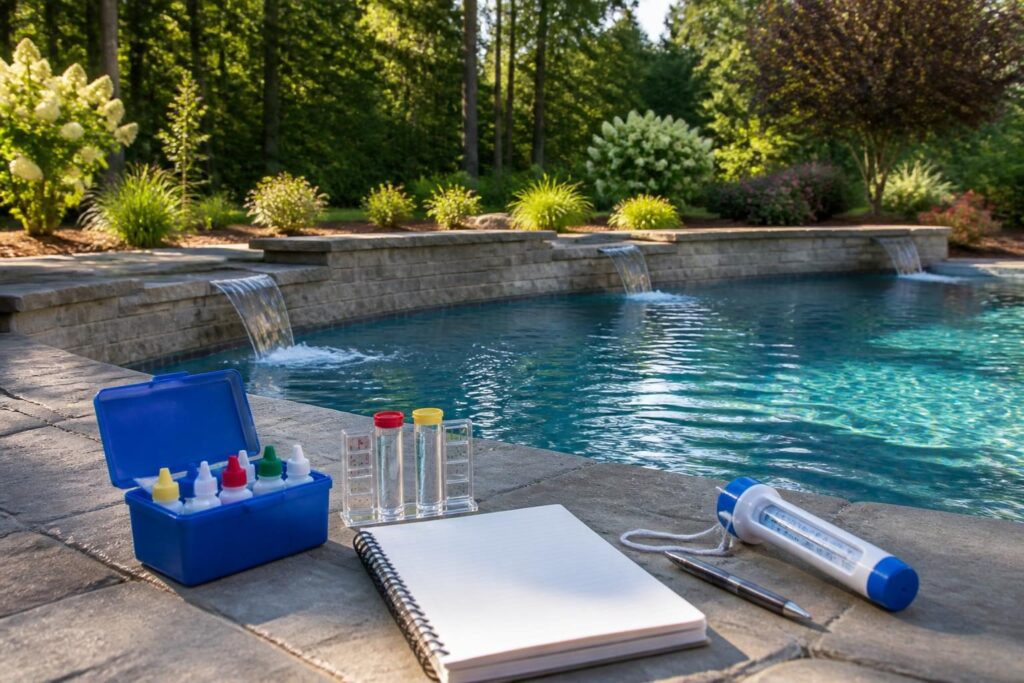
Pool chlorine demand tracking North Carolina gives homeowners a practical way to understand changing sanitizer needs. Instead of reacting to one unexpected reading, you compare chlorine results with sunlight, rain, swimming, water temperature, and circulation. That record can reveal repeatable patterns and help you ask better questions before changing your routine.

This is not a substitute for test-kit instructions, product labels, or professional water-care guidance. Chlorine readings can also reflect testing technique, stabilizer levels, water balance, contamination, and equipment performance. Use the log as an observation tool, not as a diagnosis.
What chlorine demand means in a home pool
Chlorine demand is the amount of sanitizer a pool appears to use between comparable measurements. A reading that falls during the day does not automatically identify the cause. Sunlight can reduce available chlorine, while swimmers, leaves, rain, warm water, and poor circulation can change the result.
Think in terms of patterns. A single low reading may follow heavy use or a testing mistake. Similar losses on several sunny, lightly used days may point to a different question. The log helps separate those situations.
Use the same test method whenever possible. Follow the kit or meter instructions, check expiration information, and collect samples in a consistent location and manner. If two tests disagree sharply, record both results rather than quietly choosing the one you prefer.
Record more than free chlorine
Free chlorine is the sanitizer available to help protect the water. Depending on the test system, you may also record combined chlorine, pH, and other results your pool professional recommends. Combined chlorine is the portion linked to compounds formed when chlorine reacts with contaminants. Do not assume that one number explains the entire water condition.
The CDC provides general guidance about residential pool chlorine, pH, and testing in its home pool water treatment and testing resource. Local conditions and your equipment still matter.
Pool chlorine demand tracking North Carolina homeowners can use works best when each reading has a clear time and context.
Build a simple daily chlorine log
A useful record should be quick enough to complete consistently. A notebook works, but a spreadsheet can make comparisons easier. One line per test is usually better than a long weekly summary because weather and pool use can change quickly.
Include these fields:
- Date and time of each test.
- Free chlorine and any other results you routinely measure.
- Water temperature.
- Approximate sunlight or shade conditions.
- Rain, storms, dust, pollen, or visible debris.
- Number of swimmers or a simple low, medium, or high-use note.
- Water features, covers, or unusual splash-out.
- Pump and filtration operating period.
- Cleaning, backwashing, filter work, or equipment changes.
- Products added, including the product name and amount recorded from the label.
- Appearance, odor, foam, cloudiness, or algae-like growth.
Do not estimate chemical amounts from memory. Record the label information and the actual amount used. Keep chemical additions separate from observations. That separation makes later review clearer.
A dated pool chlorine demand tracking North Carolina log also gives you a clearer record when weather and pool use change together.
Use consistent testing windows
Testing at different times can make normal daily changes look larger or smaller. Choose a practical primary window, such as before routine chemical additions. If you want to understand daytime loss, add a second test after a consistent period of sunlight and circulation.
Do not add chemicals between comparison tests unless safety or your water-care instructions require it. If you do make an adjustment, mark the time and reason. You cannot directly compare a result taken after an addition with an untreated interval.
For broader routine planning, compare your log with the guidance in pool water testing frequency for North Carolina weather and use.
Compare the main factors behind chlorine loss
The goal is not to prove one cause from a single reading. Look for conditions that repeat when chlorine demand rises or falls.
Sunlight and cloud cover
Ultraviolet light can affect chlorine, especially when the pool receives strong direct sun. Note whether the pool received full exposure, partial shade, or cover protection. A sunny afternoon after a cloudy morning may create a different pattern from an overcast day.
A cover can change sunlight exposure and may also reduce evaporation and debris. Record whether you used it throughout the interval, removed it, or used it only part of the time. Avoid treating a cover as a cure for a sanitizer problem without reviewing the full record.
Weather and rain
Rain can dilute the pool, add debris, and introduce organic material. Storm runoff near the pool can bring soil or lawn material into the water. Record the timing, not just the fact that rain occurred. A storm before testing may matter more than a brief shower several days earlier.
Hot, humid periods may coincide with more swimming, warmer water, and faster biological activity. Those factors can overlap. Your notes should show the combination rather than assigning every change to temperature alone.
Swimming and household activity
Swimmers introduce oils, sweat, cosmetics, and other contaminants. Children’s play, frequent entry and exit, and water features can increase the load. Mark both the approximate activity and whether your household used the pool for a short gathering or much of the day.
Compare similar days when possible. A high-use sunny day and a low-use sunny day may help show whether activity changes the next reading. The comparison is more useful when the testing method and time remain consistent.
Water temperature
Warm water can accompany higher sanitizer use, but temperature rarely acts alone. Record the temperature near the same time as the chlorine test. Note heater operation, solar exposure, and unusually warm weather if those details are relevant.
Do not change heater settings or sanitizer targets solely because one warm day produced a lower reading. Extend the observation period and follow product and professional guidance for your system.
Circulation and filtration
Circulation moves treated water through the pool and equipment. If the pump operates for a different period, a valve position changes, or flow appears unusual, record it. Also note air in the system, weak returns, a dirty filter, a skimmer issue, or a water feature that did not operate normally.
These observations do not establish a mechanical fault. They identify questions for a qualified pool professional. Avoid opening electrical equipment or changing plumbing settings unless you have the required qualifications and the manufacturer’s instructions support the work.
Review the log for useful trends
Review the record once or twice each week during active use. Start by grouping days with similar conditions. Compare readings from similar test windows, then ask what changed between the groups.
Useful questions include:
- Did chlorine readings fall more after sunny days than after shaded or covered days?
- How did high-use days affect the next test result?
- Was warmer water associated with a repeated increase in sanitizer use?
- Had rain, debris, or runoff appeared before unusual readings?
- Was circulation consistent during the comparison period?
- Did the test result change after a new product, filter service, or equipment adjustment?
- Were pH, stabilizer, and other relevant results also changing?
A simple spreadsheet can calculate the difference between two readings. Label each interval clearly. A negative change means the later reading was lower, but it does not identify why. Avoid comparing a morning reading with an evening reading unless that timing is the question you are studying.
For help connecting test results with equipment and circulation observations, see pool water testing log interpretation and equipment checks.
Over time, pool chlorine demand tracking North Carolina families record may show whether sunlight, use, temperature, or circulation repeatedly lines up with lower readings.
When a pattern deserves a closer look
Repeated low readings, visible growth, unusual odor, cloudiness, or a major change after ordinary use deserves attention. First, verify the testing method and check whether the kit or meter remains within its usable period. Compare the result with a second reliable test method or qualified service provider when appropriate.
Review related records before adding more product. Check recent rain, heavy use, water replacement, temperature, stabilizer information, pH, filter condition, pump operation, and visible debris. Adding chemicals without understanding the measurements can create new balance problems.
Do not handle chemicals casually. Follow the product label, never mix products, use appropriate protective measures, and store chemicals securely. Keep children and pets away from the testing and storage area.
Make the log useful to a pool professional
Bring several days or weeks of records instead of one isolated result. Include test times, product additions, weather notes, equipment changes, and photographs when appearance changed. A concise timeline helps the professional understand what happened before the appointment.
Ask focused questions:
- Is the test method suitable for this sanitizer system?
- Which readings should be compared together?
- Could circulation, filtration, or flow conditions affect the pattern?
- What additional testing would help distinguish sunlight, use, water balance, or equipment factors?
- Which changes should you make gradually and document?
Keep the final advice with your pool records. Note the date, observations, recommended actions, and follow-up readings. Build a Pool in North Carolina encourages homeowners to treat water-care records as part of responsible pool ownership, not as a substitute for qualified service.
A daily log cannot determine compliance, water safety, or equipment condition by itself. If readings remain unusual, consult a qualified pool professional. For equipment, electrical, water-source, or site concerns, contact the appropriate licensed specialist or local authority.