
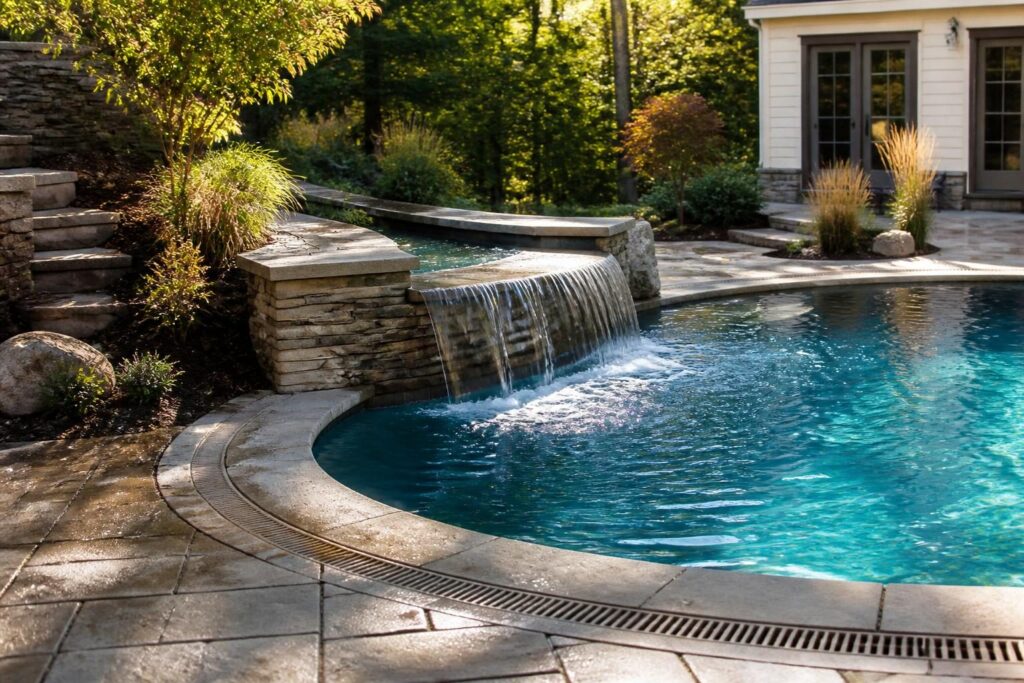
Good pool water feature splash out planning North Carolina homeowners can do early helps prevent surprises after installation. Fountains, waterfalls, spillways, bubblers, and busy play areas add movement and character. They can also increase water loss, alter chemical demand, spread sound, and send water beyond the intended pool edge.

The goal is not to discourage water features. Instead, treat each feature as part of the pool’s operating system. Its height, flow, wind exposure, controls, deck layout, drainage, and cleaning routine all affect ownership. A thoughtful design review gives you better questions for your pool contractor and other qualified professionals.
For many homeowners, pool water feature splash out planning North Carolina means comparing the feature’s visual appeal with its daily operating demands before approving the design.
Why water features change pool water loss
Still water loses moisture mainly through evaporation. Moving water exposes more surface area to air. A fountain creates droplets, a waterfall breaks water into sheets, and a spillway sends water over an edge. Wind can carry some of that water away before it returns to the pool.
Splash-out is different from evaporation. It occurs when water leaves the vessel through play, wind, wave action, or a feature’s landing pattern. A feature may return most of its flow to the pool while still pushing small amounts onto the deck, planting beds, or nearby structures.
North Carolina weather adds changing conditions. Hot sun, humid air, thunderstorms, dry periods, and breezy shoulder seasons may produce different water-loss patterns. A large feature does not automatically create a problem, but its operation should match the yard and the family’s use.
Compare feature types before choosing one
- Fountains: Jets and arcs may be sensitive to wind. Fine spray can travel farther than expected.
- Waterfalls: Rough surfaces and tall drops may create more sound and splash than a smooth sheet.
- Spillways: A raised spa or basin may send water across a narrow edge. The receiving area needs a clear return path.
- Play areas: Tanning ledges, steps, bubblers, and shallow zones often receive repeated activity. Children’s play can create more splash-out than normal circulation.
Ask for the proposed flow rate, operating controls, and expected landing area. You may not need a precise water-loss prediction, but you do need to understand what the design assumes.
Plan splash-out around the deck and yard
Water should have a controlled route away from doors, walls, equipment, planting beds, and neighboring property. Review the feature’s landing zone at normal and reduced settings. Consider where water goes when swimmers stand near the edge or when wind changes direction.
Deck slopes, drains, channels, joints, thresholds, and nearby soil all matter. Splashing near a door can create a nuisance even when the pool itself is watertight. Water near an equipment pad may also create service and component concerns. Review related deck questions in pool deck drainage around doors and walkways.
Do not assume a feature can drain wherever the deck naturally falls. Confirm the planned collection and discharge route with the designer. Local site conditions, grading, easements, flood risk, and project scope can affect what is suitable. The pool drainage outlet planning guide offers a useful set of questions for that review.
Use a splash-zone checklist
- Mark the feature’s landing area on the plan.
- Identify nearby doors, windows, walls, furniture, and electrical equipment.
- Ask whether the deck can collect and direct incidental water.
- Review planting soil, mulch, and erosion exposure near the splash zone.
- Confirm how the area will be cleaned and inspected.
- Ask what happens during heavy rain or when the feature is turned off.
Drainage is not only a finished-pool issue. During construction, land disturbance and runoff may involve North Carolina requirements that vary with the project. Review current information from the NC DEQ Construction Stormwater Program, then verify the project’s obligations with the local authority and qualified professionals.
Expect chemistry and replenishment changes
Water loss removes water, not necessarily every dissolved substance in the same proportion. When water evaporates, many dissolved materials remain behind. When splash-out removes treated water, some chemicals leave with it. Replacing lost water can then change the pool’s balance, depending on the source water and the amount added.
Frequent feature use can therefore create a different maintenance pattern from a quiet pool. You may notice changing water level, more frequent testing, or a need to review dosing practices. Heavy use also adds body oils, sunscreen, debris, and other contaminants. Read the companion guide on pool water chemistry after heavy use for a broader testing and recordkeeping approach.
Use test results rather than guesswork. The CDC provides residential guidance about pool water treatment and testing, including chlorine and pH. Review its home pool water treatment and testing information. Product labels, equipment instructions, and professional recommendations still apply.
Track the feature separately
A simple log can show whether the feature changes operating needs. Record the date, weather, water level, feature setting, hours of operation, test results, and refill activity. Note major parties, strong wind, heavy rain, or unusual splash-out.
- Measure water level under similar conditions, if practical.
- Record whether the feature ran continuously or intermittently.
- Note visible water leaving the pool area.
- Document refill dates and the approximate reason for each refill.
- Ask a qualified pool professional to investigate unexpected loss rather than assuming evaporation.
This record does not diagnose a leak or establish a required chemical adjustment. It gives your service professional useful information and helps separate normal use from a new condition.
Manage noise, neighbors, and operating hours
Water movement creates sound. A low spillway may provide gentle background noise, while a tall waterfall can become prominent near seating, bedrooms, property lines, or open windows. Pumps and feature plumbing can add to the sound profile.
Listen to the proposed feature from several locations. Include the house, patio, bedroom windows, seating areas, and property boundaries. Ask whether the feature can run at different flow settings. A timer or automation control may let you enjoy the feature during selected periods instead of operating it all day.
Noise expectations can depend on local rules, neighborhood conditions, and property layout. Avoid assuming that a design is acceptable because it is common elsewhere. Discuss local concerns with the appropriate authority and make practical decisions with your contractor.
Questions for the design meeting
- Where will the feature sound be strongest?
- Can the flow be adjusted without harming circulation or equipment?
- Can the feature operate on a schedule?
- Will wind change the spray or landing area?
- How will the design limit water reaching nearby structures?
- What maintenance access is needed for pumps, valves, lights, and nozzles?
Coordinate controls, equipment, and maintenance
Water features often depend on separate valves, pumps, suction paths, returns, lights, or automation settings. The exact arrangement varies by design. Ask for a clear explanation of which equipment serves the feature and how it interacts with ordinary pool circulation.
Feature operation can affect energy use. A separate feature pump may run only when the feature is active, while another design may share equipment. Request the operating assumptions in writing. Compare normal circulation, feature operation, and seasonal schedules rather than focusing only on the equipment label.
Keep manuals, valve labels, control settings, cleaning instructions, and diagrams with the rest of your pool records. Before handover, ask the contractor to demonstrate normal operation, reduced flow, shutdown, cleaning access, and any safe procedure for clearing a blocked nozzle. Do not open electrical equipment or alter wiring unless directed by a qualified professional.
Inspect the area during routine care. Look for displaced water, blocked drains, loose stones, staining, algae in shaded wet areas, plant debris, and soil movement. A feature that changes its pattern may need professional attention. Shut down equipment only according to the manufacturer’s instructions and seek help when the cause is unclear.
Make decisions before construction starts
Water features are easiest to coordinate while the layout, elevations, deck, drainage, plumbing, and controls remain open decisions. Add the chosen feature to the design documents and scope. The pool design freeze checklist can help organize those decisions before work begins.
During this review, pool water feature splash out planning North Carolina should connect the feature schedule with refill access, drainage paths, sound-sensitive areas, and service records.
- Feature type, location, dimensions, finish, and intended flow.
- Control method, schedule options, and operating assumptions.
- Landing zones and deck or drainage treatment.
- Sound-sensitive areas and preferred operating hours.
- Refill access and a plan for monitoring water loss.
- Cleaning, winter care, service clearance, and replacement access.
- Any lighting, electrical, plumbing, or structural work requiring licensed professionals.
North Carolina requirements can vary by jurisdiction, adopted code, utilities, septic systems, flood zones, property conditions, and project scope. A feature may also change drainage or construction-stormwater questions. Verify permits, inspections, barriers, electrical work, discharge routes, and other requirements with the local inspections department and appropriate licensed professionals.
Thoughtful pool water feature splash out planning North Carolina homeowners can use turns a decorative element into a manageable part of the pool system. Review water loss, chemistry, noise, drainage, controls, and maintenance together. When the design involves drainage, structural work, electrical equipment, septic or well concerns, flood risk, or code questions, consult the local inspections department, licensed pool contractor, electrician, engineer, surveyor, septic professional, or another qualified specialist. Build a Pool in North Carolina can help homeowners frame those planning questions without replacing site-specific advice.