
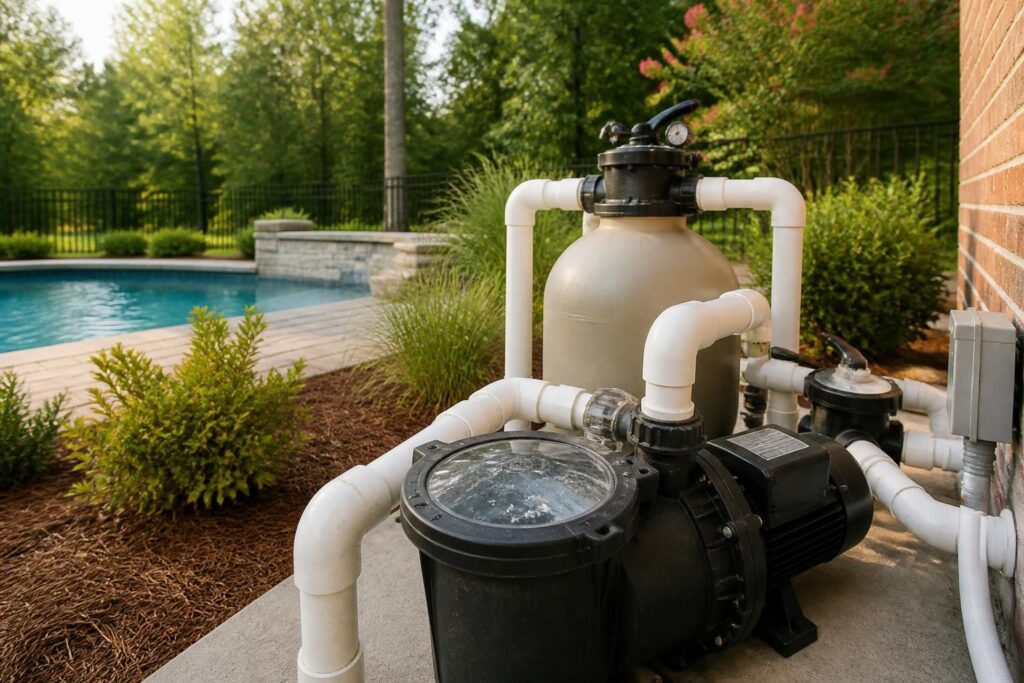
Pool pump priming air in system homeowner checks can help you describe a circulation problem before service arrives. Air may appear as bubbles in the pump basket, weak return flow, or repeated loss of prime. Some causes are simple observations, such as a low water level. Others involve suction plumbing, seals, valves, electrical controls, or equipment damage.

This guide focuses on what a homeowner can safely observe. It does not replace instructions from the equipment manufacturer or service from a qualified pool professional. Turn off equipment before opening a lid, removing a basket, or touching plumbing connections. Keep hands, clothing, and tools away from moving parts.
What “priming” means in a pool system
Priming is the process of filling the pump housing and connected suction line with water so the pump can move water through the filter, heater, sanitizer, and return lines. A properly filled pump may still show some brief air movement during startup. Persistent air usually deserves closer attention.
The pump sits on the suction side of the circulation system. It pulls water from the pool through the skimmer and, where installed, the main drain or other suction outlets. The pump then pushes water through the pressure side and back to the pool through return fittings.
“Losing prime” means the pump no longer has enough water in its housing to maintain normal circulation. The motor may continue running while water movement drops. That condition can create heat and may damage equipment, depending on the pump design and the manufacturer’s instructions.
North Carolina weather can add useful context. Heavy rain may change water levels or introduce debris. Warm weather can increase run time and evaporation. Freezing conditions can create separate risks for exposed plumbing. These factors do not prove the cause, so record what changed before adjusting the system.
Visible signs of air in the circulation system
Start with observations from outside the equipment. Do not remove a pressurized filter lid or loosen fittings while the system is operating. A clear pump lid, if your model has one, can reveal useful patterns.
- Persistent bubbles under the pump lid: A few bubbles during startup may clear. A steady stream or an increasingly empty housing needs attention.
- Air bursts from return fittings: Small spurts may appear after someone has opened the system. Repeated bursts can suggest air is entering the circulation path.
- Weak or uneven return flow: One return may differ from another because of valve settings or design. A sudden system-wide change is more significant.
- Gurgling or slurping sounds: Noise near the skimmer, pump, or plumbing can accompany a low water level or restricted flow.
- Repeated loss of prime: The pump starts normally, then stops moving water after a short period or after the system shuts down.
- Filter pressure changes: A pressure reading that differs from your normal record can help service staff understand the event. It does not identify the cause by itself.
Record a short video when you can do so from a dry, safe location. Include the pump lid, pressure gauge, return flow, and any visible water around the equipment pad. Never place a phone or camera near energized equipment or wet surfaces.
Common observation points before you call
Pool water level and skimmer condition
Check whether the water level remains high enough for the skimmer to draw water continuously. The correct operating range depends on the pool and skimmer design. Use the owner’s manual or ask your service professional if you are unsure.
Look for a floating cover, large debris, or a skimmer basket that looks blocked. Do not reach into the skimmer while the pump is running. Switch the system off using the normal control, then follow the manufacturer’s steps for basket removal.
Pump lid, seal, and basket area
With the pump off, look for a lid that is not seated correctly, a damaged lid, or a seal that sits out of place. Do not assume that tightening the lid harder will solve the issue. Excess force can damage components or make later service more difficult.
Check for water around the pump housing and nearby unions. A wet area does not prove that air is entering the suction line, but it gives a professional a useful clue. Dry the area only if you can do so without touching electrical parts.
Valves, cleaners, and visible connections
Compare valve handles with the normal positions shown in your equipment notes. A partly closed valve, changed cleaner connection, or altered suction setting can affect flow. Do not force a stiff handle or change several settings at once.
If the system includes a vacuum hose, automatic cleaner, or other accessory, note whether the symptom began after you connected that item. A loose hose connection can allow air into some systems. Follow the product instructions, and ask a qualified professional before disassembling unfamiliar parts.
Safe pool pump priming air in system homeowner checks
A cautious check begins with the system off and the area dry enough to work safely. Keep children and pets away from the equipment pad. If water is near electrical equipment, stop and contact a qualified electrician or pool professional.
- Record the symptom. Note the date, weather, water level, pump mode, visible bubbles, return flow, filter pressure, and any recent maintenance.
- Stop the pump normally. Use the approved switch, timer, automation control, or disconnect procedure. Do not open equipment that may still carry power.
- Wait for the system to settle. Follow the equipment manual before opening any pump lid or filter component. Pressurized systems can release water unexpectedly.
- Check obvious conditions. Look at the water level, skimmer area, pump lid, basket, visible seals, and valve positions. Avoid forcing parts.
- Restore only documented settings. If you changed a control during a safe check, return it to the position shown in your records or manual. Do not experiment with unfamiliar valves.
- Restart only if the manual allows it. Watch from a safe position. Stop if the pump does not establish water movement, the pump housing empties, loud grinding occurs, or water leaks.
Do not repeatedly restart a pump that will not prime. A single controlled observation can be useful. Repeated dry or nearly dry operation may worsen a mechanical problem.
For a new installation, record the first normal readings and settings in a consistent format. The related pump and equipment startup readings guide can help organize that record without treating one reading as a universal target.
When to stop operating the equipment
Turn the system off and seek qualified service when you see a steady loss of water in the pump housing, a pump that will not prime, or a leak that grows while the system runs. Stop immediately for smoke, burning odor, tripped protection, exposed wiring, unusual heat, grinding, or electrical noise.
Also stop when you cannot tell whether a component remains pressurized or still carries power. Pool equipment combines water, electricity, rotating machinery, and chemical systems. A homeowner should not remove electrical covers, bypass protective devices, open a filter vessel, or cut into plumbing to diagnose air.
Call the appropriate specialist if the issue may involve wiring, bonding, grounding, controls, buried plumbing, structural equipment damage, or a persistent leak. The local inspections department may also be relevant when work changes installed equipment or electrical components. Current requirements can vary by jurisdiction, adopted code, property conditions, and project scope. The North Carolina Office of State Fire Marshal provides code documents and interpretations, but local officials and qualified professionals should confirm what applies.
When pool pump priming air in system homeowner checks show persistent bubbles or falling flow, give the service professional your observations instead of testing unfamiliar components.
What information helps a service professional
A clear record can reduce guesswork. Avoid making repeated adjustments before help arrives. Instead, gather the following information:
- Make, model, and approximate age of the pump and related equipment.
- Whether the problem occurs at startup, after several minutes, or after the system shuts down.
- Whether bubbles appear under the lid, at the returns, or in both locations.
- Recent filter cleaning, basket cleaning, water additions, drain-down work, or valve changes.
- Normal and current filter pressure, if you can read the gauge and safely observe the system.
- Photos of the equipment pad, labels, valve positions, and visible water marks.
- Any weather event, power interruption, landscaping work, or construction activity near the equipment.
Keep the equipment manuals, plumbing diagram, control settings, and prior service notes together. If buried plumbing or concealed work might involve the problem, construction photos and records can help identify routes and connections. A useful construction photo record may show conditions that are no longer visible.
Preventing confusion during future checks
Use labels that match the equipment manual and your service provider’s terminology. Mark normal valve positions with a record or diagram rather than relying on memory. Take a baseline photo when the system operates normally, but do not place labels where they hide warnings or equipment data.
Track pressure and flow observations alongside water-care notes. A water-testing record can help show whether circulation changes follow heavy use, storms, or maintenance. It cannot replace a mechanical diagnosis. The water-testing and equipment checks guide explains how to compare those records carefully.
Energy choices also affect operating habits. Some certified pumps use controls that change speed and flow. ENERGY STAR provides general information about certified pool pumps and energy considerations at ENERGY STAR Pool Pumps. Follow the exact operating instructions for your model rather than copying another pool’s schedule.
A calm decision rule for homeowners
If water moves normally and the symptom was brief, document it and monitor the next safe operating cycle. If air persists, flow drops, or the pump repeatedly loses prime, stop treating the issue as a routine adjustment. Service is the safer next step.
For pool pump priming air in system homeowner checks, keep observations factual: what you saw, when it occurred, what changed, and what you did. Consult the local inspections department for applicable permitting or inspection questions. Contact a licensed pool contractor, electrician, engineer, surveyor, septic professional, or other qualified specialist when the condition involves their area of expertise.