
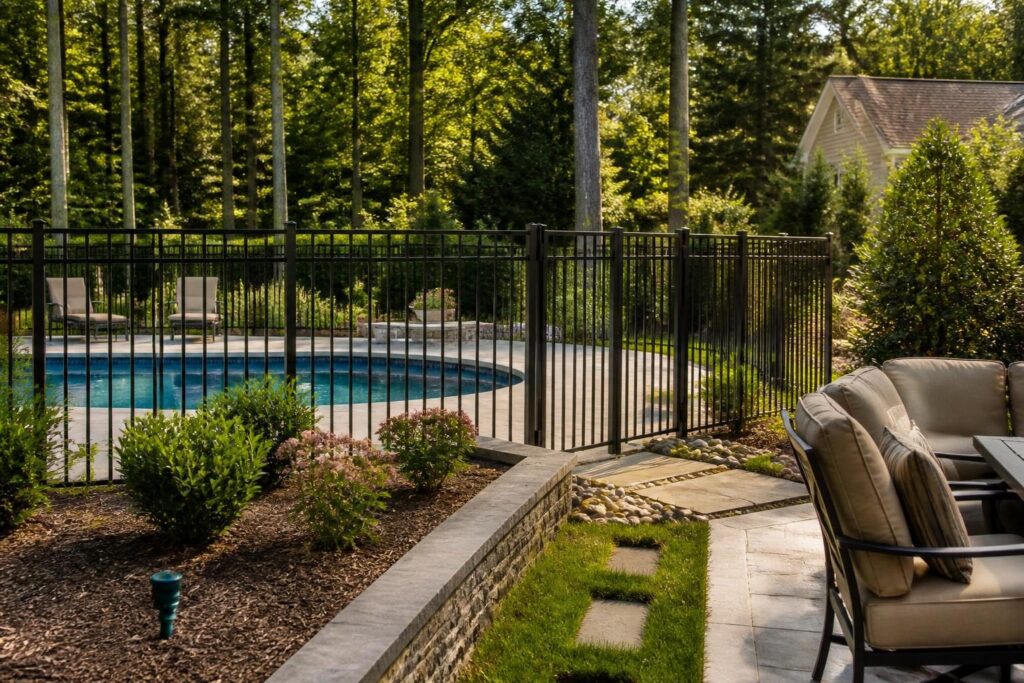
A pool fence inspection after landscaping changes can catch safety problems that are easy to miss. New soil, planters, retaining features, furniture, lights, and irrigation parts may change the barrier’s effective height, access, or condition.

A barrier includes a fence, wall, gate, or other feature that limits unsupervised access to the pool area. Its performance depends on the whole setting, not only the fence panels. Yard work can raise the ground, create footholds, block a gate, or add an object that helps a child climb.
North Carolina requirements can vary by jurisdiction, adopted code, property conditions, and project scope. This guide offers a homeowner review process, not a code, engineering, or inspection determination. Confirm current requirements with your local inspections department and qualified professionals when needed.
Why yard changes can affect pool barrier safety
Inspectors and homeowners often compare pool barriers with the surrounding grade and nearby features. When the yard changes, the original conditions may no longer exist. A fence that appeared suitably separated from the ground can become easier to reach after someone installs a raised planting bed.
Landscaping can also change how someone approaches the barrier. A low wall may become a step. A bench may become a platform. Dense shrubs may hide a gate or reduce visibility. Irrigation work may leave loose soil, exposed tubing, or a new valve box beside the fence.
These changes do not automatically mean the barrier fails. They do mean the homeowner should pause and reassess the complete route to the pool. Look at the area from a child’s likely viewpoint, while still following safe supervision practices.
The CDC’s pool safety guidance treats barriers as one part of broader protection. Supervision, alarms, safe habits, and emergency preparation still matter after a fence review.
Start a pool fence inspection after landscaping changes
Choose a time when the yard is dry and visible. Walk the entire boundary instead of checking only the side where work occurred. Changes in one location can affect a gate approach, drainage route, or adjoining section.
Make a boundary walk
- Follow the barrier from end to end, including corners and transitions.
- Check where the fence meets soil, paving, decks, walls, and other structures.
- Look for fresh fill, erosion, settlement, exposed footings, or gaps.
- Inspect both sides of the barrier if access allows.
- Photograph changed areas from consistent viewpoints.
Use your project photographs, landscape plan, or previous inspection records for comparison. Mark the date and describe what changed. A simple record helps you notice gradual movement after rain, irrigation, or further planting.
Do not rely on a tape measure or a remembered code number as proof of compliance. Dimensions, openings, gate details, and separation requirements may depend on the applicable local rules. Ask the inspections department what it must verify in your jurisdiction.
Repeat a pool fence inspection after landscaping changes whenever later work alters the soil, planting beds, paving, or access route.
Check new soil, planters, and retaining features
Added soil is one of the most important changes to review. A planting bed, decorative berm, or grading adjustment can bring the ground closer to the top of the barrier. Heavy rain may also move soil against the fence or wash it away from a footing.
Inspect the soil line after the work and again after significant rain. Look for mounding, ruts, exposed roots, and sediment deposited along the barrier. If soil has moved, avoid simply pushing it back without understanding the drainage or stabilization issue.
Planters can create a convenient foothold or platform. Check pots, raised beds, edging, and planter boxes near the fence. Consider their height, width, stability, and position when someone approaches from either side. Movable containers deserve attention because their location can change during routine yard care.
Retaining walls and landscape steps require special care. A wall may alter the elevation beside the fence or provide a surface for standing. Steps can create a direct approach to a gate. Review the relationship between the barrier and those features as one system.
For related planning questions, see pool barrier placement around retaining walls and decks. If a wall, slope, or drainage change is involved, ask a qualified designer or engineer whether the feature needs a professional review.
Look for climbable objects and new access routes
A climbable object can help a person step up, stand, reach, or cross toward the pool. It may remain in place year-round, appear seasonally, serve a decorative purpose, or result from routine yard work. Review the area from several directions.
- Benches, chairs, tables, stools, and storage containers.
- Large planters, stacked pots, firewood, or landscape blocks.
- Play equipment, bicycles, carts, and yard tools.
- Low walls, raised edging, steps, and deck transitions.
- Tree limbs, trellises, cables, and dense plant growth.
- Light fixtures, transformer boxes, irrigation controls, and hose reels.
Permanent objects may need relocation, redesign, or professional evaluation. Temporary objects need a household routine. Decide where furniture, toys, tools, and containers will stay when the pool is unattended.
Plants deserve repeated checks. A small shrub can become a dense mass that conceals the barrier or gate. Branches may create handholds. Vines can attach to fencing. Ask the landscaper how mature growth will be managed without damaging the barrier.
The article pool barrier landscaping clearance planning offers a focused way to organize this review. Keep the goal practical: preserve access control, visibility, and reliable gate operation.
Recheck gates, latches, lighting, and irrigation
Yard work often affects the gate before it affects the fence. New paving can change the swing path. Soil or mulch can collect under the gate. A light, plant, or irrigation control can obstruct the approach.
Gate review questions
- Can the gate move through its intended path without rubbing or striking anything?
- Will it close fully after a normal opening?
- Does the latch engage consistently without a person holding the gate?
- Can landscaping, furniture, or a hose prevent closure?
- Is the gate still visible and easy for adults to check?
- Are hinges, fasteners, posts, and surfaces free from obvious damage?
Do not defeat, bypass, or modify gate hardware based on a general online tip. A qualified pool professional or local authority can explain what applies to your barrier. For a detailed homeowner hardware review, use the pool safety barrier gate hardware inspection checklist.
Lighting can improve visibility, but it can also add a box, conduit, footing, or cord near the barrier. Keep electrical work within the scope of a licensed electrician. Ask whether new equipment changes access, concealment, or the approved arrangement.
Irrigation changes can create soft soil, standing water, exposed components, or repeated spray against posts and gates. Ask the irrigation professional to confirm that heads, valves, tubing, and maintenance access do not interfere with the barrier. Electrical and backflow questions also need qualified review.
Use a local verification and records checklist
After your visual review, separate observations from conclusions. Write down what changed, where it is located, and what question remains. Avoid labeling a condition compliant or noncompliant unless the appropriate authority or professional makes that determination.
- Record the landscaping date, contractor scope, and weather afterward.
- Save before-and-after photographs of soil levels, gates, walls, and nearby objects.
- Keep landscape plans, retaining-wall documents, product instructions, and invoices.
- List any moved furniture, planters, lights, irrigation parts, or play equipment.
- Note gate behavior, visible damage, drainage changes, and recurring soil movement.
- Ask the local inspections department whether a review or permit question applies.
- Ask the pool contractor or barrier installer to assess changed conditions.
North Carolina code materials and local interpretations can change. The North Carolina Office of State Fire Marshal documents page is an official starting point, but homeowners should confirm the current rules and local interpretation before relying on them.
If a landscape project involved significant grading or erosion, keep those records with your pool file. The pool landscaping soil erosion control guide can help you organize observations about moving soil and runoff.
Set a repeat review routine
One inspection is not enough when the yard continues to change. Recheck after planting, pruning, furniture changes, irrigation repairs, retaining work, severe weather, or delivery of large landscape materials.
A seasonal review can be brief. Walk the boundary, test normal gate operation, scan for new footholds, and compare the soil line with your photographs. Include every adult who may move outdoor furniture or maintain the landscape.
Use household rules that support the physical barrier. Store toys and chairs away from the fence when the pool is unattended. Keep gates closed. Maintain active supervision whenever children are near water. Consider other protective layers, such as alarms or a suitable cover, as appropriate for your pool and household.
Consult the local inspections department about current requirements. Ask a licensed pool contractor, electrician, engineer, surveyor, landscape professional, or septic professional for help when the change involves their field. A local review matters especially when grading, retaining walls, electrical equipment, drainage, or property conditions have changed. This final pool fence inspection after landscaping changes can help you identify questions before relying on the altered yard.