
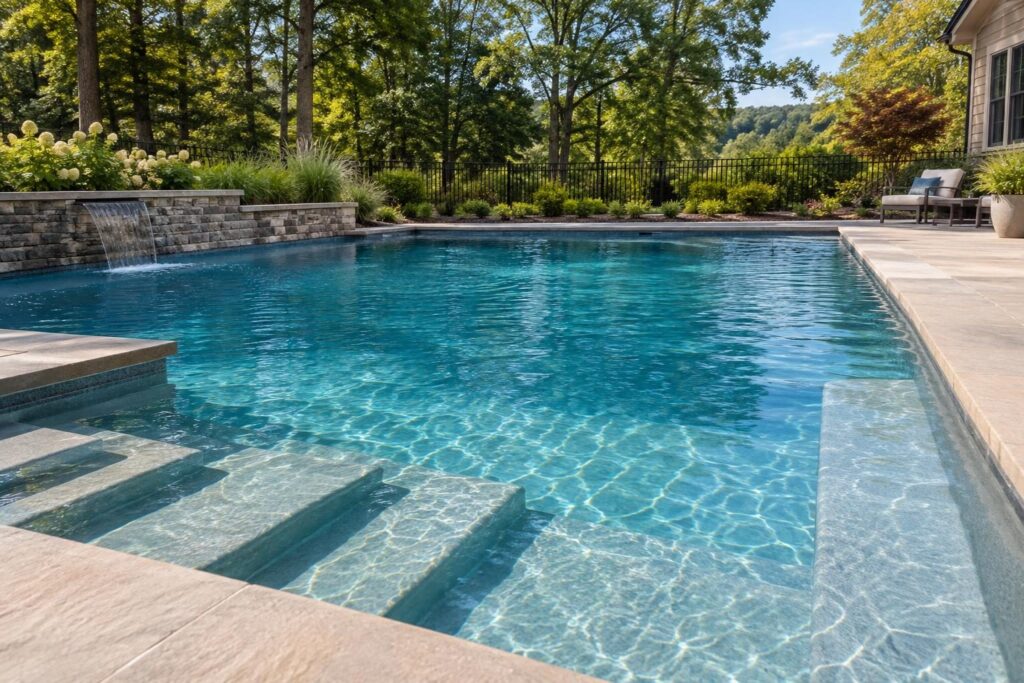
Managing backyard pool diving risk starts before anyone enters the water. A pool can look deep, long, or spacious without being suitable for headfirst entry. Guests may assume the far end allows diving, especially when they see darker water or a raised edge.
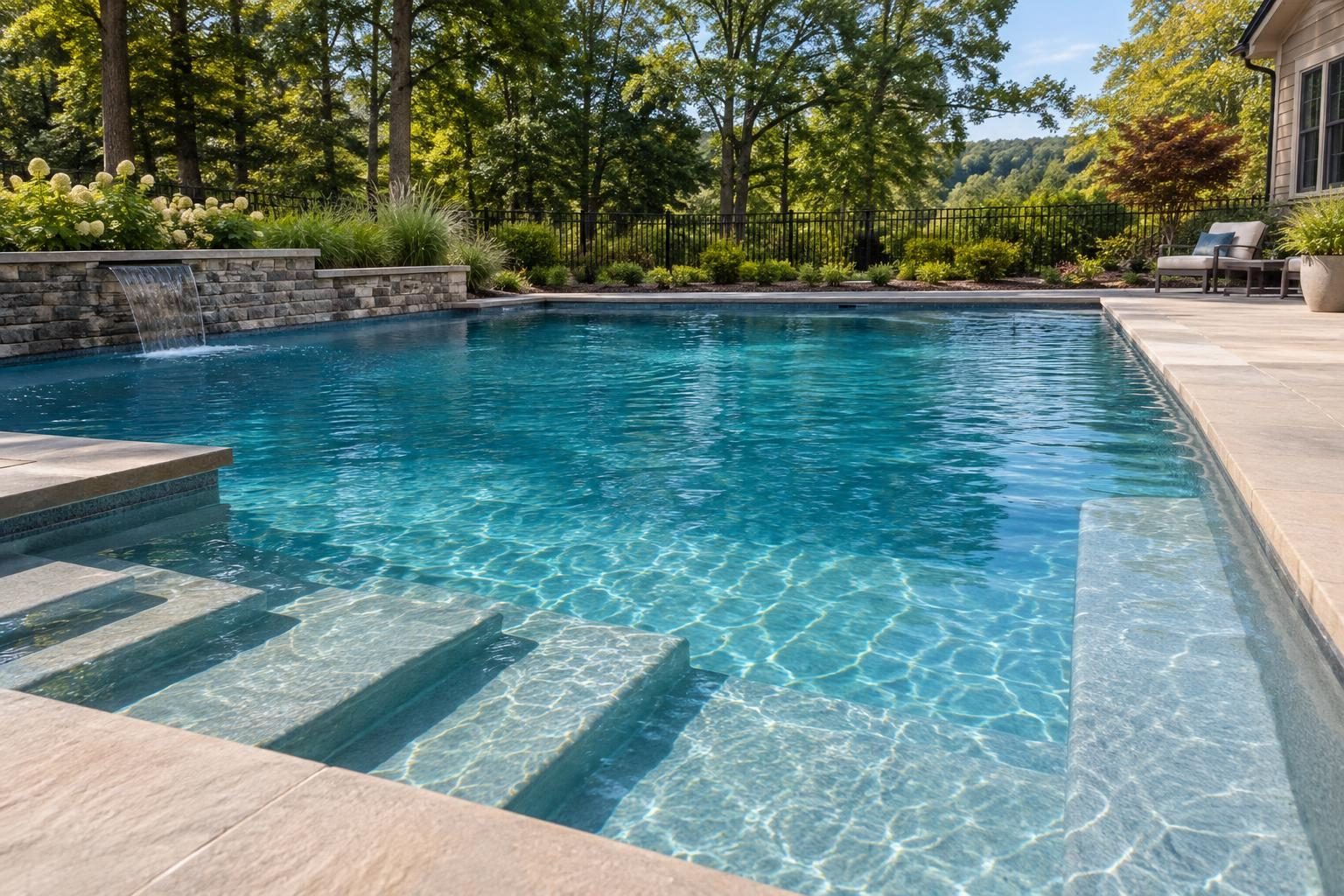
Do not let appearance become permission. For a pool without documented, professionally confirmed suitability for diving, establish a clear no-diving rule. Explain that rule to every guest, including experienced swimmers. Swimming ability does not establish that a particular pool can accommodate a dive.
Why pool appearance cannot establish diving safety
Headfirst entry into insufficient water can cause severe head, neck, or spinal injury. The concern extends beyond the depth directly beneath the entry point. A person also travels forward through the water.
Pool length alone does not establish a suitable underwater path. Neither does one depth measurement. The bottom may rise, change slope, or meet a bench, step, or ledge along that path.
Several visual cues can mislead guests:
- Dark finishes, shadows, reflections, and lighting can make water seem deeper.
- A long swimming lane may still have a shallow bottom.
- A raised wall or broad deck edge can resemble an inviting launch point.
- A deeper section may connect quickly to a sloping bottom or shallow shelf.
Even clear water does not provide a professional assessment of diving suitability. Never ask someone to test an uncertain area with a dive. Past use without an injury is not proof that future use is safe.
Use pool depth records without treating them as permission
Find the pool drawings, specifications, and any records describing its intended use. A rendering shows appearance; it does not necessarily document the finished underwater shape.
Ask the builder or qualified evaluator to explain these points:
- Was the pool designed for swimming only, or for specific diving equipment?
- Do the drawings show bottom slopes, steps, benches, and ledges?
- Do the records describe the completed pool rather than an earlier design?
- Were construction changes recorded and reviewed by the responsible professional?
- What restrictions apply to water level, equipment, and use?
Depth labels help communicate information, but they do not independently establish permission to dive. Ask a qualified professional to confirm their accuracy and placement. Do not invent labels from memory or estimates.
If documents conflict, request a written explanation. An old drawing or missing measurement does not prove defective work. It does mean you should resolve the uncertainty before considering diving use.
Address backyard pool diving risk before guests arrive
Choose a household rule that guests can understand immediately. For a pool operated without diving, use direct language: no diving, no headfirst entries, and no jumping from walls or furniture.
Tell visitors before they reach the water. Repeat the rule during a brief poolside orientation. Point out steps, benches, shallow shelves, and the designated entry route.
A practical guest briefing should cover:
- Where swimmers should enter and exit.
- Which areas contain shallow features or changing depths.
- That running, pushing, and horseplay are not allowed.
- That furniture, raised walls, and landscaping are not launch platforms.
- Who is supervising and how to request help.
Do not replace a no-diving rule with a general instruction to jump feet first. Jumping can also be unsafe around shallow features or other swimmers. Direct guests to the intended steps or approved entry route.
Give children rules they can repeat back. Ask visiting adults to reinforce them rather than assuming everyone received the same message.
Make signs support the conversation
Place clear no-diving reminders where guests approach the pool and where headfirst entry might be tempting. Ask your local inspections department about applicable sign or depth-marking requirements. Have a qualified professional review placement when needed.
Signs should remain visible when furniture, towels, umbrellas, and guests occupy the deck. Check them from normal approach routes rather than only from beside the water.
For rentals or gatherings, include the rules in written guest information. Keep the same restrictions in messages, posted reminders, and spoken instructions. Conflicting directions create avoidable uncertainty.
Consider whether new features change how guests interpret the space. A raised seating wall, decorative platform, or wide coping edge may invite unintended use. Coping is the finished edge around the pool.
Photograph the sign locations and retain any professional recommendations. These records support consistent maintenance and communication; they do not replace supervision or establish legal compliance.
Assign active supervision, not shared assumptions
At a gathering, several adults nearby can still leave responsibility unclear. Designate an attentive adult water watcher. That person should avoid phone use, alcohol, and distracting tasks while supervising.
Transfer the role explicitly when taking a break. Do not rely on someone noticing that the previous watcher left. Young children and inexperienced swimmers need close, appropriate supervision.
The Pool Safely safety tips explain water-watcher practices and other layers of protection. Rules about diving belong within that broader safety plan, not instead of it.
Position the watcher to see the water and likely entry points. Move obstructing furniture when practical. If glare, crowding, or darkness prevents effective observation, pause pool use.
Cloudiness also deserves immediate attention. Stop swimming when visibility is inadequate; do not assume a sanitizer reading makes conditions acceptable. Our guide to cloudy water despite a chlorine reading explains why visibility needs separate attention.
Require professional review before adding diving equipment
A diving board is not a simple deck accessory. Its compatibility depends on the specific pool, equipment, installation, and intended use. A seller’s general description cannot confirm suitability for your property.
Evaluating backyard pool diving risk requires more than comparing the pool’s deepest point with a product brochure. A diving envelope is the underwater space needed for a particular diving installation. Its evaluation belongs with qualified professionals, not a homeowner measuring exercise.
Before ordering equipment, request written answers:
- Who will verify the completed pool’s shape and dimensions?
- Which equipment model and manufacturer instructions will govern the review?
- Who will evaluate the mounting support and surrounding deck?
- Which permits or inspections apply locally?
- What drawings, restrictions, and installation records will you receive?
Do not substitute another board, stand, or mounting arrangement without renewed review. Keep uncertain or damaged equipment out of use pending professional evaluation. Do not alter supports yourself.
North Carolina requirements can vary by jurisdiction, adopted code, site conditions, and project scope. Confirm current requirements with the local inspections department and appropriately licensed professionals.
Put equipment commitments and approvals in writing
If equipment forms part of a construction or renovation contract, identify the exact model and responsible installer. Include the required evaluation, drawings, mounting details, inspections, and handover records in the written scope.
Ask who pays for redesign if the proposed equipment does not suit the completed pool. Clarify responsibility before ordering, not after materials arrive.
Retain these records:
- Approved drawings and equipment specifications.
- Written suitability findings and use restrictions.
- Signed change orders and product substitutions.
- Installation photographs taken safely before work is covered.
- Inspection reports, correction records, manuals, and warranties.
Align payment milestones with the contracted work and required documentation. Verify inspection status independently with the issuing office. Do not treat a verbal statement that everything passed as your only record.
Missing paperwork, inconsistent explanations, or pressure to pay before agreed verification are reasons to ask questions. They do not automatically prove wrongdoing. Request the missing evidence and a written plan for unresolved work.
Recheck guest rules after changes and before gatherings
Review backyard pool diving risk whenever the pool or surrounding space changes. Renovations can alter underwater features. New furniture or landscaping may obstruct supervision or create an unintended jumping point.
Before guests arrive, use a short checklist:
- Confirm the entry route and no-diving reminders remain clear.
- Check that water visibility supports supervision.
- Remove objects guests might use as launch platforms.
- Assign a watcher and explain the handoff process.
- Keep emergency access and a phone available.
Review planning clear pool emergency access routes when arranging furniture or hosting visitors. Arrange recognized water-safety and CPR training for household adults. Clear rules cannot eliminate the need for emergency preparation.
Managing backyard pool diving risk means keeping permission tied to verified conditions, not appearance or guest confidence. Consult local inspections staff about requirements and a licensed pool contractor about records. Bring in an engineer or other qualified specialist when equipment suitability, structure, or conflicting drawings need evaluation.