
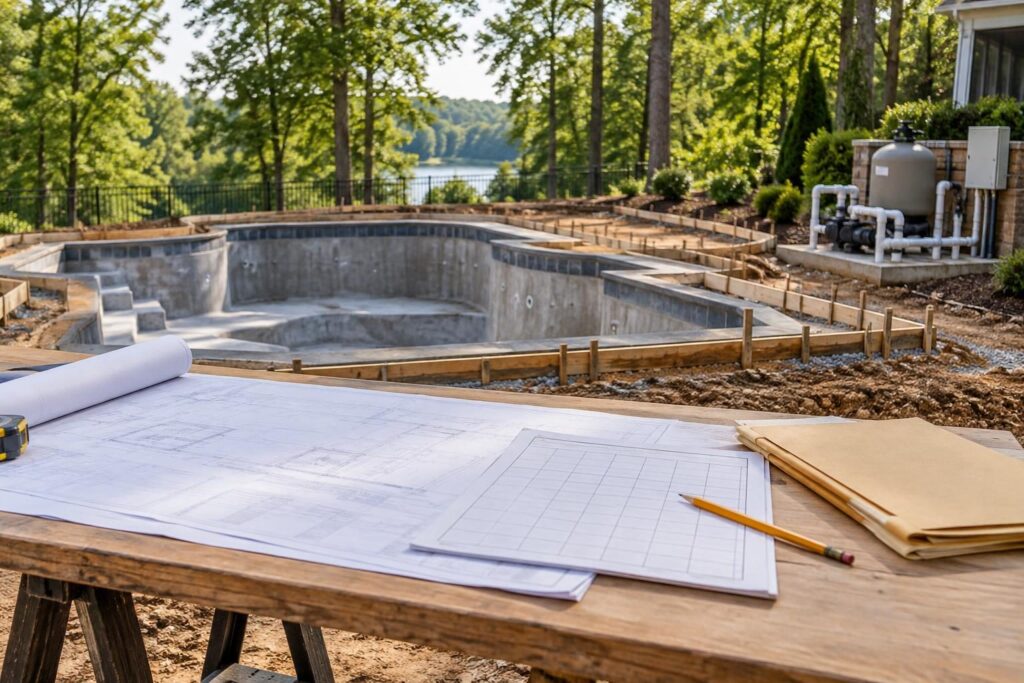
A pool subcontractor responsibility matrix helps answer a question that a proposal may leave unclear: who handles each task? Your builder, electrician, deck installer, and landscaper may work on different schedules and under different contracts. A written chart identifies who performs work, coordinates handoffs, gathers records, and responds when something needs correction.
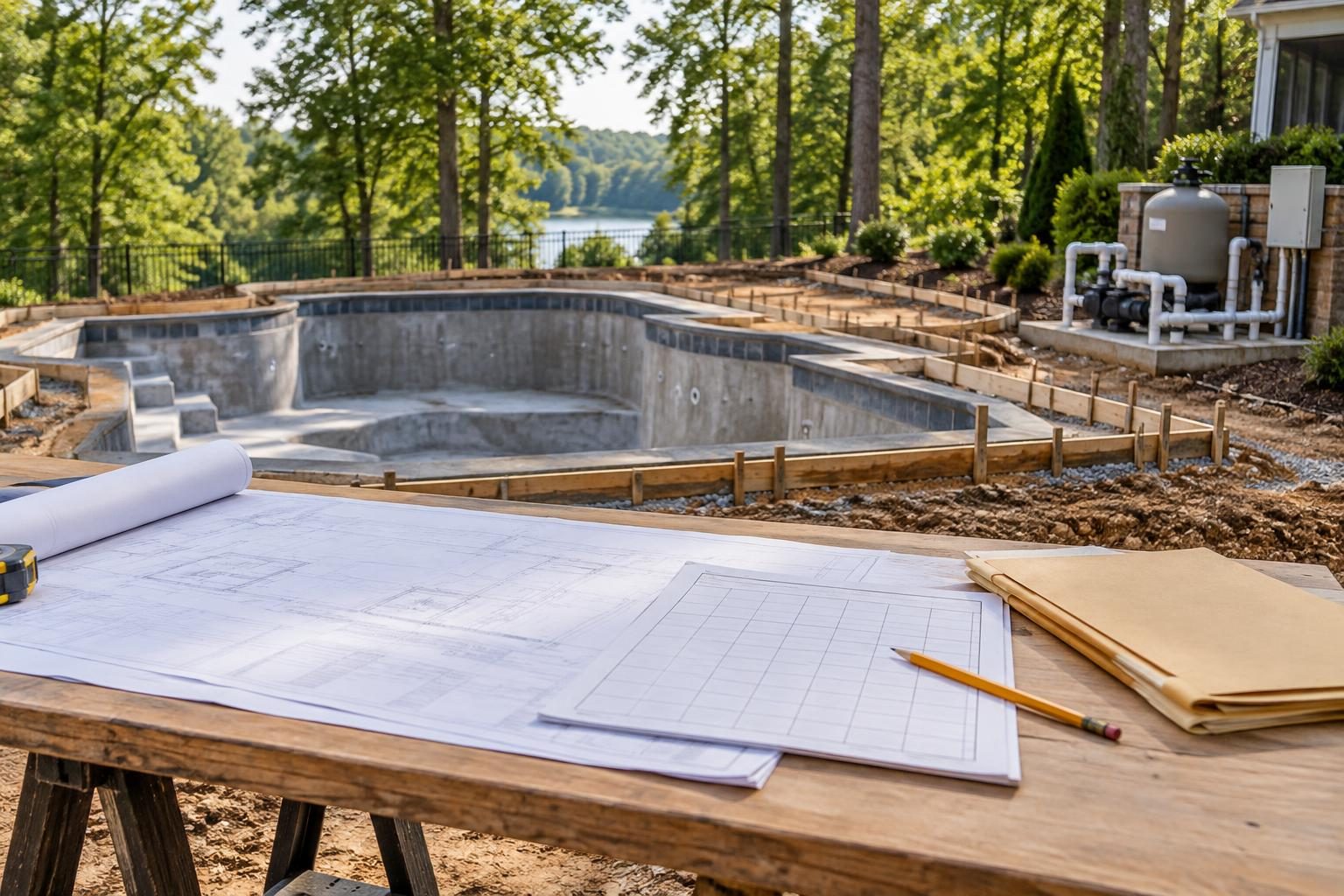
The chart does not determine legal liability or replace a complete contract. Instead, it makes proposed responsibilities visible before you sign. That matters most where one contractor’s work affects another contractor’s installation.
Separate the contracting relationship from the jobsite contact
First, identify who hires each trade. A company hired by your pool builder has a different contracting relationship than an electrician you hire directly. Simply calling everyone a subcontractor can hide that distinction.
Ask the builder to list each trade’s business name, scope, hiring party, and authorized contact. If the hiring party has not selected a company, identify who will select it and when.
- Which work does the builder’s contract include?
- Which work requires a separate homeowner contract?
- Who coordinates work performed under those separate contracts?
- Who can approve scope changes or added costs?
- Who receives concerns and arranges follow-up?
A scheduler may arrange visits without supervising workmanship. Likewise, a salesperson may not have authority to approve a construction change. Request names and roles rather than relying on a general promise that someone will handle everything.
For licensing research, start with the North Carolina Licensing Board for General Contractors’ consumer overview. Verify applicable licensing with the appropriate board, including electrical credentials separately. A contact list alone does not establish qualifications.
Build a pool subcontractor responsibility matrix around tasks
Use one row per task, not just one row per company. A single electrical row may conceal separate responsibilities for excavation, installation, inspection scheduling, backfill, and yard restoration.
Request these columns in the chart:
- Task and location: Describe the work and its boundaries.
- Contract reference: Identify the proposal item, drawing, or specification.
- Hiring party: State who contracts with the performing company.
- Performing company: Name who completes the task.
- Supervisor and coordinator: Identify who checks work and manages handoffs.
- Prerequisite: List what must happen before work starts or gets covered.
- Completion evidence: Specify photos, inspection records, or other documentation.
- Correction contact: Name who receives concerns and coordinates resolution.
- Cost treatment: Identify included work, exclusions, and change procedures.
Leave unresolved assignments visibly marked for discussion. Avoid using “others” as a final answer. Each required task needs a named party or an explicit decision about who will supply it.
Use these sample rows to expose scope gaps
The following pool subcontractor responsibility matrix prompts are discussion starters, not assigned duties. Have the affected companies confirm the final assignments in their written agreements.
| Task | Assignment to resolve | Record to request |
|---|---|---|
| Trade supervision | Who checks each crew’s work and receives site concerns? | Named supervisor and visit or review expectations |
| Electrical handoff | Who coordinates the electrician before nearby work conceals connections? | Readiness confirmation and applicable inspection records |
| Deck preparation | Who confirms elevations, drainage details, and trade readiness? | Current drawing references and pre-placement review notes |
| Cleanup and protection | Who removes each trade’s debris and protects completed surfaces? | Cleanup scope and site-condition photographs |
| Inspections | Who requests visits, provides access, and obtains results? | Permit references, results, and correction records |
| Correction work | Who investigates concerns and coordinates affected trades? | Issue log, written plan, and completion evidence |
| Homeowner-hired landscaping | Who reviews access and possible effects on drains or barriers? | Agreed access plan and restoration responsibilities |
Split any row that contains several unclear duties. For example, collecting inspection results and completing required corrections may involve different people.
Define handoffs before electrical and deck work
A handoff is the point when one trade leaves work ready for another. Ask the builder to identify these points on the schedule. Then require a clear readiness check before the next activity begins.
Electrical bonding connects specified conductive parts to help reduce dangerous voltage differences. The licensed electrician should identify applicable bonding work and coordinate anything that later construction could conceal. Homeowners should not inspect connections themselves or decide that electrical work is safe.
For deck work, ask who confirms finished elevations—the planned surface heights—and drainage details against current drawings. Who coordinates drains, sleeves for future lines, equipment access, and adjacent landscaping?
- Who requests the readiness review?
- Which trades must participate?
- Who confirms applicable inspections are complete before covering work?
- What happens if a drawing conflict remains unresolved?
Photograph accessible work before crews cover it, without entering excavations or approaching electrical hazards. Use a stage-by-stage construction photo record to organize those images. Photos support documentation; they do not replace professional review.
Set boundaries for homeowner-hired trades
Hiring your own electrician, fence installer, or landscaper requires an explicit coordination agreement. Do not assume the pool builder supervises a company simply because it works inside the same project area.
Ask both companies to acknowledge the same boundaries. One contract should not assign coordination to the builder while another excludes that service.
- Access: Who authorizes entry and identifies areas that equipment must avoid?
- Scheduling: Who confirms the site is ready and communicates changes?
- Protection: Who protects drains, piping, finishes, and completed landscaping?
- Safety arrangements: Who maintains agreed site security when crews enter or leave?
- Restoration: Who repairs disturbed ground or surfaces after the trade finishes?
- Damage reporting: Who documents a concern before deciding cause or cost responsibility?
Include daily debris removal, final hauling, and any specialized waste handling in the cleanup scope. “Clean up afterward” leaves too much open to interpretation.
If coordination is excluded, identify who will provide it before accepting the proposal. An unassigned duty does not disappear when construction starts.
Give inspections a named owner and a records process
Separate the person requesting an inspection from the person preparing the work. Also identify who receives results, schedules corrections, and requests any required reinspection.
North Carolina requirements can vary by jurisdiction, property conditions, adopted code, utilities, septic systems, flood zones, and project scope. Confirm current permit and inspection requirements with the local inspections department. Refer septic questions to local environmental health staff or a qualified septic professional.
Request written answers to these questions:
- Which permit covers each portion of the work?
- Who verifies that the inspection request matches the work awaiting review?
- Who supplies inspection and correction records to the homeowner?
- Who confirms when the next construction stage can proceed?
Independently verify important permit and inspection representations through the local authority’s available process. Verbal summaries can omit conditions or follow-up items. An inspection result also does not settle every contractual workmanship or finish concern.
Assign correction coordination without prejudging fault
A correction contact should receive an issue even when its cause is uncertain. That role need not settle legal responsibility. Its purpose is to prevent unanswered requests while companies determine the appropriate response.
Agree on a process for logging concerns, acknowledging them, arranging review, and documenting the next step. Keep dates, locations, photographs, written communications, and the companies involved.
Ask who coordinates access if a correction affects another trade’s work. Clarify who will document proposed charges, restoration, and schedule changes before authorization.
Warnings worth investigating include inconsistent explanations, missing records, or repeated referrals without a named coordinator. These signs do not prove wrongdoing. Request a joint review and a written account of what remains unresolved.
For complex disagreements, consider an independent pool construction consultant with relevant qualifications. Define the review scope and limitations before hiring.
Keep the matrix aligned with changes, payments, and closeout
Request the pool subcontractor responsibility matrix during proposal review, not after the first coordination problem. Compare bidders on who actually provides supervision, records, cleanup, and correction coordination—not merely the number of included trades.
Have the parties document how the chart relates to their contracts. Seek legal review if agreements conflict or responsibility language remains unclear.
Update the chart whenever a trade, scope, drawing, or assignment changes. Preserve earlier versions and written approvals. Each change should identify affected tasks, costs, schedule effects, and revised handoffs.
Connect agreed payment milestones to defined work and supporting records. The payment documentation checklist can help organize that review. If a request appears premature, compare it with the contract and seek clarification before deciding how to respond.
At closeout, use the pool subcontractor responsibility matrix to collect remaining inspection records, warranties, startup documentation, and punch-list updates. A punch list identifies unfinished items or corrections. Record who handles each open item and how completion will be confirmed.
Consult local inspections staff when requirements are unclear. Use a licensed pool contractor, electrician, engineer, surveyor, or septic professional for issues within their expertise. The goal is a documented handoff—not homeowner supervision of technical work.