
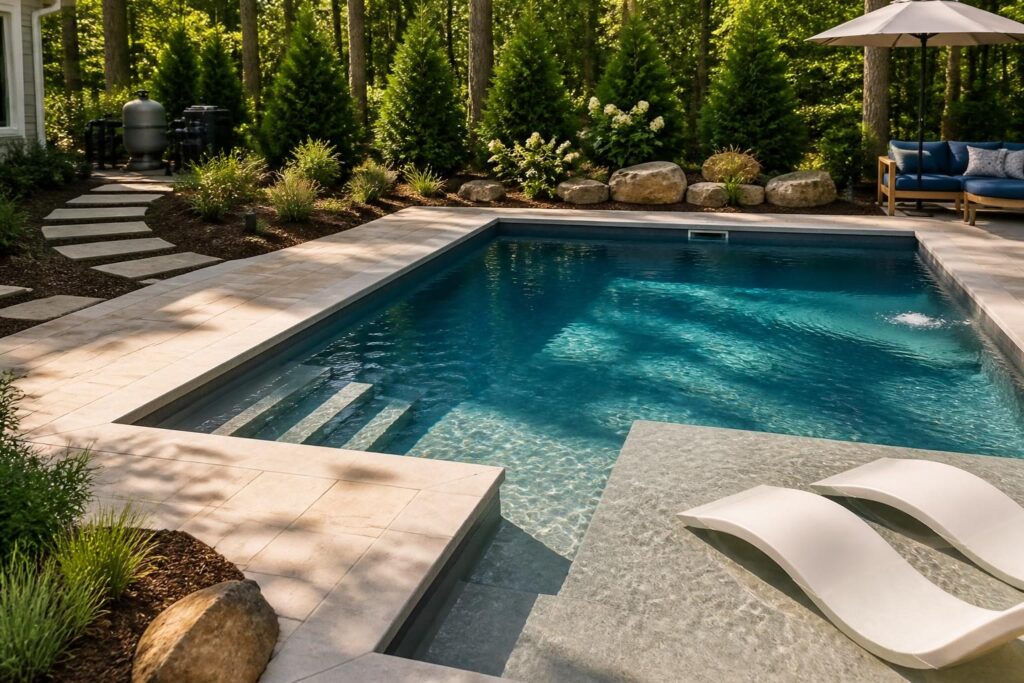
Pool skimmer return location planning deserves attention before plumbing becomes difficult to see or change. Skimmers collect surface water and floating debris. Return fittings send filtered water back into the pool. Their locations work together with the pool’s shape, common wind direction, sunlight, steps, shelves, and equipment route.

No single arrangement fits every North Carolina yard. A good discussion connects the circulation concept to how your household uses the pool and how the site behaves. Use the questions below to prepare for a more useful conversation with a qualified pool designer or contractor. Early pool skimmer return location planning can also help keep later equipment and construction decisions aligned.
Start with the basic circulation jobs
Pool circulation is the movement of water from the pool, through the pump and filter, and back through return fittings. A skimmer usually draws water from the surface. The pump then moves that water through the treatment equipment before it returns to the pool.
This system supports filtration and chemical distribution. It does not make every part of the pool identical at all times. Dead spots can appear near corners, steps, benches, shelves, walls, or other features. The design discussion should identify those areas early.
Ask your builder to explain the proposed flow path in plain language. You should be able to identify:
- Which skimmer or skimmers collect surface water.
- Where each return fitting sends water.
- How the circulation pattern reaches shallow and deeper areas.
- Which lines run from the pool to the equipment pad.
- How valves or controls may change flow between features.
These questions do not replace hydraulic design by a qualified professional. They help you understand the plan and spot practical conflicts before construction.
Use debris and prevailing conditions in pool skimmer return location planning
Leaves, pollen, grass clippings, and other floating material often collect along one side of a pool. Wind and nearby landscaping can influence that pattern. The best location for a skimmer may therefore depend on what happens on your property, not only on the drawing’s geometry.
Walk the proposed pool area at different times if possible. Note nearby trees, open fields, slopes, fences, screens, and structures that may affect wind. Also consider where debris typically lands on existing outdoor surfaces.
A skimmer discussion should include these questions:
- Which pool edge is most likely to receive floating debris?
- Could a fence, wall, or enclosure redirect wind toward the water?
- Will nearby plants shed pollen, flowers, or leaves over the pool?
- Can you reach the skimmer basket without crossing wet or crowded areas?
- Would a proposed location conflict with steps, a sun shelf, or a cover?
Debris patterns can change after landscaping, enclosure work, or tree growth. That is one reason to treat circulation as part of the whole site plan. Build a Pool in North Carolina can help homeowners keep these planning questions connected to construction decisions.
Consider sunlight, heating, and daily use
Sun exposure affects how people use different parts of a pool. A sunny shallow shelf may become a popular sitting or play area. A shaded edge may serve as a resting area. Return locations should be discussed alongside these use patterns.
Sun does not determine a return location by itself. The designer may also consider pool depth, circulation goals, fittings, water features, and the available plumbing route. Still, a plan that ignores daily use may leave a popular area with less movement than expected.
Describe your routine before approving the layout. Tell the design team whether the pool will commonly support:
- Children’s play on a shallow shelf.
- Quiet seating or lounging on steps and benches.
- Lap-style swimming along a long dimension.
- Frequent use near a tanning ledge or entry area.
- Occasional use of a spa, water feature, or attached pool section.
Sun exposure also affects water temperature and evaporation. Those issues belong in broader equipment and water-care discussions. They should not be used to promise a particular temperature or chemical result from return placement alone.
Match circulation to the pool shape
Simple rectangles may offer a clear path for discussing flow. Curves, L-shaped pools, narrow sections, and separate areas can create more questions. Corners and changes in width may need special attention during the design review.
Ask the designer to mark skimmers and returns on the actual plan, not only on a marketing rendering. Request a simple explanation of how water moves around each bend or narrow section. If the pool includes a raised section, spillway, attached spa, or water feature, ask whether it uses shared or separate plumbing paths.
Look for practical conflicts before excavation:
- Can service staff reach each return fitting later?
- Could a return fitting sit directly beside a step or bench?
- Does the plan account for water movement through a narrow connecting area?
- Do water features have separate controls, if that is part of the design?
- Will the proposed fittings interfere with lights, drains, tile, or interior finishes?
For additional background, review how pool check valves may benefit equipment plumbing. Valve placement and circulation design are related, but they solve different problems.
Give steps, benches, and shelves their own review
Interior features change the shape of the water space. Steps can interrupt flow near a wall. Benches create sheltered areas. A shallow shelf may collect debris if water movement and cleaning access receive little attention.
Do not assume that a nearby return automatically solves every circulation concern. Ask how the proposed arrangement addresses each feature and whether routine brushing or vacuuming will still remain necessary.
Useful questions include:
- Where does water move around the steps rather than stopping at them?
- Could a bench create a low-flow pocket beneath or beside it?
- How will debris come off a shallow shelf?
- Are fittings positioned away from locations where swimmers may sit or rest?
- Will handrails, lighting, or other details limit fitting locations?
Review the feature plan with the circulation plan at the same time. The article about planning pool steps, benches, and ledges offers a related homeowner checklist.
Plan the equipment route with circulation in mind
Water must travel between the pool and the equipment pad through buried plumbing. The route can affect excavation, access, service, future landscaping, and the number of bends in the system. Site conditions may also limit where lines can run.
Ask for a plumbing plan that identifies the skimmer lines, return lines, drains, water features, and equipment connections. Confirm how the route relates to the home, deck, utilities, septic features, wells, retaining structures, and planned planting areas.
Keep these records as the project develops:
- A dated plan showing fitting locations and plumbing routes.
- Photos of exposed plumbing before backfill or concrete placement.
- Labels for lines that may be difficult to identify later.
- Notes about approved changes and the reason for each change.
- Equipment connection information supplied at handover.
Pool skimmer return location planning also benefits from clear photo records before lines disappear below soil or concrete. You can read how to document pool plumbing fittings before backfill. Photos do not replace required inspections or professional records, but they can improve your project file.
Electrical equipment, bonding, drainage, and service access need separate professional review. For equipment-location questions, use this pool electrical equipment location planning checklist.
Discuss pumps, filters, and operating decisions
Circulation performance depends on more than fitting locations. Pump selection, filter size, pipe sizing, valve settings, water level, cleaning, and operating schedules all matter. A proposed layout should be considered as part of the complete equipment system.
Ask which settings the homeowner will control and which adjustments require service support. Request clear instructions for reading flow clues, cleaning baskets, checking filter pressure, and responding to unusual noise or weak return flow.
Energy use also belongs in the conversation. ENERGY STAR provides information about certified pool pumps and energy-performance considerations at ENERGY STAR Pool Pumps. The right choice depends on the complete system and professional sizing, not a label alone.
Never open pressurized equipment or change electrical connections unless the appropriate qualified professional directs and performs the work. Follow the manufacturer’s instructions and local requirements.
Build pool skimmer return location planning into approval
Before approving the final plumbing concept, compare the drawing with the way you expect to use the pool. Mark the features that need special attention. Ask for explanations in writing when a location changes.
A focused approval checklist can include:
- Skimmer locations and access for basket cleaning.
- Return locations and the intended circulation pattern.
- Debris sources, prevailing wind, and sunlight exposure.
- Steps, shelves, benches, narrow sections, and water features.
- Equipment-pad route, valves, service access, and line labels.
- Coordination with utilities, septic systems, drainage, and other site features.
- Photos and drawings for the handover file.
Circulation remains one part of a safe, maintainable pool. Verify current permits, inspections, barriers, electrical work, and property-specific requirements with your local inspections department and other appropriate authorities. Consult a licensed pool contractor, electrician, engineer, surveyor, septic professional, or other qualified specialist when site conditions or system design require it.