
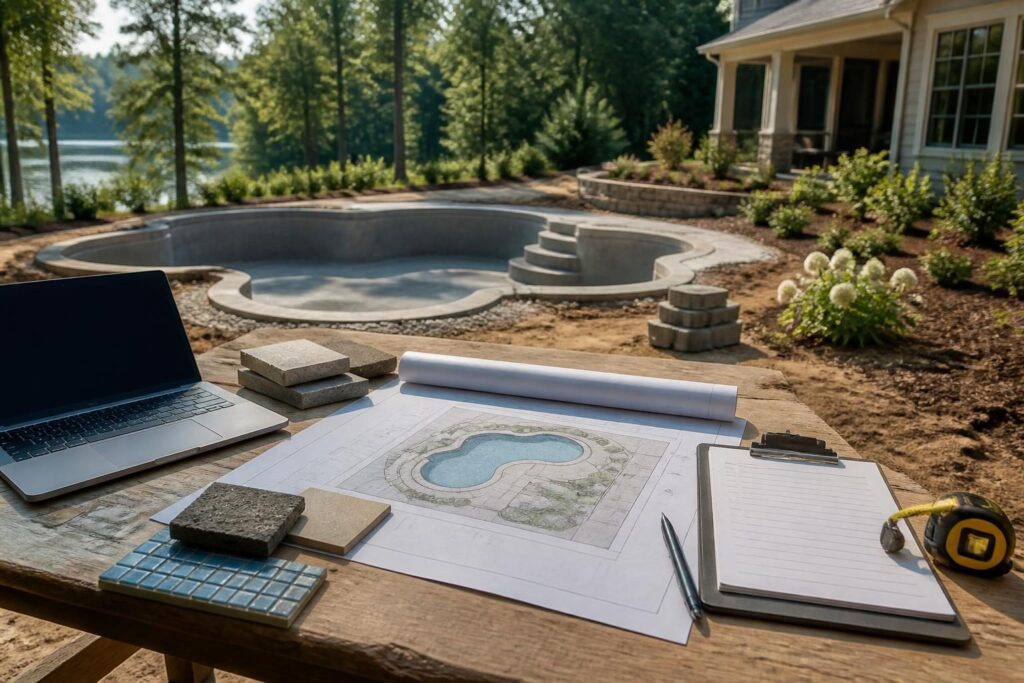
A pool construction schedule decision tracking checklist can help you follow progress without assuming every project fits a fixed timeline. North Carolina pool work depends on design approvals, permits, material availability, inspections, soil, access, drainage, and weather. A useful tracker records what must happen next, who owns the decision, and what evidence closes the item.

This approach gives you a clearer view of the project while leaving room for conditions that no homeowner or contractor can control. It also creates a practical record for meetings, questions, payments, and final handover.
Why a fixed pool schedule can mislead homeowners
A calendar may show excavation, plumbing, decking, and startup in a neat sequence. Actual work can move differently. A site may need additional review after excavation. Rain may affect access or soil conditions. An inspection may need to occur before workers cover the work. A selected finish may have a different availability date than expected.
That does not make schedule information useless. It means you should track dependencies instead of relying on one promised completion date. A dependency is an item that must be resolved before another step can proceed.
- Decision: What must be approved or selected?
- Owner: Who must provide the answer or document?
- Dependency: What work, approval, or delivery depends on it?
- Status: Is it open, submitted, approved, delayed, changed, or closed?
- Evidence: Which drawing, email, receipt, photo, or inspection record supports the status?
Keep the tracker separate from legal or code judgments. For current requirements, confirm details with the local inspections department and qualified professionals. The North Carolina Office of State Fire Marshal documents can help you locate state building-code material, but local interpretation and the currently adopted code remain important.
Build the decision tracker before construction starts
Use a spreadsheet, project-management app, or paper binder. The format matters less than consistent entries. Give each item a short identification number, such as D-01 for a design decision or I-01 for an inspection record.
Your core columns should include:
- Item number and date opened
- Topic, such as layout, coping, lighting, drainage, or equipment
- Exact question or decision needed
- Person responsible for the next action
- Required-by point, such as before ordering or before excavation
- Current status and next follow-up date
- Related drawing, proposal section, selection sheet, or change document
- Date closed and the approval record
Avoid vague entries such as “check pool design.” Write “confirm the location and finished elevation of the equipment pad on the current plan.” Specific wording reduces misunderstandings and makes later review easier.
For a broader filing structure, see this guide to a pool construction document organization system. Your tracker should point to the file location rather than forcing every detail into one row.
Use status labels that show risk
Simple labels can reveal bottlenecks quickly. Consider “open,” “waiting on homeowner,” “waiting on contractor,” “submitted for review,” “approved,” “not applicable,” and “closed with record.” Add a separate flag for “schedule-sensitive” when delay could affect ordering, inspection, access, or another trade.
Do not mark an item complete because someone mentioned it during a conversation. Close it when you save the relevant drawing, written approval, receipt, inspection result, or photograph.
Track design approvals and material selections
Design decisions often affect several later activities. A change to pool shape or depth may influence excavation, structure, circulation, finish quantities, equipment, drainage, or surrounding grades. A finish selection may affect ordering and installation preparation.
Create a separate row for each approval. Useful categories include:
- Pool dimensions, depths, steps, benches, and water features
- Finished elevations and transitions to the yard or deck
- Decking, coping, tile, interior finish, and color selections
- Lighting locations and control preferences
- Equipment type, location, access, and service clearances
- Drainage, grading, retaining features, and restoration areas
Record the plan revision or selection document used for approval. If a later conversation changes the decision, do not erase the earlier entry. Mark it superseded, save the replacement record, and note the reason in neutral terms.
Before approving a selection, ask:
- Does this match the current drawing and written scope?
- Is the selected color, model, size, or finish identified clearly?
- Does the decision affect cost, ordering, access, maintenance, or another approval?
- Who confirms that the selection is available and suitable for the proposed installation?
When a change affects scope or price, use a written process. This pool construction change order guide explains the records homeowners commonly need to organize around a proposed change.
Organize inspections, permits, and covered work
Inspection tracking should show more than a date on the calendar. Record the inspection type, requesting party, date requested, scheduled date, result, conditions or corrections, and the document received. Keep approved plans and revisions together so you know which version applies.
Ask the project team which work must remain visible for a local inspection. Homeowners should not decide that question alone. Requirements can vary by jurisdiction, adopted code, project scope, and site conditions.
A practical inspection record includes:
- Permit or application reference, when available
- Inspection requested and scheduled dates
- Work area ready for review
- Result or written correction notice
- Person assigned to address any correction
- Follow-up inspection date and closing record
Electrical work, barriers, structural details, drainage, and septic-related questions may require qualified review. Use the tracker to document who needs to answer the question. Do not use it as a substitute for an inspection department, licensed electrician, engineer, surveyor, or septic professional.
Record site conditions and weather interruptions
Weather is easier to understand when you record its effect rather than simply writing “rain delay.” Note the date, affected area, observed condition, work that could not proceed, protection measures, and the next decision required. Photos can provide useful context when they show the same area from consistent viewpoints.
Site conditions deserve similar treatment. Excavation may reveal rock, groundwater, unstable soil, buried material, or an unexpected obstruction. Those observations may lead to a proposed change, but homeowners should avoid directing technical solutions themselves.
For each site condition, record:
- Where it occurred and when someone observed it
- What work it affected
- What professional or contractor evaluated it
- Whether someone proposed a drawing, price, method, or schedule change
- What written approval or technical record closed the issue
Construction runoff and disturbed soil can also affect the site. North Carolina’s Construction Stormwater Program provides official information about potential stormwater requirements. Applicability depends on the project and property, so verify the issue with the appropriate authority.
Track utility marking and excavation preparation as separate items. North Carolina 811 is the official utility-notification resource, but a notification does not answer every property-specific planning question. Confirm the appropriate process before digging.
Run a weekly open-decision review
A short weekly review can keep small questions from becoming construction interruptions. Compare the current work area with the latest plan, then scan every open item for its next action. Use the pool construction schedule decision tracking checklist to identify items that could affect the next work stage.
Weekly homeowner review
- What changed since the last review?
- Which decisions are needed before the next work stage?
- Which inspections are requested, scheduled, completed, or awaiting follow-up?
- Did weather or site conditions create a new open item?
- Are materials ordered, received, stored, and matched to the approved selection?
- Do photos show important work before workers cover it?
- Did you convert verbal discussions into written records?
- What question needs a qualified professional’s answer?
Send a concise recap after the review. List decisions made, items still open, responsible parties, and the next follow-up date. Neutral notes work best: describe the condition, request, response, and supporting record without assigning blame.
Use the tracker at payment and handover points
Schedule tracking is also useful when reviewing payment requests. Compare the claimed stage with the written scope, approved changes, inspection records, delivered materials, and visible work. Payment terms depend on your contract and applicable requirements, so seek qualified guidance when a payment question becomes a contractual dispute.
Before handover, filter the tracker for unresolved items. A useful closeout list may include:
- Open approvals or selections
- Pending inspections or correction records
- Unfinished grading, drainage, access, or restoration work
- Missing equipment information or maintenance instructions
- Unresolved finish, surface, deck, or lighting questions
- Photos and documents needed for future service
Do not close the project merely because the pool contains water. Record what someone demonstrated, what documents they delivered, and what remains subject to follow-up. The startup phase may require its own water-care and equipment records.
A calmer way to manage an uncertain schedule
The goal is not to predict every construction day. It is to make the next decision visible, preserve the record, and identify dependencies before they create confusion. A pool construction schedule decision tracking checklist gives homeowners a shared reference for approvals, materials, inspections, site conditions, weather, and open questions.
Build a Pool in North Carolina encourages homeowners to keep the tracker with their project records and update it as decisions change. For property-specific permitting, barrier, electrical, drainage, excavation, septic, or technical questions, consult the local inspections department, licensed pool contractor, licensed electrician, engineer, surveyor, septic professional, or another qualified specialist. A pool construction schedule decision tracking checklist works best as a recordkeeping aid, not as a substitute for that professional review.