
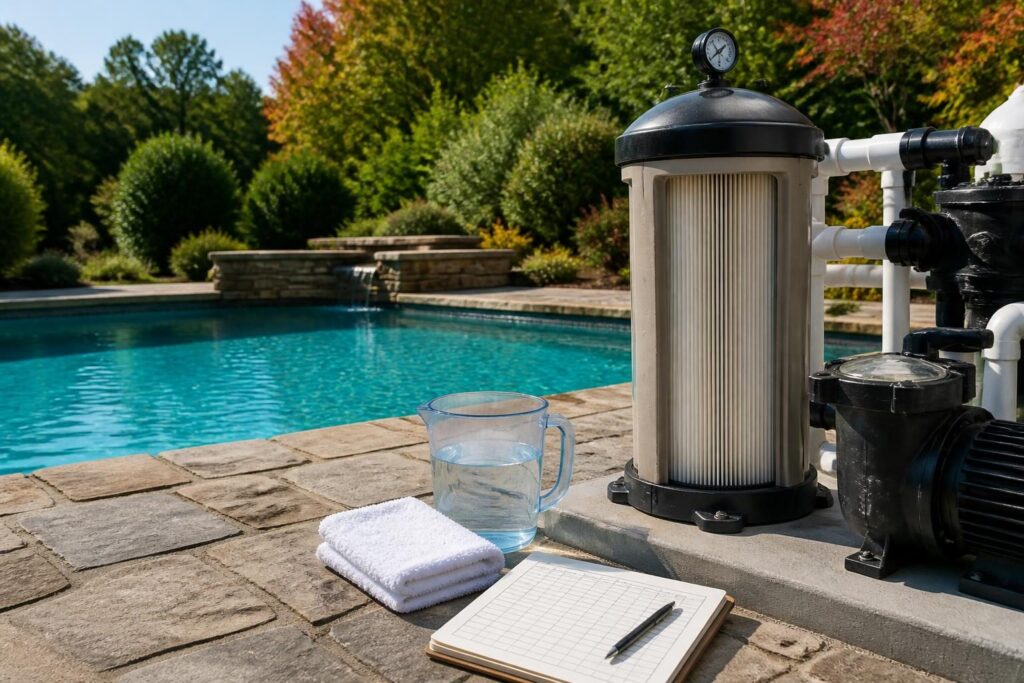
Knowing when to clean residential pool filter pressure water conditions can help you avoid unnecessary maintenance and notice circulation problems sooner. A filter does not need cleaning simply because a calendar reminder appears. Pressure, water flow, water clarity, recent weather, and filter type give you a more useful picture.
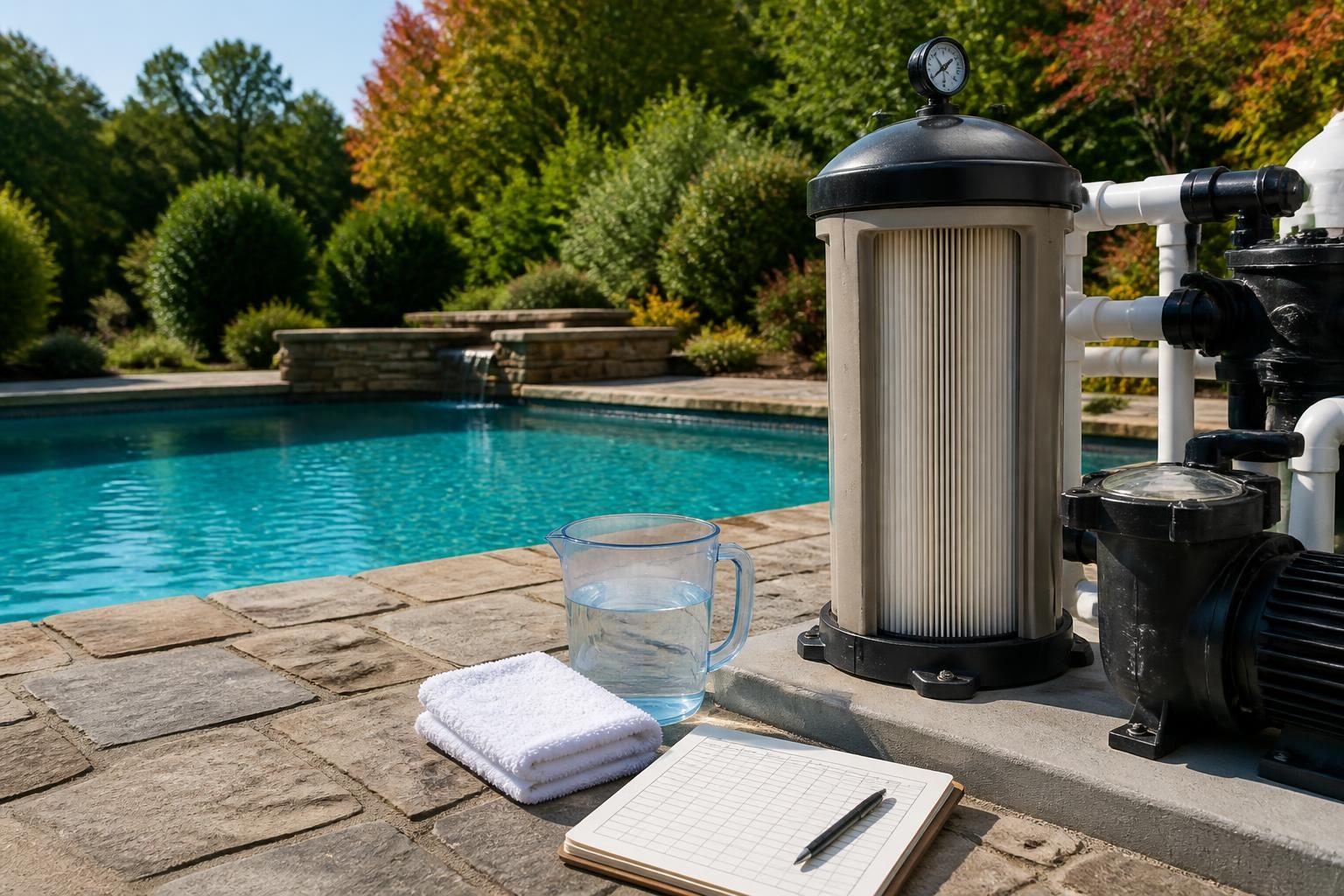
North Carolina pools may collect pollen, leaves, dust, soil, and storm debris at different times of year. Rain can also change the water entering the pool. Use the filter gauge and your owner’s manual together. If readings change suddenly, the pump sounds different, or water remains cloudy, stop guessing and investigate the system safely.
Start with the filter’s normal pressure
A pressure gauge shows resistance on the filter side of the circulation system. As the filter collects debris, water usually meets more resistance. That resistance can raise the gauge reading and reduce flow. The exact reading varies by equipment, plumbing, pump speed, water level, and valve position.
The most useful number is your clean starting pressure. This is the reading you record after properly cleaning the filter while the system runs under a repeatable setup. Record the pump speed, valves, water level, and any operating mode that affects the reading. A reading without that context can mislead you.
For homeowners deciding when to clean residential pool filter pressure water conditions, a rising reading is an important signal. However, do not rely on one number alone. Compare the gauge with return-jet strength, skimmer action, water appearance, and recent pool activity.
Build a simple pressure log
- Write down the clean pressure after maintenance.
- Record the date, pump speed, and filter type.
- Note pressure before and after heavy rain or storms.
- Record whether the pool was brushed, vacuumed, or treated.
- Mark the date and method of each cleaning.
Check the gauge when the pump has run long enough to reach normal operation. Readings taken during startup may not represent the usual condition. If the gauge needle sticks, vibrates, or does not return to a believable reading, ask a qualified pool professional to assess the gauge and system.
Use flow changes as a second warning
Pressure is only one side of the decision. A dirty filter can restrict circulation, so water may return to the pool with less force. You may notice weaker surface movement, reduced skimmer pull, slower vacuuming, or a pump basket that does not fill as expected.
Low flow can have other causes. The water level may be low. The skimmer basket, pump basket, or skimmer throat may contain debris. A valve may sit in the wrong position. Air may enter the suction side, or the pump may have a separate problem.
Before cleaning the filter, turn the pump off and follow the equipment manufacturer’s instructions. Never open a pressurized filter while the pump is running. If you are unsure how to isolate pressure, release it, or restart the system, use a licensed or qualified professional.
A pressure increase combined with weaker return flow is more persuasive than either sign by itself. A sudden loss of flow without a gradual pressure rise deserves extra caution. That pattern may indicate a blockage, air issue, water-level problem, or equipment fault rather than ordinary filter loading.
Let water clarity and conditions guide the timing
Clear water does not prove that a filter is clean, and cloudy water does not always mean the filter needs cleaning. Water clarity reflects filtration, circulation, chemistry, swimmer load, debris, and environmental conditions. Test the water and review recent events before choosing a maintenance step.
The CDC’s home pool water treatment and testing guidance explains why regular testing matters for chlorine and pH. Balanced water supports effective care, but it does not replace mechanical filtration. Keep test results with your pressure log when the water looks different.
Conditions that may load a filter faster
- Spring pollen or fine plant debris entering the pool.
- Heavy rain that carries soil or organic material.
- Windy weather followed by leaves, dust, or roof debris.
- Brushing, vacuuming, or clearing settled material.
- More swimmers than usual or an active pool gathering.
- Algae or other water-quality problems that create fine debris.
After a storm, first remove large debris and check the water level. Do not send large amounts of leaves into the circulation system if you can remove them with a net. If the pool remains cloudy, test the water and inspect circulation. Cleaning a filter may help, but repeated cloudiness can point to a chemistry, circulation, or equipment issue.
Homeowners asking when to clean residential pool filter pressure water conditions should also consider whether the water is improving. If pressure rises again soon after cleaning, the filter may be capturing an unusually high debris load. Continued rapid pressure changes need professional evaluation rather than repeated cleaning alone.
Match the cleaning method to the filter type
Cartridge, sand, and diatomaceous earth, or DE, filters do not use the same maintenance process. The filter type determines whether you remove and rinse cartridges, backwash a media tank, or clean and recharge DE. Confirm the model and method in the manual before moving valves or opening the housing.
Our guide to pool filter types and maintenance differences can help you identify the basic operating behavior of each design. Manufacturer instructions remain the controlling source for your specific equipment.
Cartridge filters
Cartridge cleaning usually involves shutting off the pump, relieving pressure, removing the cartridge, and rinsing it carefully. Use enough water to remove debris from between the pleats. Avoid aggressive pressure that can damage the fabric. Some cartridges need a deeper cleaning product, but only use products approved for that filter.
Inspect the cartridge for torn pleats, crushed areas, broken bands, or a damaged end cap. Rinsing will not correct a damaged cartridge. Record the condition and replacement date so you can compare performance over time.
Sand filters
Sand filters are commonly cleaned through a backwash cycle, which reverses water flow through the filter media and sends dirty water to an approved discharge location. The valve sequence and duration depend on the equipment. Follow the manual and confirm where backwash water may go.
Backwashing too often can waste water and may interfere with normal filtration. A pressure rise, weaker flow, and appropriate water conditions provide a better basis than a fixed weekly habit. After backwashing, the system may require a rinse step before returning to filter mode.
DE filters
DE filters require careful cleaning and replacement of the filter powder after the appropriate service procedure. The powder supports the filtration process. Follow the manufacturer’s instructions for the correct amount and handling method. Do not assume a DE filter works like a sand filter.
Because DE systems may involve multiple steps, homeowners should ask a qualified pool professional for help if the valve positions, pressure relief, or recharge process remain unclear. Keep the model number and service instructions with your equipment records.
When pressure does not tell the whole story
A pressure gauge can show a low reading when the pump is not moving enough water. That does not necessarily mean the filter is clean. Low water level, suction-side air, a blocked basket, a valve setting, or a pump problem can affect the reading.
A gauge can also fail. Compare the reading with actual flow and inspect the gauge for physical damage. Do not remove a gauge or filter lid while the system is pressurized. If pressure behavior seems unsafe or inconsistent, turn the system off and obtain professional help.
Filter cleaning is also not a substitute for addressing water chemistry. Persistent cloudiness, visible growth, unusual odors, or repeated water-quality changes call for testing and a broader review. For startup or recently renovated pools, keep the water-care records and equipment instructions together. The pool startup water chemistry checklist offers a recordkeeping framework, although every pool still needs advice suited to its equipment and surface.
A practical cleaning decision checklist
Use this sequence whenever you wonder when to clean residential pool filter pressure water conditions:
- Confirm the pump is operating in the normal mode used for your baseline reading.
- Check the water level and remove visible debris from the pool.
- Inspect the skimmer basket and pump basket with the pump off.
- Compare the current pressure with the clean starting pressure.
- Check for weaker return flow or reduced skimmer movement.
- Review water clarity, recent rain, pollen, brushing, and swimmer load.
- Identify the filter type and follow its manufacturer procedure.
- Record the pressure after cleaning and watch how quickly it changes.
Do not keep cleaning indefinitely if the same problem returns. A filter that loads quickly may be doing its job while the pool receives an unusual debris load. It may also indicate a water-quality, plumbing, valve, pump, or filter-media concern.
Keep records that make future decisions easier
A small maintenance record can reveal patterns that are hard to see day to day. Save pressure readings, cleaning dates, filter condition, weather events, water tests, and any changes in pump settings. Take a photo of the gauge when a reading seems unusual.
Record the filter model, cartridge size or media details, cleaning products used, and replacement parts. Keep manuals in a dry location. When ownership changes or equipment receives service, these records help explain how the system normally operates. Build a Pool in North Carolina encourages homeowners to treat routine maintenance as documentation as well as cleaning.
Consult the equipment manufacturer, local pool professional, electrician, or other qualified specialist when pressure cannot be safely released, electrical components are involved, water flow changes suddenly, or the correct cleaning method remains uncertain. Local conditions and equipment designs vary, so professional guidance is the safest choice when routine filter care does not explain the problem.