
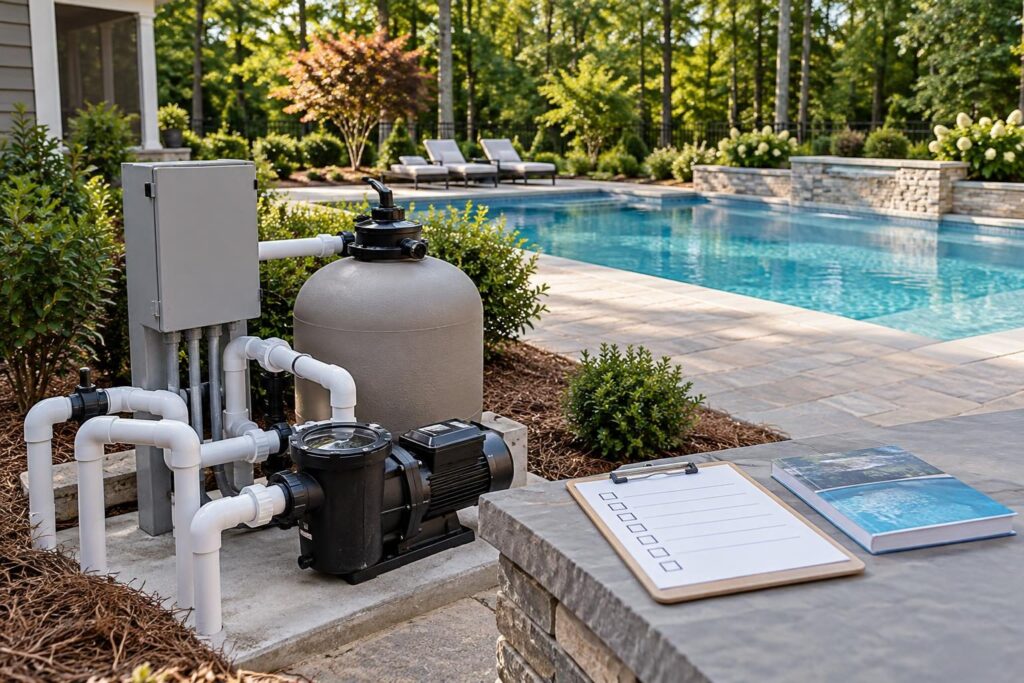
A pool owner operating demonstration acceptance checklist helps you distinguish receiving equipment from learning to operate it. Before handover, arrange a hands-on session at your own pool. Ask the installer to demonstrate routine tasks, then watch you repeat the homeowner-safe steps. This approach, called teach-back, reveals questions that a quick equipment tour can miss.
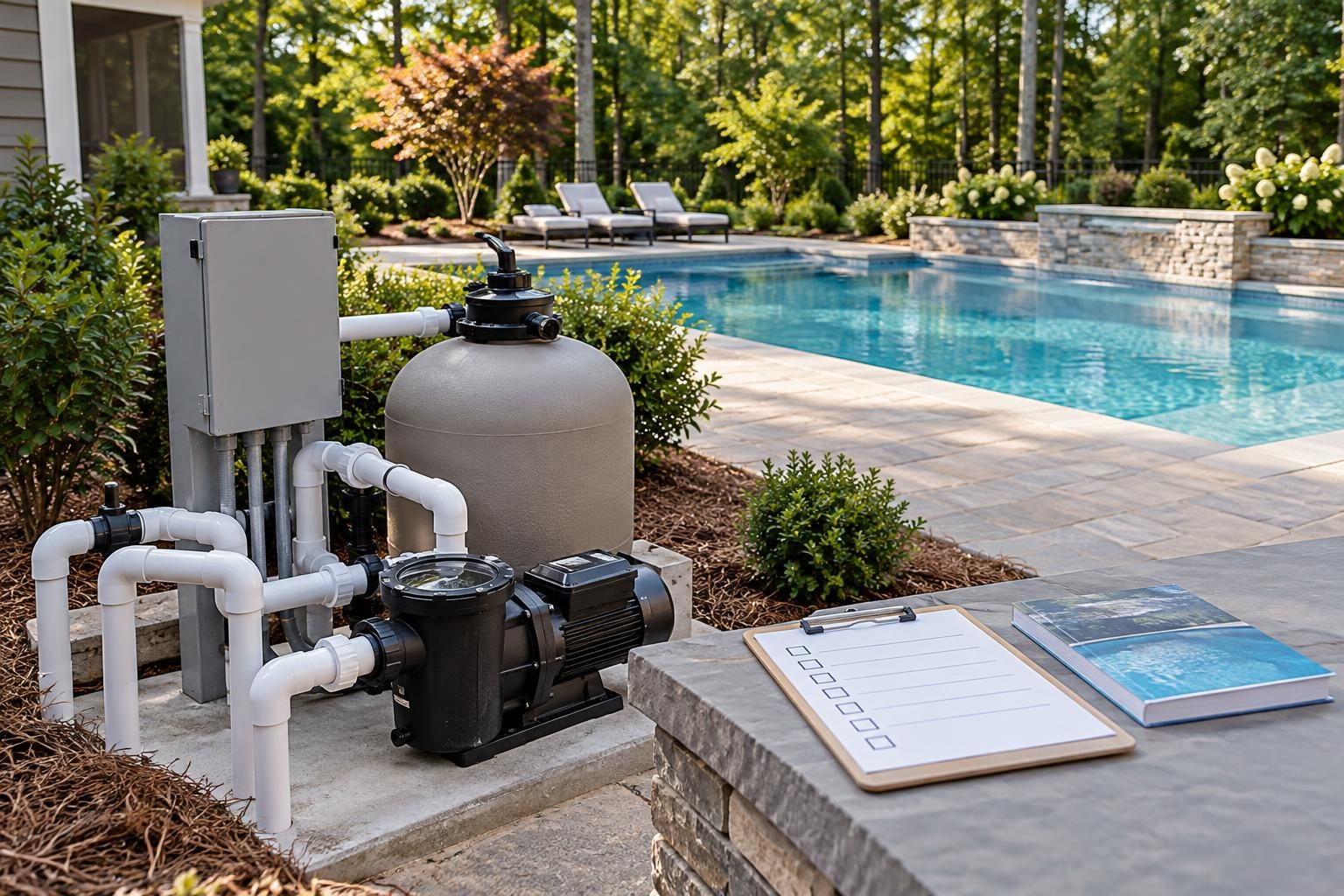
The goal is not to become a repair technician. You should understand normal operation, recognize when to stop, and know whom to call. Keep training records separate from manuals, inspection records, and completion paperwork. Each documents something different.
Arrange the pool operating demonstration before closeout
Ask who will lead the session and whether that person knows your installed equipment. Confirm the training scope in writing. Include everyone who will regularly operate or maintain the pool, rather than relying on one person to relay instructions later.
Request a session when the equipment can operate normally and questions will not interrupt another construction task. Avoid trying to learn while workers are still changing controls or equipment settings.
- Identify the pump, filter, heater, sanitizer equipment, controls, and cleaning equipment to be covered.
- Ask which tasks are appropriate for homeowners and which require professional service.
- Confirm whether follow-up training is included if equipment cannot be demonstrated.
- Have model-specific manuals and the installed equipment list available.
- Agree on how unanswered questions will receive written answers.
If training was promised but remains vaguely defined, request clarification against the contract. The North Carolina Licensing Board’s home-improvement contract guidance provides useful consumer context for written commitments.
Use teach-back instead of a quick equipment tour
A useful session follows a simple pattern: explain, demonstrate, practice, and confirm. The trainer explains the task and its limits. After watching the demonstration, you repeat only the steps identified as safe for homeowner operation.
Use your pool owner operating demonstration acceptance checklist to record performance, not just attendance. “Discussed filter cleaning” means something different from “owner demonstrated the approved routine with supervision.”
Ask permission before recording video or audio. Short clips organized by task are easier to use than one long recording. Photograph control screens, equipment labels, and normal valve positions without opening electrical enclosures or removing guards.
For every task, record the equipment model, relevant manual section, and any limits on homeowner work. If the explanation conflicts with a manual, ask for clarification before practicing. Do not resolve conflicting instructions by trial and error.
Demonstrate normal filtration and recognize the baseline
Filtration means moving pool water through equipment that captures suspended debris. Ask the trainer to explain the normal water path using your installed equipment and labeled plumbing.
The demonstration should show how to recognize normal operation without reaching into equipment or opening pressurized components. Record the operating mode alongside any readings. A reading without its operating conditions may be difficult to interpret later.
- Which schedule and pump settings are intended for routine use?
- What does the filter pressure gauge show during the demonstrated operating condition?
- Which visible signs suggest reduced water movement, air, or a possible leak?
- How does heating or a water feature change the operating mode?
- Which valves should remain untouched during normal homeowner operation?
Photograph the confirmed baseline settings and label them with the date. Ask the installer to verify your notes. Do not assume that every pool uses the same pump speed, schedule, or pressure range.
Practice controls, schedules, and local operation
Have the trainer demonstrate ordinary commands at the equipment and through any connected app. Practice checking the schedule, identifying the active mode, and returning from an approved temporary setting to normal operation.
Ask what happens if internet access disappears or a phone becomes unavailable. Learn which functions remain available locally. Have the trainer explain any manual control mode that overrides scheduled operation, including how authorized users should exit it.
- Can you identify whether equipment is running automatically or under a temporary command?
- Do you know which settings should not change without service guidance?
- Can you find alerts and report their exact wording?
- Have user access and recovery details been confirmed?
A working app does not establish account ownership. Use the separate automation account transfer checklist to verify access and permissions. Record whether a demonstrated command worked, rather than accepting an assurance that it should work later.
Rehearse cleaning without crossing service boundaries
Ask for demonstrations using the cleaning tools actually supplied. Depending on your equipment, this may include brushing, a robotic cleaner, skimmer care, or pump-basket maintenance. Identify finish-specific restrictions before using a brush or cleaning product.
For any task involving a lid, clamp, or filter opening, require model-specific instructions and a clear safety boundary. Ask how unexpected startup is prevented and how stored pressure is addressed. Never loosen a pressurized component or assume an app’s “off” command makes equipment safe to open.
If you are uncomfortable repeating a maintenance procedure, record it as requiring service or further training. Do not mark it complete merely because you watched someone else perform it.
Keep detailed cleaning instructions with the relevant manual. For cartridge systems, the cartridge-cleaning homeowner guide explains questions to raise about handling and rinsing. Verify any rinse-water or discharge requirements locally before disposal.
Learn safe shutdown and when to call for service
Request separate explanations for routine stopping, maintenance shutdown, and an emergency response. These are not interchangeable. Ask the installer to identify the appropriate controls and explain what stopping the pump does—and does not—make safe.
Do not create hazardous conditions to test a response. Discuss these situations instead:
- Burning smells, smoke, electrical shock, or tingling near pool equipment.
- A damaged suction cover, missing protective component, or suspected entrapment hazard.
- Substantial leaks, unusual mechanical noise, or repeated equipment trips.
- A persistent flow alert or equipment that repeatedly stops.
- Chemical spills, strong fumes, or uncertainty about chemical compatibility.
Have qualified professionals explain safe actions for your installation and when emergency services are appropriate. Never bypass a protective device or repeatedly reset equipment to force operation.
Keep people away from suspected hazards. Review Pool Safely’s safety guidance alongside the equipment training. Operating knowledge does not replace supervision, barriers, or other layers of protection.
Record unanswered questions and unfinished demonstrations
Give each task its own status. Useful labels include “demonstrated,” “owner practiced,” “needs clarification,” “not demonstrated,” and “professional-service task.” Avoid a single checked box labeled “training complete” when important items remain open.
Add unresolved items to your pool owner operating demonstration acceptance checklist so they remain visible during follow-up.
For each unresolved item, record:
- The equipment and task involved.
- What was demonstrated and what remains unanswered.
- Why practice or testing could not occur.
- Who will provide the answer or return visit.
- The agreed next step and target date.
- The evidence needed to close the item.
Send the summary to the responsible contractor and request confirmation or corrections. Retain the response with your project communications. If weather prevents a meaningful demonstration, use a deferred seasonal testing record rather than describing the feature as demonstrated.
A missing demonstration does not prove defective equipment or misconduct. It identifies something that still needs verification.
Separate training acceptance from manuals and signatures
Maintain separate records for documents received, training performed, equipment testing, inspection status, and unfinished work. Receiving a manual does not show that you practiced a task. A successful demonstration does not establish that all construction work is complete.
Before signing, read what each acknowledgment actually says. Ask for clarification if a receipt also declares complete satisfaction or completion. Do not assume a training checklist changes payment duties, warranty terms, or the meaning of another document.
Compare payment requests with the written contract and documented milestones. If training remains incomplete, record that fact and ask how the contract addresses it. Seek qualified legal advice when the effect of a signature or payment obligation is unclear.
Keep the final pool owner operating demonstration acceptance checklist with manuals, approved changes, inspection and correction records, warranties, and the unfinished-work list. Preserve earlier versions so the record shows what was later resolved.
North Carolina requirements vary with jurisdiction, adopted code, site conditions, utilities, and project scope. Consult local inspections staff about approvals, a qualified licensed pool contractor about operation, and a licensed electrician about electrical concerns. Bring in an engineer, surveyor, or septic professional when unresolved site questions require their expertise.