
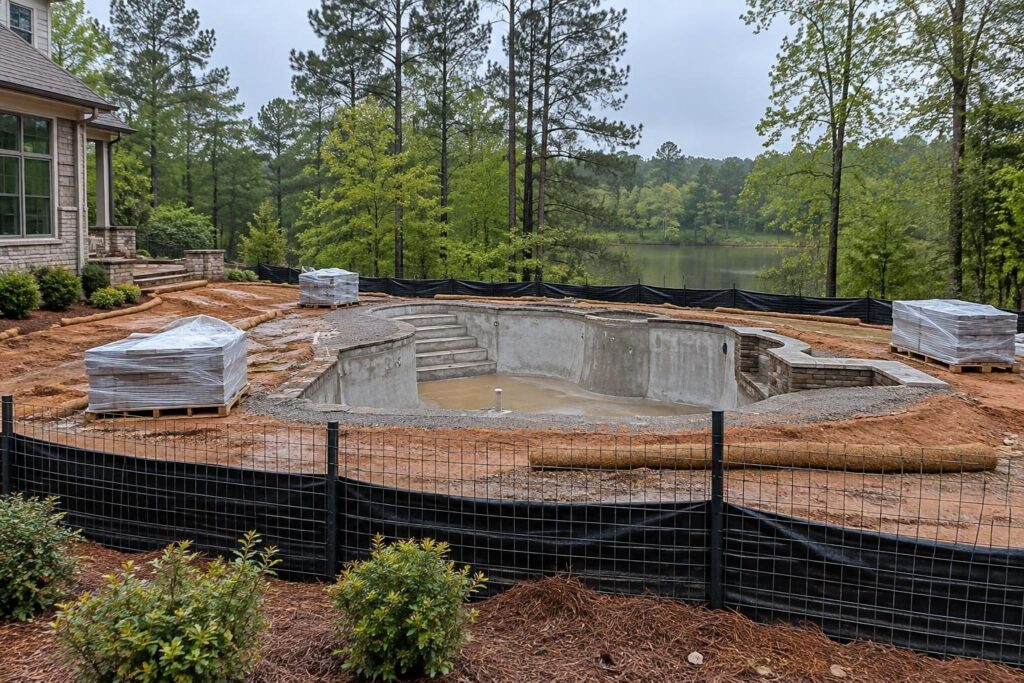
A paused pool construction site stabilization plan gives homeowners a written record of how the project team will protect an unfinished site. It should address temporary barriers, open excavations, rainwater, exposed materials, and responsibility for recurring checks. The purpose is not to assign blame or promise a restart date. It is to identify current hazards and establish who will assess, protect, monitor, and document the site.
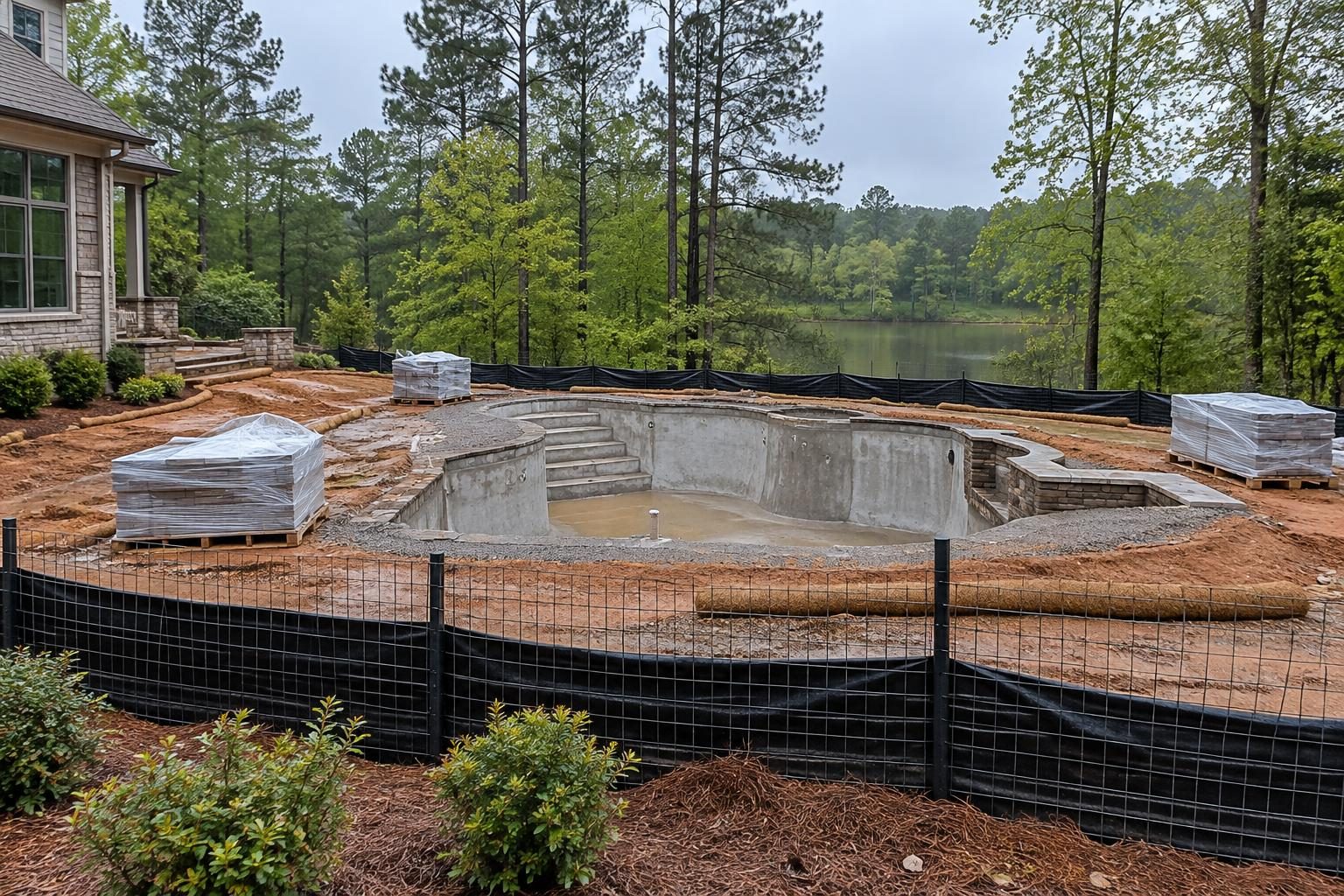
An extended pause changes the questions you need answered. Instead of asking only when crews will return, ask what needs attention while they are away. Verbal reassurance cannot replace a site-specific assessment or a clear written assignment.
Separate site stabilization from the restart schedule
Site stabilization means temporary measures that reduce hazards and limit deterioration while construction remains paused. It is not a declaration that the project is complete, safe for swimming, or ready for inspection.
Request a dated paused pool construction site stabilization plan tied to the current construction stage. An open excavation requires different review than an installed shell awaiting equipment or decking.
- What work is complete, partly complete, or still exposed?
- Which conditions need prompt assessment by a qualified professional?
- Which protective measures will the contractor install, maintain, and check?
- Who has accepted each assignment, and who serves as backup?
- What changes will trigger another assessment?
Keep schedule discussions separate from immediate protection decisions. An uncertain restart date should not leave temporary safeguards undefined. If the contractor cannot provide a restart estimate, request a date for the next status update instead.
Document the paused pool site before conditions change
Ask the contractor to document existing conditions from safe locations. Keep your own dated photographs without entering excavations, crossing barriers, or approaching unstable edges.
Capture wide views and visible details: fencing, access points, soil piles, exposed pipes, stored equipment, and water accumulation. Include nearby structures and drainage routes where safely visible. Photograph work before later crews cover it.
Describe observations without diagnosing them. “Water visible in the excavation” records a condition. “The excavation is failing” requires qualified assessment.
Keep these records together:
- Current drawings and approved revisions.
- Permit details, inspection results, and unresolved correction notices.
- Recent photographs and written communications about the pause.
- Material delivery records and manufacturer storage instructions.
- The stabilization plan and subsequent updates.
A paused pool construction site stabilization plan should identify the records used to assess conditions. Missing information is a reason to investigate, not proof that anyone acted improperly.
Confirm temporary barriers and controlled access
Ask who will assess whether current barriers suit the unfinished site. Do not assume construction fencing provides the same protection as a completed pool barrier. Do not treat a tarp or ordinary cover as a safety barrier.
- Who checks fencing, gates, connections, and access points?
- How will workers secure the site after each visit?
- Could stored materials or equipment create climbing access?
- Who responds if a barrier falls, shifts, or becomes unsecured?
- How will household members, visitors, and pets stay outside the work area?
The Pool Safely safety tips explain layers of protection around pools. They do not establish whether a particular unfinished site meets local requirements.
Verify temporary protection expectations with the local inspections department. North Carolina requirements can vary with jurisdiction, adopted code, property conditions, and project scope. Keep children away from the construction area even when workers are absent.
Request qualified review of open excavations
Open excavations can present fall hazards and unstable ground. Rain, changing groundwater, nearby loads, and prolonged exposure may affect conditions. Homeowners should not enter an excavation to inspect it, retrieve objects, or adjust a pump.
Ask the contractor which qualified professional should evaluate the site. Depending on conditions, the assessment may require an engineer or excavation specialist. Protective systems and soil stability require site-specific judgment.
- Does the excavation need reassessment before the pause continues?
- Are soil piles, stored materials, or equipment affecting nearby edges?
- Are adjacent foundations, retaining walls, utilities, or walkways involved?
- What visible changes require prompt reporting from a safe location?
- Who decides whether temporary work must occur before normal construction resumes?
Request written findings, recommended actions, and completion records. If you need an outside review, define its scope and exclusions. This guide to hiring an independent pool construction consultant explains useful qualification questions. A consultant does not replace licensed engineering or electrical services.
Address rainwater, runoff, and exposed soil
A pause does not stop rain from reaching disturbed ground. Ask how the site will manage runoff, standing water, and erosion. Erosion is soil movement; sediment is soil carried and deposited by water.
Do not pump out an excavation or unfinished pool shell based on appearance alone. Water removal can involve ground stability, structural conditions, electrical hazards, and discharge restrictions. Request a qualified assessment and an approved method where required.
- Where will rainwater collect, and who will monitor it?
- Who maintains temporary drainage and erosion controls?
- Could runoff reach the house, neighboring property, or a public drain?
- Could proposed controls affect utilities, a well, or septic areas?
- If the site needs pumping, who approves the method and discharge destination?
The NC DEQ erosion and sediment control manual provides planning guidance. Ask the applicable local authority which requirements and approvals apply to your property. Do not redirect water onto another property as an improvised solution.
Protect exposed materials and unfinished systems
Request a material-by-material protection list rather than a general promise to “cover everything.” Storage and protection needs depend on the product, installation stage, weather, and manufacturer instructions.
- Which materials may remain outdoors, and under what storage conditions?
- Who protects unfinished plumbing from debris and damage?
- Does exposed reinforcement, concrete, tile work, or waterproofing need specialist review?
- Who checks packaging, supports, covers, and stored equipment after storms?
- What protection do materials and systems need if the pause extends into freezing weather?
Have a qualified electrician address exposed wiring, temporary power, and electrical equipment. Do not touch wet equipment, open panels, or energize unfinished systems.
Record product names, model numbers, storage locations, and visible condition. If exposure may affect suitability or warranty coverage, request written manufacturer guidance. Do not assume a stored item remains acceptable simply because it looks unused.
Assign periodic site checks and escalation steps
The paused pool construction site stabilization plan should name the person responsible for checks and identify a backup contact. “We will keep an eye on it” leaves frequency, scope, and response unclear.
Ask a qualified professional to recommend check frequency and weather-related triggers. Avoid choosing an interval without considering site hazards and changing conditions.
Use a simple written log with these fields:
- Date, time, observer, and relevant weather.
- Areas observed and limitations on access.
- Barrier condition, visible water, erosion, and material protection.
- Photographs, concerns reported, and recipient.
- Assigned action, expected response, and completion evidence.
Distinguish homeowner observations from professional inspections. A photograph of standing water does not establish electrical or structural safety.
Keep contact details current when personnel change. A project manager handoff record helps preserve open assignments. If an immediate danger threatens someone, keep people away and contact emergency services rather than waiting for routine correspondence.
Clarify costs, approvals, and the next decision
Ask how proposed protection work relates to the existing contract. If the contractor proposes added work, request scope, specifications, price, authorization, and completion evidence in writing. Do not treat the stabilization plan itself as agreement to revised costs or responsibilities.
Vague assignments, inconsistent explanations, premature payment requests, or reluctance to document commitments warrant follow-up. They do not establish wrongdoing. Compare requests with contract terms and seek legal advice if contractual responsibility remains disputed.
Verify important representations independently. Ask the inspections department about permit status and required inspections rather than relying only on verbal assurances. This permit responsibility guide can help organize those questions.
Before work resumes, request review of changed conditions and unresolved corrections. Preserve photographs and any inspection records before crews cover work. A restart date does not replace that review.
Consult local inspections staff about requirements, a licensed pool contractor about project coordination, and qualified specialists about specific hazards. Electrical, excavation, drainage, survey, and septic questions may require different professionals. Keep the next step modest and clear: assess the site, assign protection, and document follow-through.