
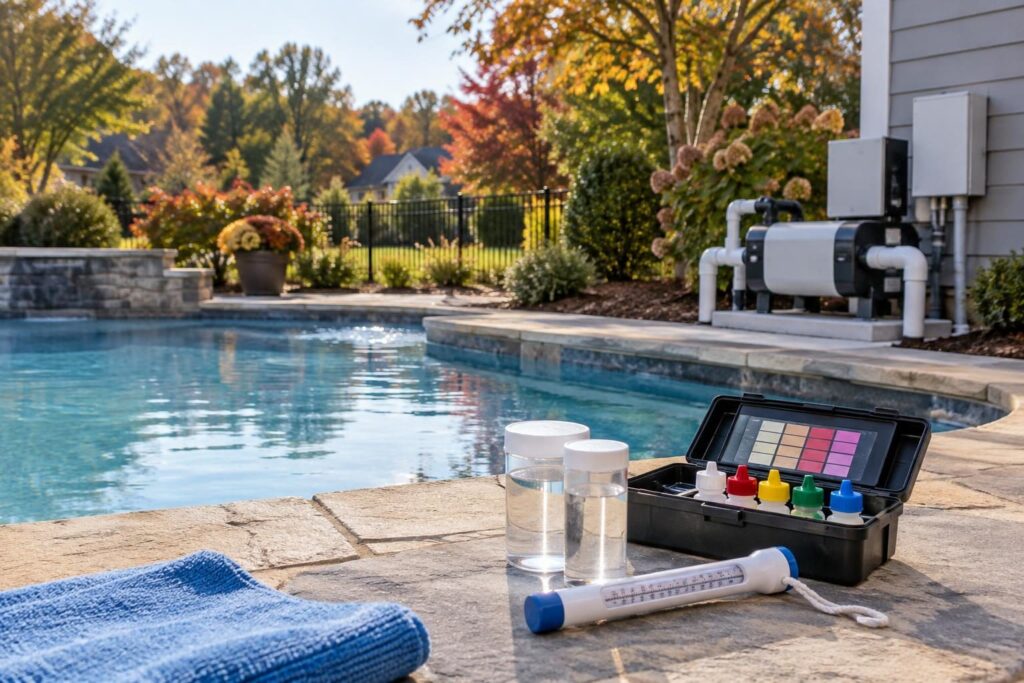
Understanding salt cell cold water limits helps North Carolina homeowners avoid unnecessary replacement costs and missed sanitation needs. A salt system may reduce or stop chlorine production when pool water cools. That response does not automatically mean the cell has failed. However, a normal cold-water shutdown does not mean the pool has enough sanitizer.
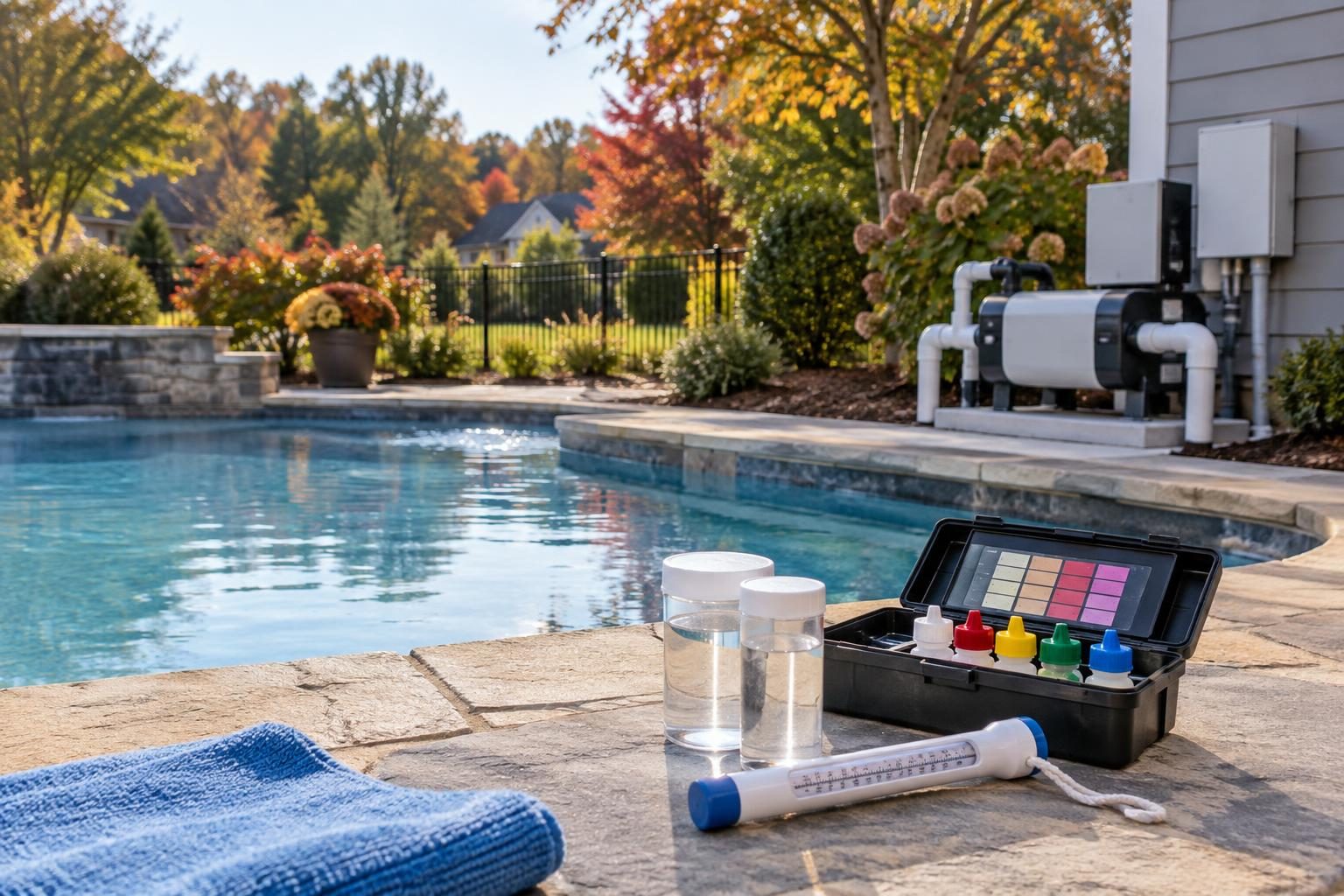
Spring and fall call for two separate checks: what the equipment is doing and what the water needs. Start with the exact equipment manual, independent water testing, and a written backup sanitation plan. Do not treat a warm afternoon, clear water, or an illuminated controller as proof of adequate chlorine.
Why cool water changes salt-cell operation
A salt chlorine generator uses electricity to turn dissolved salt into chlorine inside its cell. Water temperature affects that process and the system’s operating controls. Depending on the model, cold water can trigger reduced output, a warning, or suspended production.
The relevant temperature is the water temperature recognized by the equipment, not the outdoor air temperature. A sunny North Carolina afternoon does not establish that the pool has reached the system’s operating range.
Cooler conditions may also reduce chlorine demand, meaning the amount of chlorine the pool uses. Demand does not disappear, though. Sunlight, debris, swimmers, and changing water conditions still matter.
Keep these questions separate:
- Does the controller permit chlorine generation under current conditions?
- Does independent testing show an appropriate sanitizer level?
- If production is restricted, who will maintain sanitation until it resumes?
Find the salt cell cold water limits for your model
There is no single temperature cutoff to apply to every salt system. Manufacturers can use different limits across product families and controller versions. A neighbor’s settings or an online discussion about another cell cannot establish your equipment’s behavior.
Record the cell model, controller model, serial numbers, and available software information. Obtain the matching owner’s manual from the manufacturer or installer. Ask manufacturer support to resolve conflicts between the manual and the installed controller.
Find and save the instructions covering:
- The temperature range for normal chlorine production.
- Any reduced-output range and complete shutdown point.
- The conditions required for production to resume.
- The meaning of cold-water, salt, flow, and cell-status messages.
- Approved sanitation procedures while generation is unavailable.
Keep the manual revision and relevant pages with your equipment records. No manufacturer-specific numerical threshold is provided here because the installed model must control that decision. Never bypass a temperature or flow safeguard to force production.
Test the water independently of the controller
A production percentage is a command, not a free-chlorine test result. Free chlorine is the sanitizer available in the water. Likewise, a displayed salt concentration does not tell you whether the pool has enough chlorine.
Use a suitable pool test kit according to its instructions. Check free chlorine and pH, which describes how acidic or basic the water is. Include stabilizer, also called cyanuric acid, when assessing the chlorine target with your service professional.
The CDC’s home pool treatment and testing guidance explains chlorine and pH testing. Use it alongside product labels and equipment instructions when developing your routine.
Repeat surprising readings before making a large chemical adjustment. Check reagent condition, sampling technique, and the kit’s measurement range. Our guide to checking pool test kit accuracy outlines useful verification steps.
If results remain inconsistent, obtain an independent comparison from a qualified pool service. Keep swimmers out when sanitation is unverified or visibility is inadequate.
Check operating status without opening equipment
Photograph the controller before changing settings or clearing messages. Record the time, displayed water temperature, production setting, operating mode, and every active alert. Note whether the pump was running when you observed the display.
Compare the displayed temperature with a separate pool thermometer used according to its instructions. Different sampling locations can produce different readings. A persistent unexplained difference deserves a service check, not an improvised sensor adjustment.
Review the following homeowner-accessible information:
- Generation status: Does the screen show active production, standby, cold-water restriction, or another condition?
- Schedule: Does the pump schedule overlap with the chlorinator’s enabled operating period?
- Flow indication: Is the system reporting sufficient water movement through the cell?
- Control source: Does an automation system control settings instead of the local panel?
A pump running for freeze protection does not necessarily mean the cell is generating chlorine. Do not open electrical enclosures, disconnect energized components, or defeat flow switches. Refer electrical troubleshooting to a licensed electrician or appropriately qualified service provider.
Separate cold-water restrictions from other problems
Use salt cell cold water limits as one diagnostic checkpoint, not a complete diagnosis. Low chlorine can also involve operating schedules, circulation problems, incorrect settings, water demand, or equipment faults.
A low-salt message needs context, too. Temperature can affect how some systems estimate salt concentration. Follow the model’s troubleshooting instructions and independently verify salinity before adding salt. Adding salt solely to clear an unexplained warning can create another water-management problem.
Ask a technician to distinguish among these conditions:
- Expected cold-water restriction documented in the manual.
- A temperature reading that needs professional verification.
- Insufficient flow or a control-setting problem.
- Confirmed salt imbalance or a cell condition requiring service.
Do not acid-clean a cell simply because production stopped. Cleaning should follow the manufacturer’s inspection criteria and procedure. A cold-weather alert alone does not establish scale buildup or justify chemical cleaning.
Build a shoulder-season sanitation plan
An open pool needs a sanitation plan even while its generator is unavailable. Ask a qualified pool service to specify a compatible supplemental chlorine product and application method. Base treatment on verified pool volume, current testing, product concentration, and label instructions—not a guessed seasonal dose.
A useful written plan identifies:
- The chlorine and pH targets and the guidance supporting them.
- Who tests the water and how often, including before swimming.
- Who adds supplemental sanitizer and records each treatment.
- The circulation needed for the approved application method.
- When to retest and what conditions permit swimming.
- How treatment changes once normal generation resumes.
Never mix pool chemicals or place products in equipment not intended for them. Follow label directions for handling, storage, application, and swimmer reentry.
If the pool will be winterized, arrange a separate closing plan with a qualified professional. Do not assume cold-water shutdown protects plumbing from freezing or replaces winterization.
Require evidence before approving cell replacement
A replacement recommendation should explain what failed and how the technician reached that conclusion. Ask how the observed readings compare with the documented salt cell cold water limits. Request the applicable diagnostic procedure and written results.
Before authorizing work, obtain:
- The diagnosis, temperature readings, alerts, and independent water-test results.
- An explanation of checks for settings, flow, salt concentration, and sensor behavior.
- The proposed replacement model and controller compatibility.
- A written scope identifying labor, parts, exclusions, and authorization terms.
- Applicable warranty coverage, claim steps, and any charges requiring your approval.
Vague explanations or reluctance to provide records warrant further verification. They do not, by themselves, establish wrongdoing. Seek manufacturer support or another qualified assessment when the diagnosis remains unclear.
For new installations, identify cold-weather testing limitations before accepting the closeout package. A written deferred seasonal testing agreement can document what remains untested, who will return, and the required operating conditions.
Confirm the transition back to normal production
When water warms, confirm that the system resumes operation according to its manual. Then verify chlorine through water testing rather than assuming the resumed status guarantees adequate sanitation.
Coordinate supplemental treatment with restored generation to avoid unnecessary chemical additions. Reassess production settings against actual readings, pool use, and circulation. Keep a dated log of temperature, chlorine, pH, controller status, treatments, and service findings.
Retain photographs, written communications, repair authorizations, invoices, and warranty decisions. If a correction was needed, request the completion record and results of the follow-up test. These records help distinguish recurring problems from expected seasonal behavior.
Understanding salt cell cold water limits should lead to better verification, not guesswork. Consult a qualified pool service for sanitation planning and a licensed pool contractor for equipment concerns. Use a licensed electrician for electrical work. North Carolina requirements vary by jurisdiction and project scope; confirm permits or inspection needs locally before equipment alterations.