
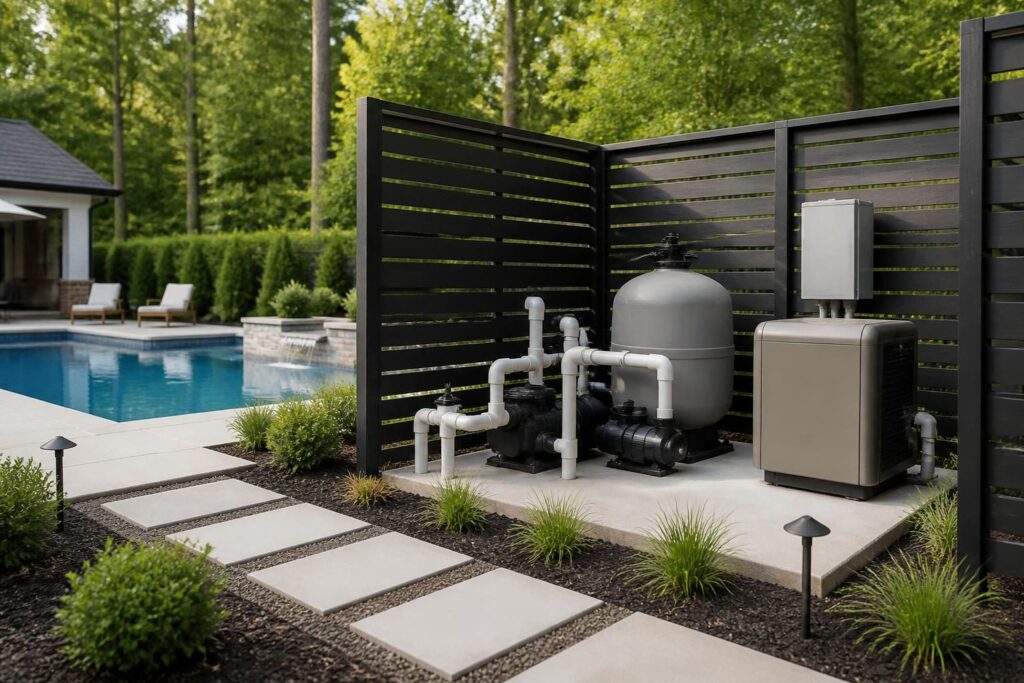
Good pool equipment pad sound isolation planning starts before the team installs the pump, heater, filter, and controls. A quieter equipment area can improve outdoor comfort and reduce disturbance for nearby rooms or neighbors. However, sound control should not create trapped heat, blocked airflow, unsafe electrical conditions, or an awkward service path.

North Carolina homeowners face different lot layouts, weather exposures, property lines, slopes, and local requirements. Treat noise reduction as one part of equipment-location planning. Ask the pool contractor to show the proposed arrangement, access route, ventilation approach, and maintenance clearances before work begins.
Begin pool equipment pad sound isolation planning with the site layout
Pool equipment does not produce one single type of sound. A pump motor may create a steady hum. Vibration can travel through a rigid base or connected pipe. Fans, heaters, valves, and loose panels can add separate sounds. Water movement may also become noticeable near return lines, spillways, or discharge points.
Walk the property at different times before choosing the pad location. Listen from bedrooms, patios, seating areas, property edges, and neighboring homes where practical. Note windows, fences, retaining walls, outdoor living spaces, and likely quiet hours. A location that seems distant from the pool may still sit close to a bedroom wall.
- Mark the nearest occupied rooms and outdoor gathering areas.
- Identify property lines and likely neighbor-facing sides.
- Note slopes that could carry sound or complicate equipment access.
- Observe existing walls, fences, planting areas, and hard surfaces.
- Ask whether future landscaping could block access or airflow.
Equipment orientation matters as much as distance. Ask whether the pump and fan outlets can face away from homes and seating areas. Avoid directing warm air, exhaust, or noticeable airflow toward a doorway, window, or narrow passage. The installer should confirm the manufacturer’s required clearances and operating conditions.
Use mounting methods that limit vibration transfer
Sound isolation means reducing the path that vibration uses to travel. Resilient mounting uses an approved flexible material or support system between equipment and its base. The goal is not to place equipment on improvised foam, loose rubber, or unstable blocks. Any mounting solution must support the equipment and remain suitable for outdoor exposure.
Ask the contractor which components need resilient support. The answer may differ for a pump, heater, blower, control enclosure, or accessory. Vibration can also travel through rigid plumbing, conduit, or brackets. A quiet base may provide limited benefit if connected pipes or panels remain tightly coupled to a wall or structure.
Questions about resilient mounting
- Is the proposed support approved or recommended for the equipment?
- Will the mounting surface remain level, stable, and dry?
- Could the support shift, compress, or deteriorate outdoors?
- Do pipe connections allow movement without stressing fittings?
- Will service technicians be able to remove equipment safely?
Do not modify equipment supports, electrical connections, gas components, or heater assemblies without qualified guidance. Vibration control should follow installation instructions and the professionals responsible for the work.
Pool equipment pad sound isolation planning: ventilate every enclosure
An enclosure can reflect or contain sound, but it can also trap heat and exhaust. Pumps and controls need appropriate airflow. Heaters may have specific intake, exhaust, and clearance requirements. A decorative screen that looks harmless may interfere with operation or maintenance.
For pool equipment pad sound isolation planning, request a ventilation sketch rather than relying on a verbal promise that the enclosure will “breathe.” The drawing should show openings, airflow direction, access panels, equipment clearances, and any separation from walls or combustible materials. The contractor and relevant licensed professionals should verify the installation against current instructions and local requirements.
Use screens carefully. Slatted panels, acoustic-rated materials, masonry walls, and planted buffers behave differently. Solid surfaces may reflect sound toward another part of the property. Dense planting can soften the view and provide some visual separation, but it should not replace required equipment clearances or ventilation.
Keep enclosure doors and panels large enough for routine work and eventual removal. Label removable sections in the project records. A quiet enclosure fails if a technician must dismantle permanent landscaping, move heavy items, or work in an unsafe position to reach a filter or pump.
Preserve maintenance and replacement access
Noise control should never eliminate safe service space. Equipment needs room for inspection, cleaning, filter access, valve operation, electrical review, and replacement. The required space depends on the equipment and installation instructions. Ask for those requirements in writing before the pad, walls, fence, or landscaping take final form.
Review the service route from the driveway, gate, or accessible walkway to the equipment. Consider how a large filter tank, heater, pump, or control component would leave the property. The route may need to remain usable years after construction, even if the original installer can carry equipment through a temporary opening.
Related planning can help. Review equipment replacement access before approving a sound screen. Also compare the proposed layout with these filter service access questions so routine maintenance does not become an afterthought.
- Keep valves, lids, gauges, baskets, and service panels reachable.
- Allow technicians to stand safely while opening or removing components.
- Protect the path from gates, steps, irrigation overspray, and stored items.
- Record which panels or screens are removable and how they come off.
- Confirm that future equipment can pass through the planned route.
Consider neighbors without making unsupported promises
Noise concerns are easier to manage when homeowners discuss them during design. Share the proposed pad location with the project team and ask how sound may travel toward adjacent properties. A wall, fence, or building can block sound in one direction and reflect it in another.
Do not promise a specific noise level unless a qualified professional has evaluated the system under defined conditions. Equipment sound changes with speed, water flow, age, weather, enclosure design, and maintenance. A variable-speed pump may operate at different speeds during filtration, heating, cleaning, or special features.
Ask whether the controls can support quieter operating periods without compromising water care or manufacturer requirements. For general pool-pump efficiency information, homeowners can review ENERGY STAR’s pool pump guidance. Energy performance and sound performance relate to the same planning decision, but one does not guarantee the other.
Keep communication practical. Discuss the planned location, screen appearance, likely operating periods, and how the equipment will receive maintenance. Avoid placing a noisy discharge or open enclosure directly beside a shared boundary when another workable orientation exists.
Review drainage, electrical work, and local requirements
Sound isolation does not replace basic pad planning. The base should coordinate with drainage so standing water does not damage components or shorten the life of resilient supports. Review equipment pad drainage planning alongside the noise-control proposal.
Electrical equipment, bonding, disconnects, gas appliances, and heater installations require qualified professionals. Keep access clear for inspections and service. Requirements can vary by jurisdiction, adopted code, utilities, flood conditions, property layout, and project scope. The local inspections department can explain which approvals apply.
North Carolina code documents and interpretations are available through the Office of State Fire Marshal. That resource does not replace confirmation with the local authority having jurisdiction. Ask the contractor or licensed trade professional to identify the current requirements that affect the proposed enclosure and equipment location.
Build a homeowner review record
A short record can prevent confusion when screens, landscaping, or equipment change later. Save the approved layout, equipment manuals, enclosure drawings, mounting details, photographs, and notes about removable panels. Record who confirmed ventilation, clearances, drainage, and electrical access.
Before approving the layout
- Where will each equipment component face?
- What surface or support will carry each item?
- How will vibration transfer through pipes, conduit, and walls be limited?
- Where will intake air and warm exhaust move?
- Can a technician reach every service point?
- Can major equipment leave through the planned route?
- Will fencing, planting, or storage change access later?
- Which items require local review or licensed installation?
After startup, listen from the same locations you noted during planning. Record operating mode, approximate time, weather, and any unusual vibration or rattling. Do not open energized equipment or adjust gas, electrical, or safety components yourself. Stop and contact qualified service when a sound suggests a mechanical, electrical, or combustion problem.
Thoughtful pool equipment pad sound isolation planning balances comfort with reliable operation. Before construction, consult the local inspections department about applicable requirements. Use a licensed pool contractor, electrician, engineer, surveyor, or other qualified specialist when the site, equipment, enclosure, drainage, or electrical scope calls for professional review. Build a Pool in North Carolina can help homeowners organize the questions and records needed for that conversation.