
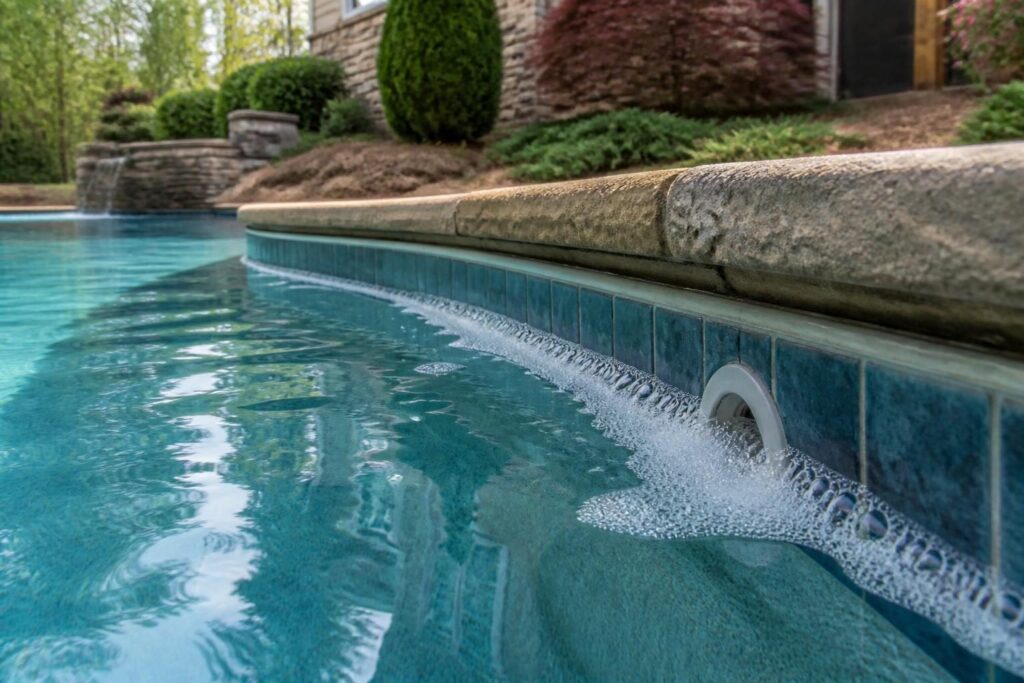
Foam or bubbles near a pool waterline can be distracting, especially after cleaning, swimming, rainfall, or equipment changes. This pool waterline foam bubbles observation guide helps North Carolina homeowners describe what they see without trying to diagnose the cause remotely.

Foam is a layer of bubbles that persists on the surface. Bubbles may also appear briefly and disappear as water moves. Those observations are useful, but they do not identify one confirmed cause. Several conditions can look similar. Use this pool waterline foam bubbles observation guide to compare timing and location before changing your routine.
Start with the pattern, not a diagnosis
Before adding chemicals or changing equipment settings, observe the location, duration, and behavior. A short video can show more than a single photograph. Record the pool’s operating state at the same time.
- Where does the foam or bubbling appear?
- Does it collect near returns, steps, a spa spillway, a skimmer, or a water feature?
- Does it remain after circulation stops, or disappear quickly?
- Is it present across the pool or limited to one area?
- Did it begin after swimming, cleaning, rainfall, landscaping, or service?
- Does the water look clear, hazy, oily, or otherwise changed?
Use neutral wording in your notes. Write “small bubbles gathered beside the return for three minutes” instead of “the pump is failing.” This keeps the record useful for a qualified pool professional.
A simple observation record
Write down the date, approximate time, weather, water temperature if already available, and whether the pump was running. Note recent additions, cleaning products, swimmer activity, and water-feature use.
Photograph the same areas from similar angles. Include one wider image and one closer view. Avoid touching the water before recording it. If you collect a sample for testing, follow the test-kit or laboratory instructions.
Possible category: surfactants and organic residue
Surfactants are substances that reduce surface tension and help water spread or wet surfaces. They can enter pool water through personal-care products, laundry residue, soaps, cleaners, cosmetics, or other household materials. Organic residue from swimmers can also affect surface behavior.
Surfactant-related foam may appear after heavy use or after an item contacts the water. It can gather along edges where wind and circulation concentrate surface material. That pattern is only a clue. It does not prove that a specific product caused the foam.
Ask household members whether anyone recently used sunscreen, lotion, hair products, detergent, or a poolside cleaner. Check whether floats, toys, covers, or cleaning tools were recently washed. Do not pour household cleaners into the pool unless the product label and a qualified professional specifically support that use.
Testing can help establish water conditions, but a test result may not identify a particular contaminant. The CDC’s home pool water treatment and testing guidance provides general information about testing, chlorine, and pH. Local conditions and product directions still matter.
Possible category: air entering the circulation system
Air intrusion means air enters the plumbing or pump system and travels with the water. It may show as a stream of bubbles returning to the pool, bubbles in a transparent pump lid, intermittent bursts, or bubbling that changes when equipment starts.
Do not assume that every surface bubble comes from the pump. Water movement, wind, returns, and features can create bubbles without a plumbing problem. Look for a repeatable relationship with the equipment cycle.
- Observe whether bubbles begin immediately after the pump starts.
- Check whether they come from one return or several.
- Note whether the pump basket or lid appears to contain air.
- Record whether the water level is unusually low.
- Watch for unusual sounds, loss of prime, leaks, or changes in flow.
Keep hands, tools, and loose clothing away from moving equipment. Do not open a pressurized filter, remove plumbing fittings, or work on electrical components as an experiment. If you see persistent air, equipment damage, leaking, loss of circulation, or uncertain operating conditions, stop and contact a qualified pool professional.
For focused, non-invasive observations, review safe homeowner checks for air in the pool pump system. The purpose is to improve communication, not replace service or pressure testing.
Possible category: water features and return flow
Waterfalls, fountains, spillways, bubblers, jets, and strong return flow deliberately mix air with water. That action can create temporary bubbles or a light foam line, particularly when a feature runs at a higher setting or wind pushes spray toward an edge.
Compare the pool with the feature off and on. Keep other conditions as similar as possible. Record which feature was active, its control setting if known, and where bubbles collected. A foam line that appears only during feature operation deserves a different discussion from foam present with all features off.
Water features can also increase splash-out and introduce material from nearby surfaces. Check whether irrigation, mulch, soil, pollen, or cleaning residue can reach the water. Do not redirect drainage or alter feature plumbing without qualified advice.
For planning and maintenance context, see this guide to water-feature splash-out and water loss.
Possible category: cleaning products and recent work
Foam may follow cleaning around the pool, deck, cover, tile, or equipment area. Residue can reach the water through runoff, wet tools, spray, or contact with a cover. Landscaping work can introduce soil, mulch, plant material, or irrigation water as well.
Make a short list of every recent activity. Include the product name, intended surface, dilution instructions, application date, and whether the item was rinsed. Keep product labels and safety data in your household records.
Questions to ask before using another product
- Is the product labeled for swimming-pool use?
- Does the label identify the compatible surface and equipment?
- Could it contain soap, fragrance, oils, or other foaming ingredients?
- Would adding it conflict with existing water-treatment products?
- Should a professional test or remove the material first?
Avoid “fixing” foam by adding an unapproved defoamer or a large chemical dose. That may hide the visible symptom while complicating later testing. Follow product labels and ask a qualified pool professional before making an unfamiliar treatment.
If foam occurs with discoloration, deposits, or a change at the tile line, document those details separately. A waterline tile cleaning guide can help distinguish an observation record from a cleaning decision.
Possible category: circulation conditions and water care
Circulation conditions include pump operation, valve positions, return flow, filtration, water level, and feature settings. These factors determine how water moves and where surface material collects. Weather, rain, swimmer load, and evaporation can also change the pool’s appearance.
Record basic water-care information using your normal routine. Include the test date, results, recent rainfall, swimming activity, and chemical additions. Do not change several variables at once if you want to learn what affects the pattern.
Compare observations over several operating cycles when safe and practical. Look for trends rather than relying on one moment. Note whether foam appears only after a feature runs, after heavy use, or throughout the day.
Water testing can show whether measured conditions need attention, but it cannot always explain foam by itself. The related guide on interpreting water-testing logs alongside equipment checks offers a structured way to compare observations.
When to pause normal use and request help
Foam alone does not establish a health or equipment emergency. Still, pause and seek qualified guidance when the water has an unusual odor, severe cloudiness, an unexplained film, sudden loss of circulation, visible equipment damage, or a rapid change after a product addition.
Keep swimmers away if you are unsure what entered the water. Follow chemical labels, manufacturer instructions, and professional advice. Do not mix products or attempt an improvised treatment.
For equipment concerns, contact a qualified pool service professional. Electrical work belongs with a properly qualified electrician. If runoff, septic systems, wells, or drainage are involved, consult the appropriate local or licensed specialist.
Homeowner checklist for the next observation
- Take a photo and short video before disturbing the water.
- Mark the location and approximate size of the foam or bubble area.
- Record pump, feature, cleaner, cover, and valve conditions if known.
- List recent swimming, rain, landscaping, and product activity.
- Use your normal water-testing method and preserve the results.
- Do not mix chemicals or add an unfamiliar product.
- Save labels, receipts, service notes, and equipment observations.
- Share the complete record with a qualified professional if the pattern persists.
Homeowners in North Carolina may see different conditions based on weather, water source, equipment design, landscape exposure, and maintenance routines. Use this pool waterline foam bubbles observation guide to organize facts, not assign a cause. This pool waterline foam bubbles observation guide supports clear records and careful questions before treatment or repair.
When the cause remains unclear, consult the local inspections department for jurisdiction-specific questions and a licensed pool contractor for pool-system concerns. An electrician, engineer, surveyor, septic professional, or other qualified specialist may be appropriate when the observation involves their scope.